In today’s convenience retail industry, a compelling foodservice offering isn’t just a nice-to-have feature. It’s a must-have that distinguishes stores from their competitors and keeps traffic flowing.
Foodservice innovation can take numerous forms. Some operators are partnering with restaurant brands, from major QSR chains to local favorites, while others are redesigning stores with food prep at the heart of their operations. Retailers are also tweaking their menus and launching new offerings like wings and barbecue.
Upgrading foodservice can be costly, but technologies like ordering kiosks and fresh food vending machines can help lower costs while allowing retailers to serve up enticing fare.
Whatever the approach, the goal is the same: giving customers a reason to visit — and return to — their stores.
In this trendline, you’ll learn how chains like Murphy USA and Alimentation Couche-Tard are upgrading their food programs to keep pace with changing consumer preferences. You’ll also see how small operators like RoadDog are experimenting with new cuisines to compete with larger players, and how popular items like sandwiches and sushi are being optimized for today’s convenience shoppers.
We hope you enjoy this trendline on foodservice innovation.
The Ohio retailer’s new Roadie’s Grub ‘N Go menu features smoked meats including brisket, pulled pork and chicken wings, plus sides such as hush puppies and baked beans.
By: Brett Dworski• Published Sept. 10, 2026
Made-to-order foodservice is nothing new for RoadDog Convenience Stores, the 12-location chain owned by Ohio-based energy company Duncan Oil. But the retailer is trying a new approach at one c-store that could eventually expand across the chain.
The move comes as convenience retailers increasingly look to foodservice as a key traffic driver and point of differentiation. Many are expanding beyond traditional grab-and-go offerings to narrow the competition gap with QSRs.
Enter the retailer’s new Roadie’s Grub ‘N Go barbecue program, which debuted Aug. 31 at a Dayton-area store.
RoadDog’s newest barbecue concept features brisket, pulled pork and smoked chicken wings.
Permission granted by Duncan Oil
While RoadDog’s mainstay sandwiches, pizza and fried chicken haven’t left the menu, the new program features an array of barbecue dishes such as brisket, pulled pork, smoked chicken wings and sides like hush puppies and baked beans. RoadDog is using seasonings and sauces from food and beverage company Blues Hog Barbecue in the program, according to Ryan Jones, food operations manager for Duncan Oil.
Jones said the new concept gives RoadDog — which he described as “a small fish in a big pond” — another way to compete with larger chains while maintaining the flexibility of a smaller operator. Some RoadDog team members had previous barbecue experience, giving Jones and his team the confidence that the program would be easy to execute, he said.
“We still wanted to keep the core things that make RoadDog RoadDog, but we added a smoker, so we kind of wanted to add another layer to everything that we already do,” Jones said.
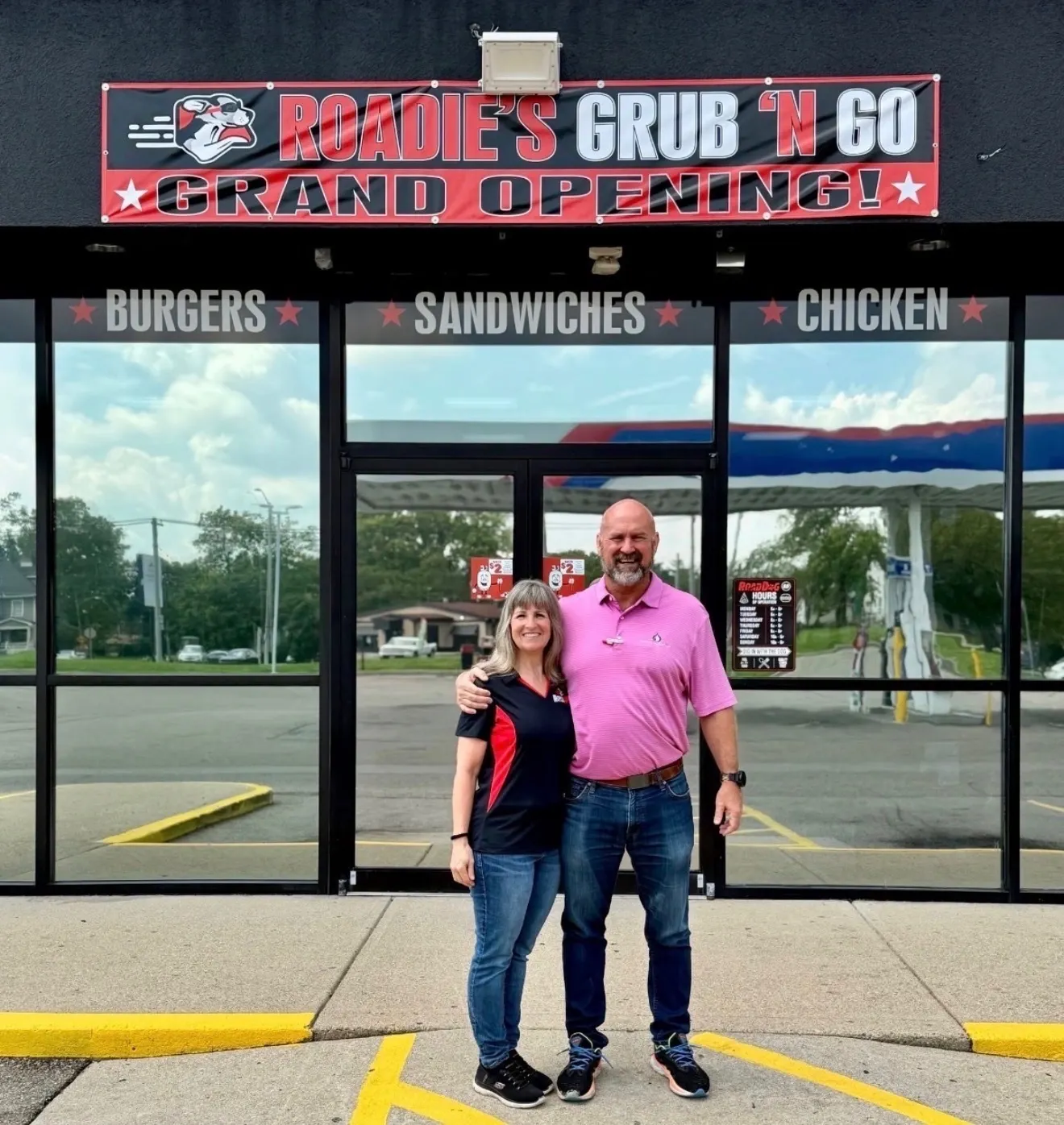
Ryan McDaniel (right), president of Duncan Oil, outside the new store concept in Dayton.
Permission granted by Duncan Oil
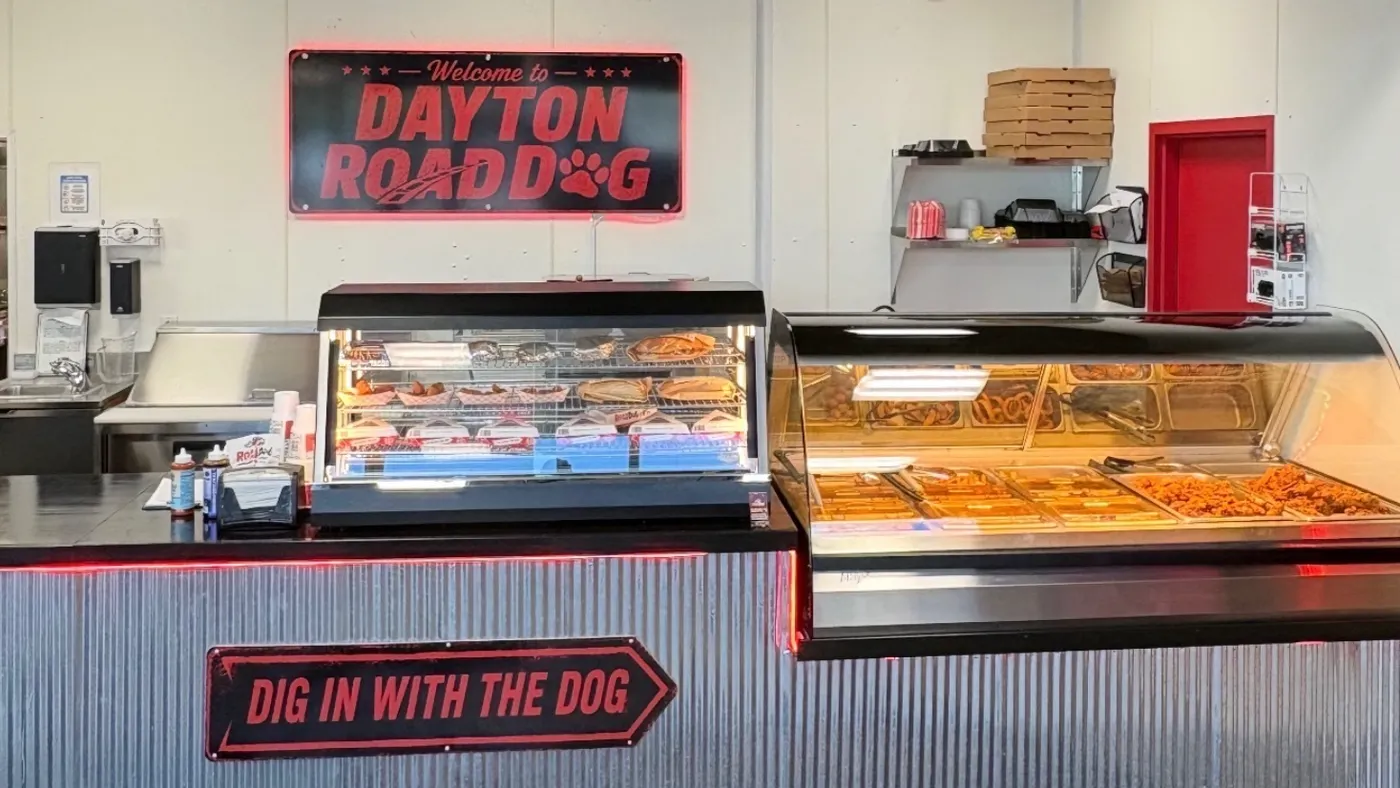
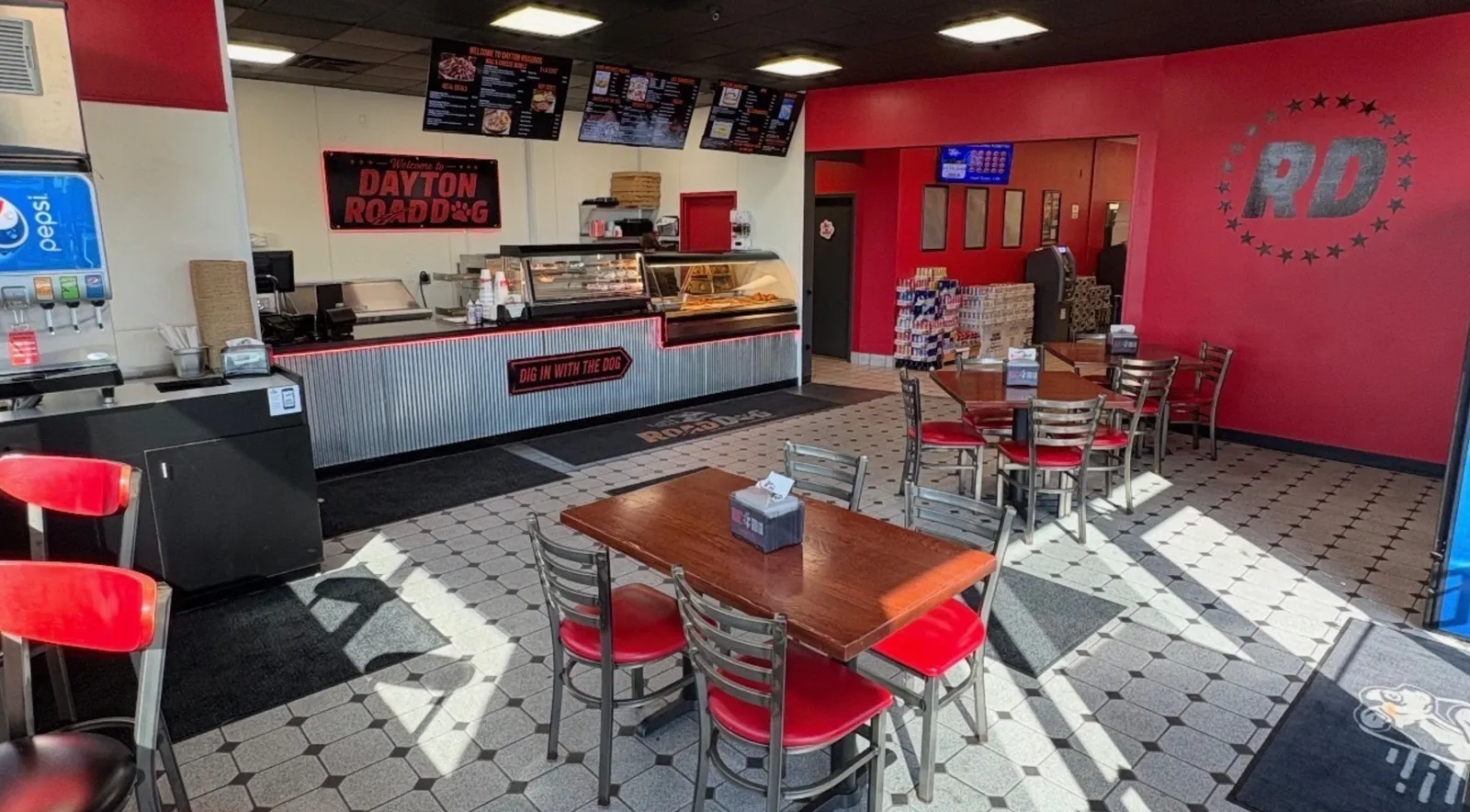
Adding the smoker required a significant investment in the store’s foodservice operation. RoadDog built an entire new kitchen inside the store to accommodate the large appliance, which can hold up to 240 pounds of heavy cuts of meat per load.
“We did want to completely revise the front-of-house as well, so we just kind of gave [the store] a whole new makeover,” Jones said.
For now, Roadie’s Grub ‘N Go is only in the Dayton-area location. But if the program is well received, RoadDog could bring the concept to additional stores, Jones said.
“If all goes well and all goes according to plan, then this could be a core RoadDog system in the future,” he said.
Article top image credit: Permission granted by Duncan Oil
The rise of gas station sushi: How c-stores can capitalize on the growing popularity of Asian foods
While items like boba, pot stickers and noodle dishes were once seen as niche offerings, they’re now in-demand options at many retailers, food experts say.
By: Christine Blank• Published Aug. 4, 2026
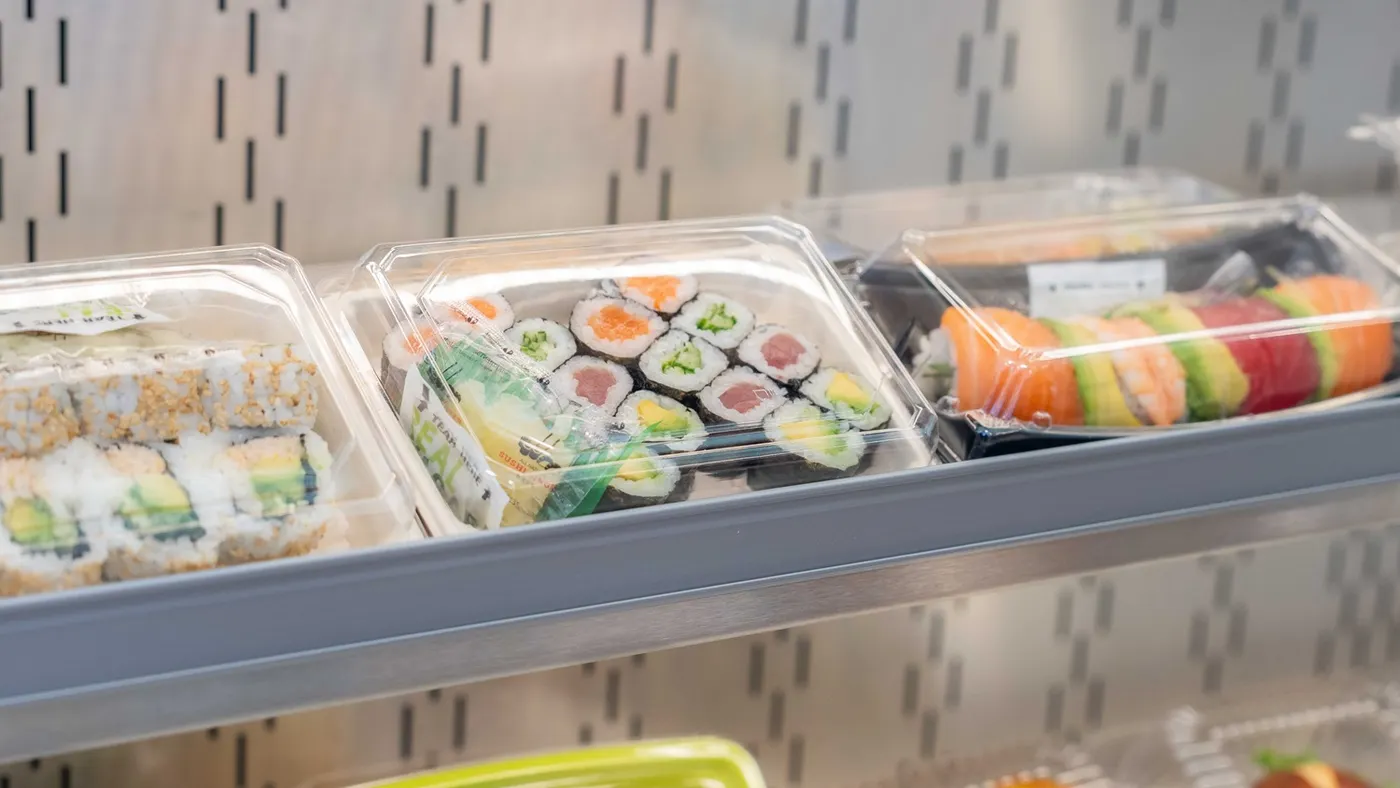
From pot stickers to poke, sushi to boba, Asian-inspired snacks and meals that were once considered a niche offering are quickly becoming more of a mainstream expectation in c-stores.
Farley Kaiser, vice president of retail foodservice at McLane, has watched the shift unfold in real time.
"We have seen growing interest from consumers in higher-end c-stores around Asian-inspired foods and beverages over the last several years," Kaiser said.
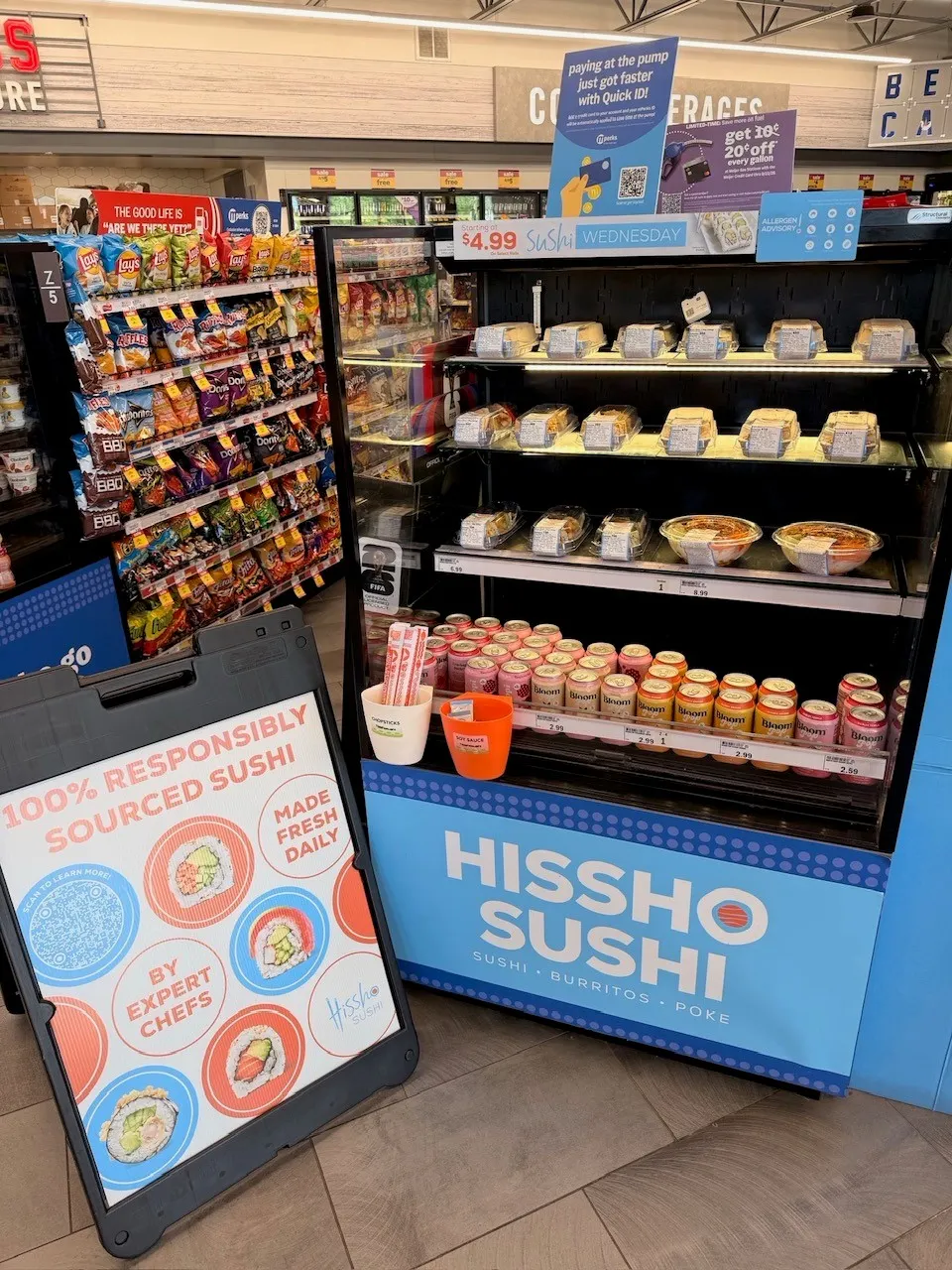
Brian Kiel, chief operating officer of Hissho Sushi, which operates sushi programs in more than 3,000 grocery stores, college campuses and other locations, agrees.
“What was once considered a specialty offering has become much more mainstream, driven by growing consumer familiarity with sushi, interest in globally inspired flavors, and demand for better-for-you grab-and-go options,” Kiel explained.
Hissho is seeing strong momentum behind both sushi and broader Asian-inspired foods as consumers “increasingly look for fresh, convenient meal solutions throughout the day,” Kiel added.
“Today's c-stores are … expanding beyond traditional snacks and beverages to offer higher-quality prepared foods that can compete with quick service restaurants. That creates a natural opportunity for categories like sushi,” Kiel said.
“Good presentation, proper inventory management and maintaining freshness standards are far more important than simply placing product in a cooler and hoping it sells.”
Farley Kaiser
Vice president of retail foodservice at McLane
The impact of this shift can be seen in stores like ReCharge by Gelson’s, which included a variety of sushi as part of its inaugural food offering. Or at Akami Sushi Bar, a renowned restaurant located inside a Han-Dee Hugo’s gas station in Apex, North Carolina.
Younger consumers have grown up with far broader culinary exposure than previous generations, and items like Korean barbecue, ramen, pho and boba no longer register as "specialty" — they're just lunch, Kaiser noted. Southeast Asian, Korean, Japanese and fusion flavors are some of the fastest-growing menu influences across all foodservice channels, not just c-stores, Kaiser added
Banh mi, spring rolls, yuzu, miso, gochujang red pepper paste and chili crisp are “growth drivers” in foodservice and restaurants, Kaiser said.
Social media has accelerated that familiarity. Kaiser noted that consumers are regularly exposed to global flavors through platforms like TikTok, Instagram and YouTube, which has primed them to seek out bold flavor and a sense of authenticity wherever they shop — including at c-stores.
The numbers reflect that growth. Among c-stores that already offer sushi, 100% report increased sales in the past year, Datassential found. Plus, 15% of c-stores said they plan to offer sushi this year, up 2 percentage points over 2023, per Datassential.
Additionally, pot stickers and Asian dumplings have grown by 10 percentage points as a c-store offering between 2023 and 2026, and sales of those items have jumped 57% year over year for those selling them.
Meanwhile, 15% of c-stores plan to offer Asian noodle bowls in their prepared food lineups — a 10-percentage-point jump from those that said the same thing in 2023.
Sushi’s popularity is undeniable
Retail sushi sales continue to grow, fueled by consumer demand for convenient, protein-forward meals with global flavor profiles, per Kiel.
“C-stores are looking into sushi programs more now compared to five years ago,” Kaiser confirmed, as consumers no longer separate c-stores from other foodservice outlets the way they once did.
Asian-inspired items are particularly well-suited to c-stores because so many of these menu items — including dumplings, spring rolls, rice bowls and boba — are inherently portable and craveable, Kaiser explained.
Sushi also complements existing foodservice programs by providing a lighter, healthier option alongside traditional hot foods, Kiel added.
Sushi tends to perform best in locations with strong commuter traffic, colleges and a larger fresh grab-and-go offer, said Kaiser. Successful retailers tend to treat sushi as part of a broader fresh-food strategy rather than a standalone item.
“Good presentation, proper inventory management and maintaining freshness standards are far more important than simply placing product in a cooler and hoping it sells,” Kaiser emphasized.
Sushi tends to perform best in locations with strong commuter traffic, colleges and a larger fresh grab-and-go offer.
Permission granted by Hissho Sushi
The strongest sushi programs combine clear signage, strong promotions and clean, well-stocked displays with ongoing consumer education, Kiel said.
"While sushi has become much more mainstream, there is still an opportunity to introduce consumers to new flavor profiles, ingredients and occasions for purchase," he said.
To that end, limited-time offers and seasonal features can give shoppers a reason to engage with the category for the first time — and trust, built through consistent quality and food safety, is what brings them back, Kiel noted.
For retailers looking to dip a toe into Asian cuisine, Kaiser recommends starting with flavor profiles that feel familiar enough to be approachable while still offering something new.
On the food side, that means adding options like teriyaki, sweet chili, Korean barbecue, sesame garlic, yuzu-based sauces and chili crisp. On the beverage side, matcha, lychee, dragon fruit, milk tea and boba are all seeing strong consumer uptake.
"These work because they strike a balance between familiarity and discovery," Kaiser said. "Consumers want to try something new, but they don't necessarily want something so unfamiliar that it feels risky."
Article top image credit: Courtesy of Gelson's Market
Sponsored
Convenience store growth in 2026: Expansion is easy. Standing out isn’t.
Convenience stores aren't just where you grab gas. Increasingly, they're where people grab lunch, groceries and more.
Convenience operators are bullish on growth in 2026, but a crowded field means expansion alone isn't enough to win. This report looks at where the industry stands: how fast c-stores are growing, what's putting pressure on operations, and where the operators pulling ahead are finding room to differentiate.
Toast conducted a blind survey from April 3–20, 2026, among U.S.-based convenience, grocery, and bottle shop store decision-makers (16 or fewer locations). Respondents were not aware that Toast was fielding the study.
Key Takeaways:
62% of convenience store operators say they're likely to open a new location in the next year, up 4 points year-over-year
About 6 in 10 convenience operators say it's tough to stand out from competitors
"Simplify operations" jumped 11 points year-over-year among convenience operators
Inventory management remains retail operators' top operational challenge, up 6 points year-over-year
Nine in ten retail operators are experimenting with AI
Let's unpack these findings.
Convenience stores are growing — and getting more crowded
Growth is on the table for most of the industry. 62% of convenience operators say they're likely to open a new location in the next year, up 4 points year-over-year, part of a broader expansion trend across grocery and bottle shops too.
But more stores also means more competition. About 6 in 10 convenience operators say it's tough to stand out from competitors — a slightly sharper problem than it is for grocery, where just over half say the same. When the store down the block sells the same drinks, snacks, and gas, opening more doors doesn't automatically solve the differentiation problem. It can make it worse.
Foodservice is becoming convenience retail's clearest differentiator
It's not hard to see why competition is intensifying. Fuel margins are thin and largely fixed, and shelf goods are easy to copy from one store to the next. A strong coffee program, hot food case, or grab-and-go counter is harder to replicate — and it's increasingly where an operator's identity, and margin, actually live.
That shift changes what operators need from their point of sale. Running a food program alongside a retail floor traditionally meant stitching together separate systems, separate logins, and separate reports. Toast Retail is built for the opposite: one system for the retail floor, the food program, and the sales data, so a coffee counter or hot food case doesn't require a whole new setup to manage.
Growth is adding pressure, and operators are trying to get ahead of it
Growth is a good thing, but it’s not always easy. "Simplify operations" jumped 11 points year-over-year, echoing the sharpest year-over-year shift of any goal across the retail industry surveyed. Operators aren't just trying to grow. They're trying to grow without adding more busywork to the day.
That instinct tracks with what's actually slowing operators down. Inventory management remains retail operators' single biggest operational challenge, up 6 points year-over-year, alongside rising pressure around staffing and checkout speed. For a lean team running a busy store, count discrepancies and manual reordering eat into hours that could go toward the floor or the counter.
AI is part of the picture, too
Nine in ten retail operators are already experimenting with AI in some form, and most expect to lean on it more in the year ahead. Adoption is real, but so is caution: operators still want a person reviewing AI-driven decisions, especially anything that touches money directly. AI is emerging as a support system for busy operators, not a replacement for their judgment.
What this means for convenience operators in 2026
Three takeaways from the data:
Growth alone won't differentiate a store. With expansion up across the board, the operators who stand out will be the ones building something harder to copy.
Foodservice is where that edge is being built. A hot food or beverage program gives operators a reason for customers to choose them specifically, not just the nearest option.
Simplification is the other half of the equation. Adding a food program only pays off if it doesn't add operational chaos on top of it.
And a few ways operators can put this into practice:
Adding a coffee bar, hot food case, or grab-and-go section to give customers a reason to choose their store specifically
Starting small — one or two food items — before scaling up, to keep cost and complexity in check
Running the retail floor and food program on one system instead of stitching separate tools together
Toast Retail for convenience stores
Toast Retail is built for convenience operators running more than a retail floor. From the checkout counter to the coffee bar, Toast Retail brings the retail floor, food program, and sales data together in one system, so growth doesn't mean adding complexity.
Footnote:
Toast conducted a blind survey from 4/3/2026–4/20/2026 of 340 U.S.-based CBG (convenience, grocery, or bottle shop) retail decision-makers operating 16 or fewer locations, including both Toast and non-Toast customers. Respondents were not made aware that Toast was fielding the study. Using a standard margin of error calculation, at a confidence interval of 95%, the margin of error is approximately +/- 5%.
Article top image credit:
O2O Creative / Getty Images
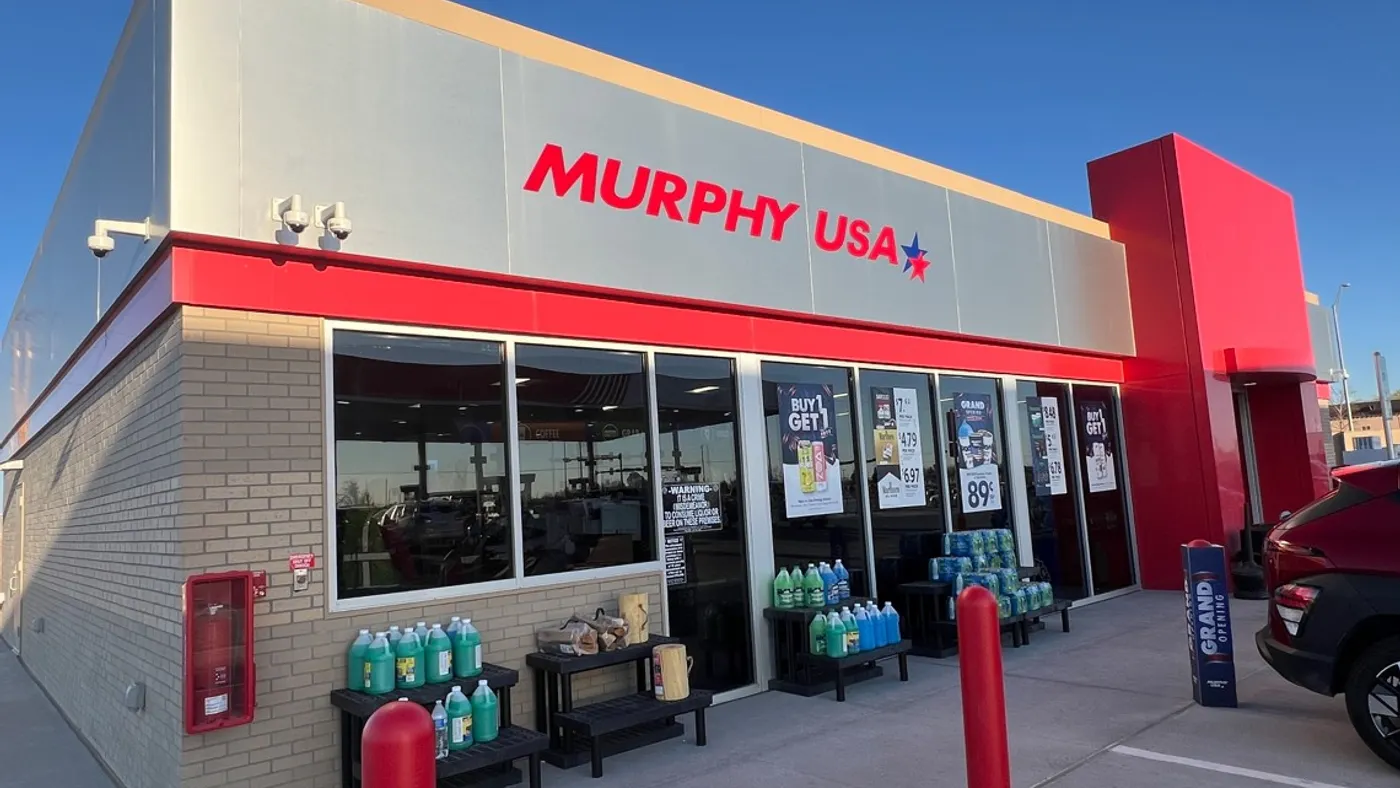
Murphy USA to trial automated White Castle kiosks
A partnership with Automated Retail Technologies will bring fresh items from the burger QSR’s menu to select large-format stores.
The platform, developed by foodservice technology firm Automated Retail Technologies, will initially feature food from burger chain White Castle. Customers place orders on a touchscreen interface and receive hot food in about two minutes.
The announcement did not specify how many locations will get the technology.
Murphy said it launched the initiative in order to test demand for fresh, convenient food options prepared in a compact space.
“We’re continually evaluating opportunities that create additional value for our customers while building on the strengths that have made Murphy USA successful,” said Scott Woodward, Murphy USA’s senior vice president and chief merchandising officer. “This relationship allows us to introduce a new convenience offering informed by customer insights, while maintaining the operational discipline and focus on everyday value.”
Although Murphy acquired the fresh-food-centric QuickChek chain in 2021, the retailer’s main banner has historically focused more on fuel and low-priced standard convenience options inside the store. That strategy appears to be shifting with the adoption of ART’s modular platform.
The platform automates the preparation, heating and delivery of food within a self-contained system, making it easy to fit into a store without building out a kitchen or hiring additional employees for food prep.
Murphy’s leaders have been mulling the question of how to bring more food options into the main banner for a while. During the company’s Q1 earnings call in April, CEO and President Mindy West noted that the company was evaluating how to enhance its Murphy stores using new formats, services and foodservice.
However, she said the company does not expect foodservice to feature at every store in the near term.
“We're going to be very thoughtful about how we step into that,” West said.
This isn’t the only change being made to Murphy stores The retailer also announced earlier in 2026 that it would roll out a refreshed store design for its main banner. The update will include a new color scheme, better forecourt lighting and clearer signage, as well as updates to the surfaces used inside and outside the store.
Article top image credit: Brett Dworski/C-Store Dive
How c-stores are building better sandwiches
The humble menu item has serious staying power, accounting for around a quarter of foodservice sales. Here are a few ways to keep selections fresh and exciting.
By: Amanda Baltazar• Published Feb. 4, 2026
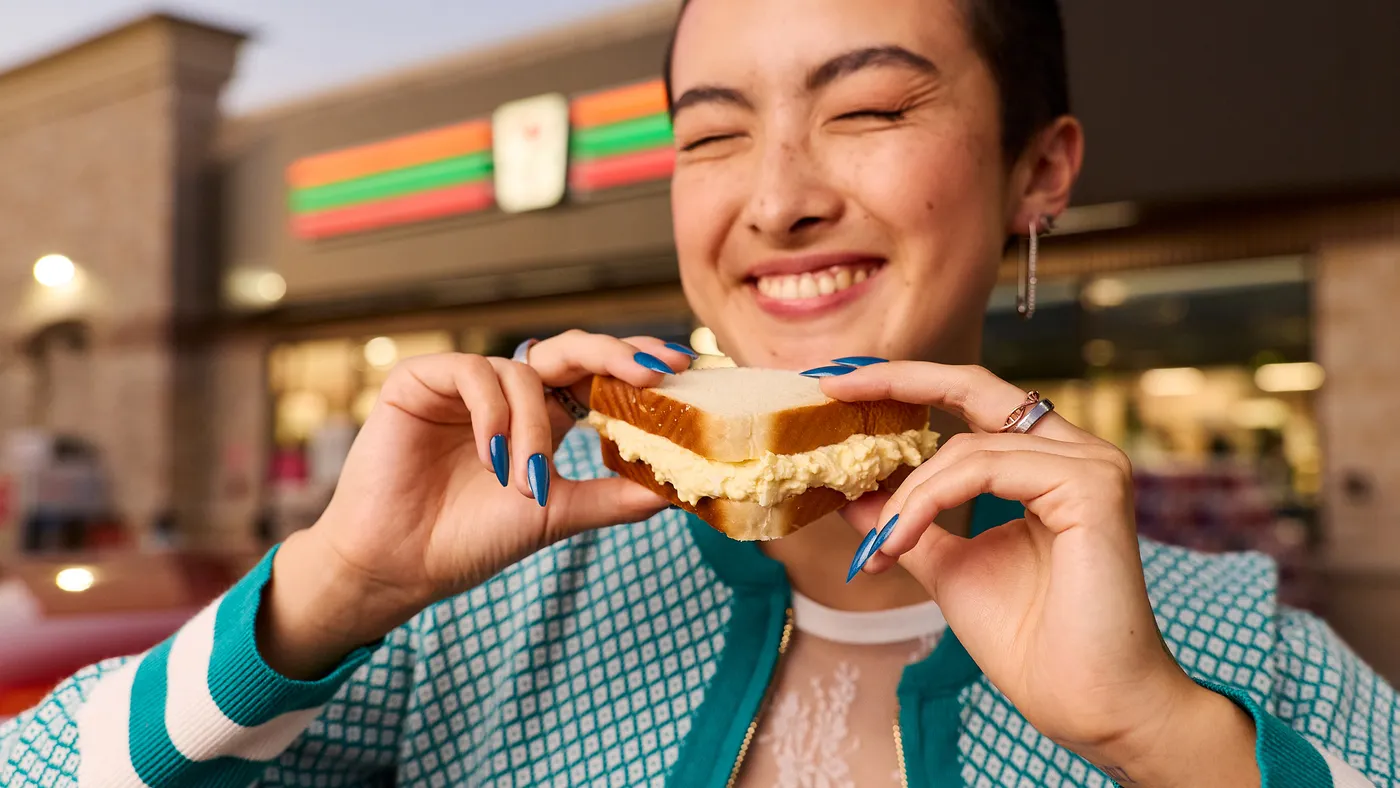
Sandwiches make up around a quarter of convenience stores’ foodservice dollar sales, according to Circana data. And it’s no wonder, since they can use a wide variety of ingredients and come in so many formats.
Total sales of sandwiches, wraps and handhelds at convenience stores reached $6.9 billion in 2024, according to market research company Technomic. In even better news for operators, this figure is projected to grow to $8.6 billion by 2029, representing a compound annual growth rate of 4.5%.
Sandwiches “are king,” said Maurice Lamarche, vice president of retail operations for Tiger Fuel Company in Charlottesville, Virginia, which operates 10 The Market c-stores. The chain’s sandwiches use par-baked French bread and are baked daily, which also adds a delicious aroma to the store.
Fireside Market opened a food-focused site in October 2025 in Slinger, Wisconsin, that offers a range of made-to-order hot sandwiches. An important factor is the freshness cues, said Peter Juzenas, director of operations for Potawatomi Ventures, which owns the chain.
The store has a rotisserie for its pastrami, which is not only fascinating for customers but also shows shoppers that everything’s made in-house.
Variety vs. SKU control
More options isn’t always better when it comes to sandwiches. Tiger Fuel recently reduced its standard lineup of sandwiches, from 25 to 13, to simplify work for foodservice staff and to reduce the number of ingredients the stores need.
However, offering a variety is very important to a sandwich program, said Donna Hood Crecca, senior principal with Technomic. “In fact the majority of c-store prepared food purchasers (78%) prioritize wide variety and selection of items when deciding which c-store to visit.”
That variety, she explains, should include the expected favorites, as well as healthy or better-for-you options, a priority for 56% of people in store, and innovative items, which 53% of shoppers seek.
The sandwich variety that c-stores offer “should also range from indulgent to healthy and from low-cost to high, to provide options for every dietary need and economic demographic,” pointed out Darren Tristano, CEO and founder of consulting firm Foodservice Results.
Getting that variety doesn’t require building from the ground up. In July 2025, major c-store distributor McLane Company launched a national commissary program to deliver fresh food to convenience stores. Through its Central Eats brand, it’s supplying premade grab-and-go cold items, such as sandwiches, subs, wraps and sliders, with a seven-day shelf-life and no artificial additives. The wholesaler also provides a core assortment of basic sandwiches and LTOs that offer a twist on the classics, especially for younger consumers.
“Retailers are looking for operational ease and to make a certain margin,” said Anne Hughes, product director for kitchen and commissary with McLane. “They want that core assortment to bring in the consumer but consumers are open to trying different flavors and platforms — so we might offer ham and cheese with spicy pickle.”
QuickChek continually tests LTOs in its sub line.
Courtesy of QuickChek
LTOs keep things interesting
To keep the sandwich program exciting, Tiger Fuel runs a quarterly LTO. It used to have monthly LTOs, but that was too much to keep up with, Lamarche explained.
LTOs are important, pointed out Hood Crecca, who said, “a trend emerging is consumers increasingly turning to c-stores to source a particular item they’re craving, and craveability is on the rise as a driver of c-store food purchases.”
Because convenience store operators are often looking to reduce SKUs, it makes sense to offer fewer sandwiches with more customization options, Tristano said. But, he added, “LTOs are still very important to stress seasonal ingredients and comfort foods.”
Ideally, LTOs and regional favorites should use the same core ingredients as the standard sandwich lineup to keep SKUs and storage needs down. This could mean a spin on a sandwich is as simple as the addition of a sauce.
“This gives retailers an opportunity to add variety with a familiar and popular item,” Hughes says.
Sales drivers
Technomic data shows that in 2024, made-to-order sandwiches were the most popular sub-category, accounting for 29% of sandwich sales. Sandwiches in the hot case accounted for 28% of sales, while cold, ready-made sandwiches accounted for 19% of sales.
Tiger Fuel offers its sandwiches all day but they’re especially popular between 10:30 a.m. and 2:30 p.m.. A lot of shoppers order their sandwiches online, and those are “overwhelmingly” build-your-own. Inside the store, shoppers are more likely to select from the menu.
But breakfast sandwiches “fly out of the stores,” says Nico Robinson, the company’s culinary program manager, and these include biscuits, burritos and tacos.
Sandwiches are also really popular for catering, which is a brisk business for Tiger, in the form of bagged lunches or Signature Sandwich platters which include 10 assorted sandwiches.
Breakfast sandwiches are a poular category.
Permission granted by Cliff's
Hot items to avoid
While almost anything can be placed between two pieces of bread, there are some ingredients c-stores should avoid. Avocado is going to turn brown and tomatoes make bread soggy. Mayo simply doesn’t hold up well. So Tiger typically doesn’t use these items.
“We want everyone who comes in to have the freshest quality,” Robinson said.
Before launching its Central Eats sandwich brand, McLane ran extensive shelf-life studies and found the order in which sandwich fillings are placed is very important. It examined how to layer meat, for example, to reduce how much moisture it transfers to the bread or tortilla, Hughes pointed out.
Clear packaging is also important, she added, so consumers can see the quality for themselves.
Fireside Market came up with its sandwich program — what it offers, what holds up, the best packaging — by speaking to third party chefs, competitors and potential guests about what works and what doesn’t.
“Quality packaging and sandwich builds engineered for easy, mess-free eating on the go are paramount,” said Hood Crecca. “That’s not easy, considering today’s trends towards decadent toppings and condiments, meat-on-meat and other indulgent and social-media-worthy sandwiches.”
Article top image credit: Courtesy of 7-Eleven
Casey’s built its brand on pizza. Now it’s chasing chicken wings.
The Iowa retailer plans to roll out the wing line to all 2,900-plus stores as it diversifies its fast-growing food business.
By: Brett Dworski• Published March 11, 2026
Casey’s General Stores plans to expand its chicken wing line to all of its 2,900-plus convenience stores across 19 states, President and CEO Darren Rebelez said during the retailer’s third-quarter earnings call in March.
Casey’s piloted chicken wings at select stores in its home base of Des Moines, Iowa, in January 2025. A little over a year later, the wings had reached more than 550 locations, and Rebelez said he estimates the fried protein to hit menus at the rest of Casey’s stores over the next two years.
Going all-in on chicken wings signals that the retailer is committed to expanding and diversifying its food business.
About eight weeks after debuting the wings at over 200 locations in Des Moines in 2025 Casey’s said it was seeing positive results from the pilot. In September of that year, the retailer reported a whopping 14% year-over-year boost in inside sales, including a near-6% increase in prepared foods and beverages.
That growth has continued into 2026, as Casey’s same-store prepared food and beverage sales “led the way” in the third quarter, Rebelez said during the company’s earnings call. Sales were up over 4% with an average margin of over 58%, he added.
Although he called out numerous food options that contributed to the performance, such as pizza and hot sandwiches, Rebelez also discussed the growth of its wing business. He said that wings have “been largely incremental,” as pizza units sold at stores that sold wings were up high-single-digit percentages during the quarter.
“We're also seeing that when people are buying our wings, they are increasing their frequency of visit as a result of that,” he said. “So we feel very good about the progress so far.”
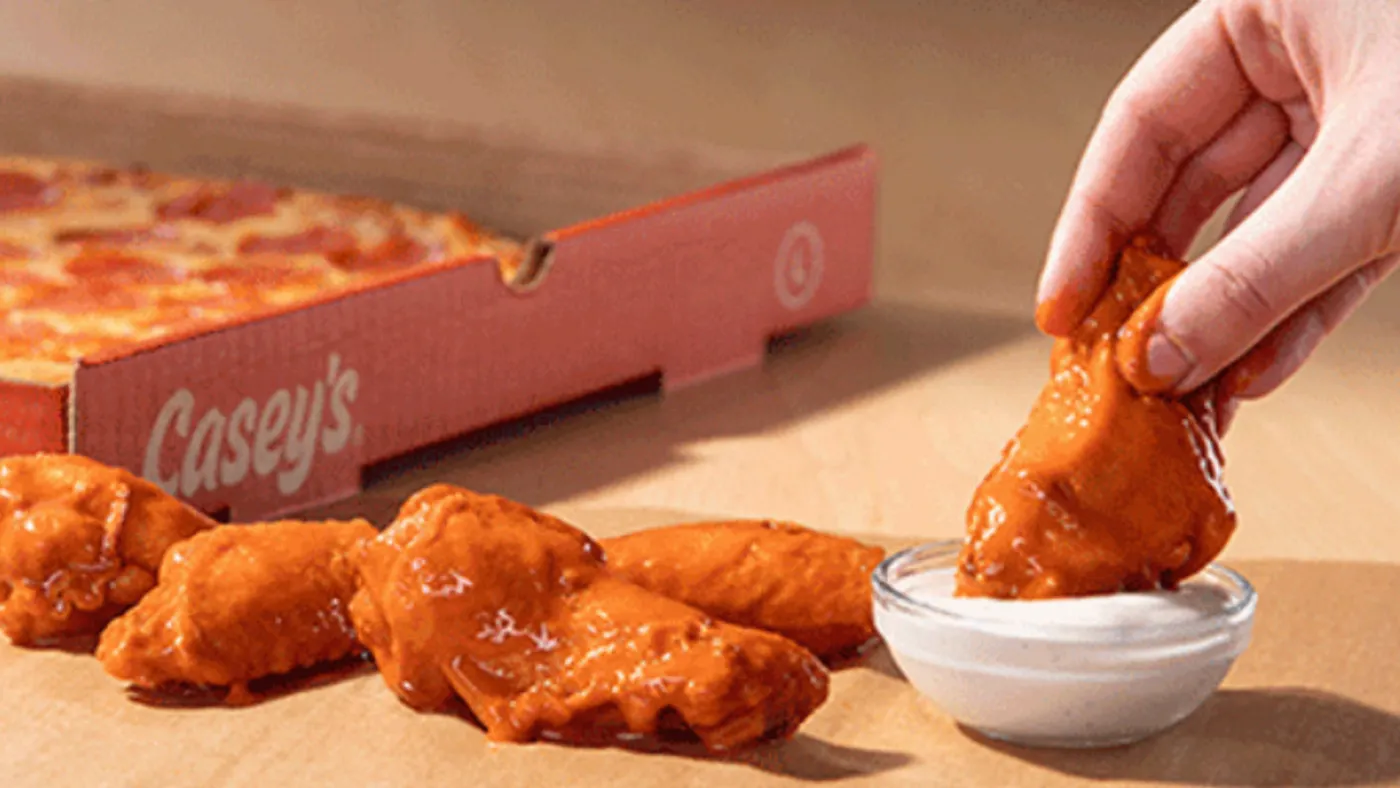
Casey’s wings come in garlic parmesan, barbecue, sweet chili, Buffalo and mango habanero flavors in both bone-in and boneless styles. According to Casey’s website, the standard eight-count order is available for $7.99 — and Rebelez said Casey’s aims to keep prices “relative to any sort of competitor.”
Rebelez said the two-year timeline to add wings to the rest of its stores reflects the time needed to install commercial fryers and train staff on how to handle the product. He emphasized that during this period, wings and pizza are both going to be a priority.
“We have a long way to go in terms of growing the wing business,” he said. “So we're more focused on doing that and doing that well, and getting that velocity up and creating that incremental occasion per-week in that business before we start tackling other products.”
While it has operated in c-stores for more than a quarter of a century, the QSR chain is ramping up its convenience retail presence as part of a broader growth strategy.
By: Brett Dworski• Published June 23, 2026
Restaurant brands are increasingly turning to convenience stores as a vehicle for expansion.
As retailers continue to invest in foodservice, QSR chains ranging from regional favorites to national players have pursued partnerships that place their concepts inside or alongside c-store locations. These arrangements provide restaurant operators access to a built-in base of on-the-go customers while opening the door to new markets.
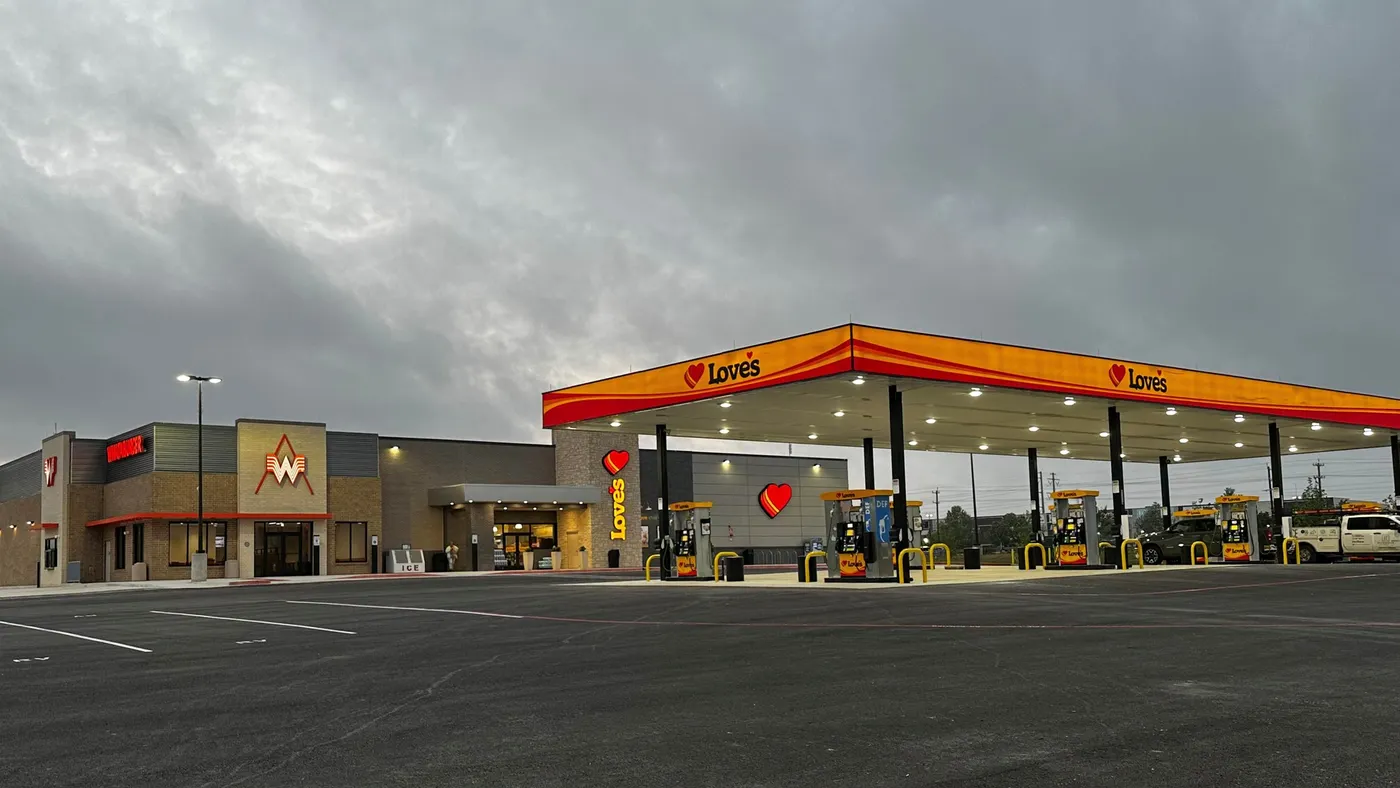
But Whataburger's presence in convenience retail is not entirely new. The chain has operated in the channel for decades, and executives say the company is looking to build on that foundation as it invests in new formats and expands its footprint.
A quiet — and growing — history in convenience retail
Whataburger’s restaurant portfolio is split between traditional and nontraditional locations, with the latter category including sites at airports, college campuses and convenience stores.
“We see fuel just as an extension of those nontraditional type investments,” said Todd Ewen, Whataburger’s senior vice president and chief development officer. “It's not a huge part of our portfolio, but it's an important part for us.”
Whataburger opened its first c-store-adjacent restaurant in 2000 and today operates roughly 40 such locations, said Joe Jaynes, Whataburger’s group director of corporate real estate. Those sites are a mix of company-owned and franchised locations spanning Texas, Oklahoma, Louisiana and Arizona. They are also generally the same size as a freestanding Whataburger and offer the chain’s full menu.
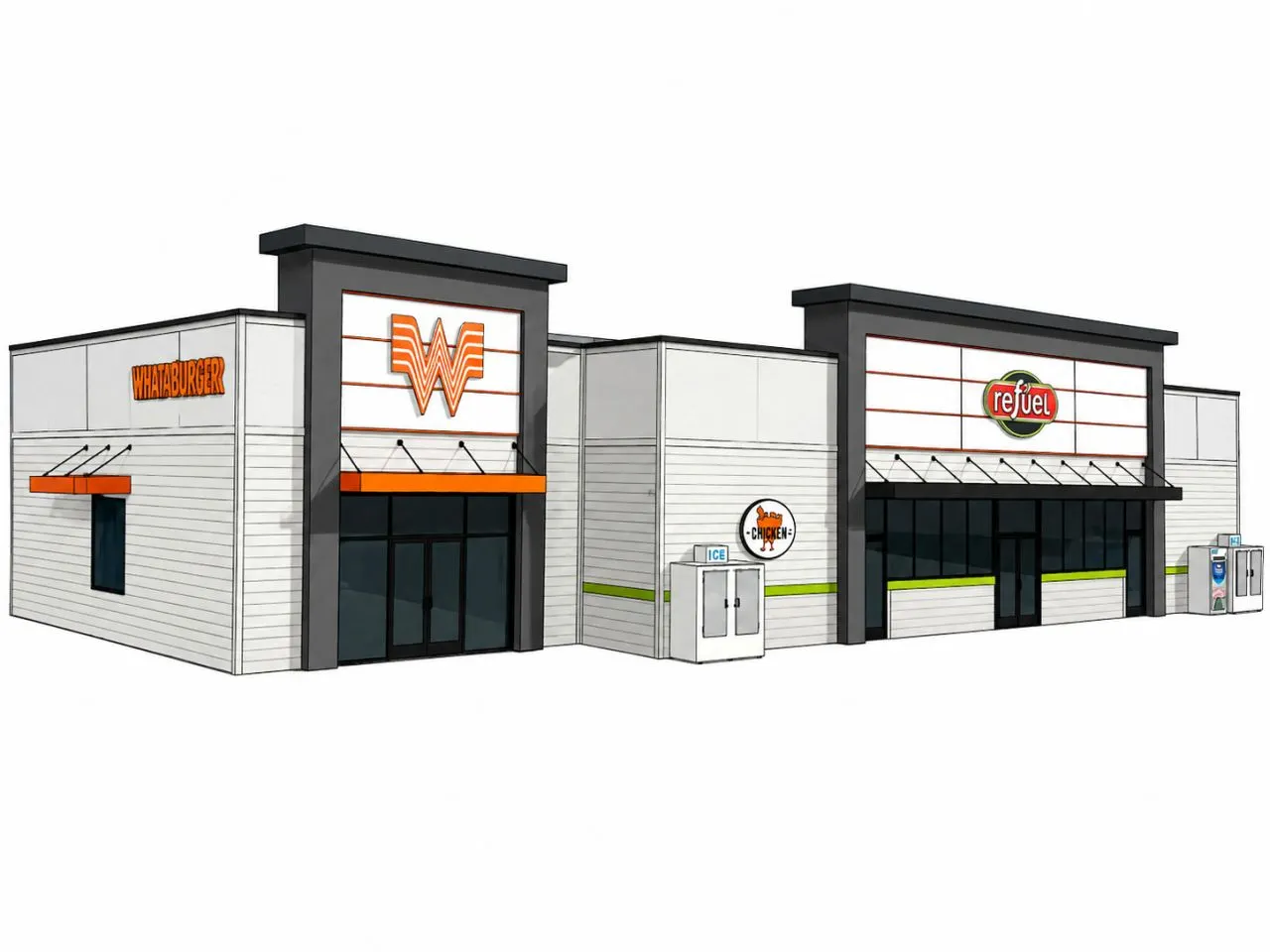
A mockup of Whataburger’s future site adjascent to a Refuel c-store.
Permission granted by Refuel Operating Company
Forty c-store-adjacent locations over 26 years may not seem significant for a chain of Whataburger’s size. But Ewen and Jaynes say convenience retail has become a more attractive growth avenue as Whataburger has expanded beyond its core markets.
Ewen said the chain has increasingly drawn interest from retailers and c-store customers as its footprint and popularity have grown.
“Love’s saw what we bring from a menu offering, from a cult following, and said, ‘Boy, we would love to partner and be part of that with them,’” Ewen said. “So I think just us growing up has caused people to look at us as a viable option in these locations.”
“Love’s saw what we bring from a menu offering, from a cult following, and said, ‘Boy, we would love to partner and be part of that with them.'"
Todd Ewen
Senior vice president, chief development officer, Whataburger
As Whataburger expands its presence in convenience retail, the company is also refining its broader restaurant design strategy through two new prototypes: Legacy and Essentials.
Both formats feature updated versions of the brand’s signature orange-and-white stripes alongside wood tones, glass and more modern materials. The Legacy design incorporates Whataburger’s classic A-frame architecture and a larger dining room, while Essentials leans more heavily into the striped branding. Both are slightly smaller than the chain’s traditional restaurants.
While these designs were not built specifically for c-store environments, elements of both prototypes are expected to influence future convenience and travel center locations, Ewen said.
“You're going to see some strong Texas kind of branding,” he added. “You're going to see orange and white, and you'll see where we try to create some of that A-frame feel without it being structural to the design.”
However, Ewen noted there are limits to how much of the prototypes can be applied in c-store and travel center settings due to space constraints and site requirements.
Both Ewen and Jaynes emphasized that Whataburger does not have a specific number of c-store locations it aims to open. Instead, the company is focused on building relationships with the right retail partners.
“We do not view these transactions lightly,” Ewen said. “Whether it's Love’s or Refuel or a to-be-determined partner, the partner is the key part of that equation for us.”
Article top image credit: Courtesy of Love's Travel Stops & Country Stores
Inside the 18-month reset reviving Couche-Tard’s US food business
After a hot start in 2020, Circle K’s Fresh Food, Fast program slowed. Executives are now fine-tuning the offering through operational improvements and menu updates to spark new growth.
By: Brett Dworski• Published Feb. 19, 2026
Alimentation Couche-Tard’s pursuit of a first-rate c-store foodservice program began when the Canadian retailer acquired Holiday Stationstores in 2017. Although the deal significantly increased Couche-Tard’s store count in the U.S., the company later said that Holiday’s food capabilities — notably its breakfast fare and sandwiches — were the driving force behind the acquisition.
In early 2020, Couche-Tard revealed that it was piloting a new foodservice offering that was heavily based on Holiday’s food program. That July, former President and CEO Brian Hannasch introduced the program as Fresh Food, Fast, and told investors Couche-Tard aimed to bring the offering to 1,500 Circle K stores in the U.S. by the end of that calendar year.
The company hit that goal by November, with Hannasch at the time calling Fresh Food, Fast “the biggest project ever undertaken by Couche-Tard.” Hannasch also touted plans to bring the program to another 3,000 locations by the end of fiscal 2021.
The goals sounded ambitious, but the company was able to support that rapid growth. Which may explain why Couche-Tard only having Fresh Food, Fast in about 6,000 stores globally in 2026 feels underwhelming for the nation’s second-largest convenience retailer.
During the company’s annual investor meeting on Feb. 11, leadership admitted that Fresh Food, Fast hit a wall in its North America business over the past couple of years — and that a pivot was needed.
Couche-Tard President and CEO Alex Miller told investors that “we have learned from our mistakes” regarding the retailer’s food operations in the U.S.
“When we first rolled out our food program, it was too complex,” President and CEO Alex Miller said during the meeting. “It had too many SKUs. The processes weren't tight enough.”
Throughout 2025, Couche-Tard was in the thick of what Miller called a “reset” for its foodservice program in North America, in which it reduced the number of menu items and tightened its processes. Thanks to those and other adjustments, Couche-Tard’s food penetration rose 72 basis points year-over-year as a percentage of revenue, according to the company’s investor presentation.
“We have learned from our mistakes… and we’re in action now,” Miller said.
Sell what customers want
At the start of the reset, Couche-Tard’s foodservice programs in Europe were performing to expectations. This led the company to examine why its offerings in North America weren’t hitting the mark, Louise Warner, executive vice president of North America operations and global commercial optimization, said during the presentation.
To start, Warner said, Couche-Tard needed to meet the needs of customers in different communities in North America, especially the U.S.
“We also know from our experience in retail across many decades that this is not something that is exactly the same in all of our geographies,” Warner said. “We know that we need to tailor our offers and our operations to our local markets.”
Couche-Tard began segmenting its customer base into groups based on how often they purchase its food. It then tailored new food offerings to existing food shoppers as well as regular in-store shoppers, compared to forecourt customers or new guests.
“We have potential food customers all the way around us, but we wanted to make sure that we were successful in the customer groups that were easiest, or the most likely food customers for us,” Warner said.
“We realized that we were trying to sell products to our customers that they didn't actually want to buy."
Louise Warner
EVP of North America operations and global commercial optimization, Alimentation Couche-Tard
Couche-Tard committed to improving in four key areas: operational execution, more targeted menus and deals, innovation and better control of its food supply chain. During an 18-month period ending in early 2026, it reduced its SKUs by 50% and dropped spoilage by 230 basis points, according to the presentation.
The company also made sure it began offering its customers food that they desired — which hadn’t always been the case.
“We realized that we were trying to sell products to our customers that they didn't actually want to buy,” Warner said.
The winning formula
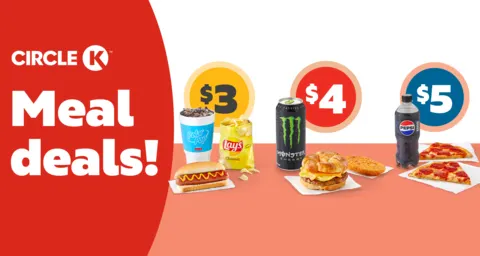
Enter Couche-Tard’s value deals, which have become the face of its Fresh Food, Fast program.
Launched in September 2024, these include three options — priced at $3, $4 and $5 — that feature a meal and drink. For example, for $3, customers can buy a Taquito with a 2-ounce bag of Frito-Lay chips and a Pepsi. For $5, that bumps to two slices of pizza with a 20-ounce Pepsi.
At the end of 2025, Miller told investors that Couche-Tard sold over 10 million meal bundles across its global store network in the program’s first year, including over 1 million weekly sales in North America.
During the investor call earlier this month, Warner emphasized that Couche-Tard has “gone all-in across all of our geographies on meal deals.”
Couche-Tard’s value deals have become the face of its Fresh Food, Fast program.
“This now allows us to innovate, to pilot different things that we're doing,” Warner said.
Besides its meal deals, Couche-Tard has also focused on hero items in its Fresh Food, Fast program. These are a couple products that retailers are either known for — such as Casey’s with pizza — or highlight to drive traffic. For instance, in Warner’s home base of North Carolina, Couche-Tard’s hero items are spicy chicken sandwiches, hot dogs and fresh-baked cookies.
During the 18-month period, Couche-Tard’s hero item availability has increased over 1,800 basis points in North America, according to the presentation.
“We looked at our heroes and made sure that these were the focus of our menu and the focus of what we were selling, and made sure we had those heroes available at the times of day that our customers wanted to buy,” Warner said.
The reset has been so successful that Couche-Tard recently set a goal to grow food revenues at four times the pace of merchandise revenues in the U.S., Warner said. While she acknowledged that not all new rollouts will be successful, Couche-Tard’s multiple business units allow the company to experiment to see what its customers like and dislike, which helps determine what it then chooses to scale.
“We believe that we have the winning formula,” Warner said.
Article top image credit: Retrieved from Couche-Tard.
How c-stores are innovating in foodservice
Convenience stores have historically had the upper hand in value over restaurants, and the industry is honing in on that advantage with a plethora of meal deals. Major chains like Wawa and Sheetz are known for their food programs, and now smaller operators are launching entirely new menus or in-store restaurants to innovate.
included in this trendline
4 tech upgrades that can drive foodservice sales
How to build a top-tier beverage program
Florida c-store chain to test kitchen robots
Our Trendlines go deep on the biggest trends. These special reports, produced by our team of award-winning journalists, help business leaders understand how their industries are changing.