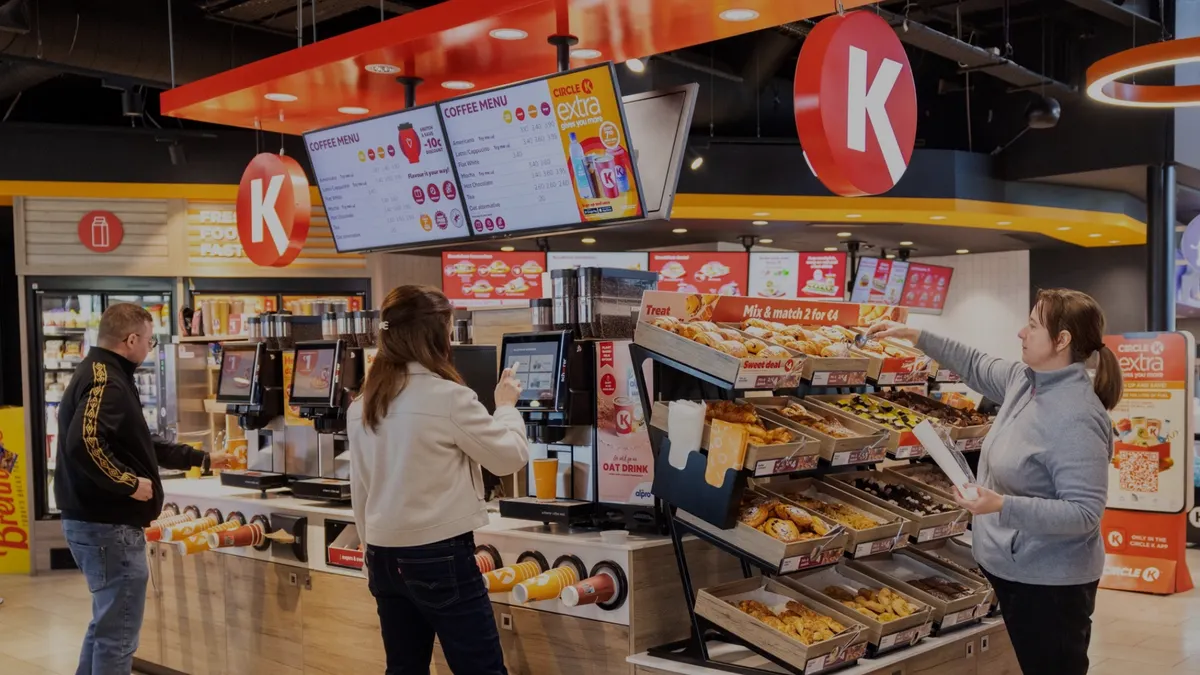
Alimentation Couche-Tard’s pursuit of a first-rate c-store foodservice program began when the Canadian retailer acquired Holiday Stationstores in 2017. Although the deal significantly increased Couche-Tard’s store count in the U.S., the company later said that Holiday’s food capabilities — notably its breakfast fare and sandwiches — were the driving force behind the acquisition.
In early 2020, Couche-Tard revealed that it was piloting a new foodservice offering that was heavily based on Holiday’s food program. That July, former President and CEO Brian Hannasch introduced the program as Fresh Food, Fast, and told investors Couche-Tard aimed to bring the offering to 1,500 Circle K stores in the U.S. by the end of that calendar year.
The company hit that goal by November, with Hannasch at the time calling Fresh Food, Fast “the biggest project ever undertaken by Couche-Tard.” Hannasch also touted plans to bring the program to another 3,000 locations by the end of fiscal 2021.
The goals sounded ambitious, but the company was able to support that rapid growth. Which may explain why Couche-Tard only having Fresh Food, Fast in about 6,000 stores globally in 2026 feels underwhelming for the nation’s second-largest convenience retailer.
During the company’s annual investor meeting on Feb. 11, leadership admitted that Fresh Food, Fast hit a wall in its North America business over the past couple of years — and that a pivot was needed.
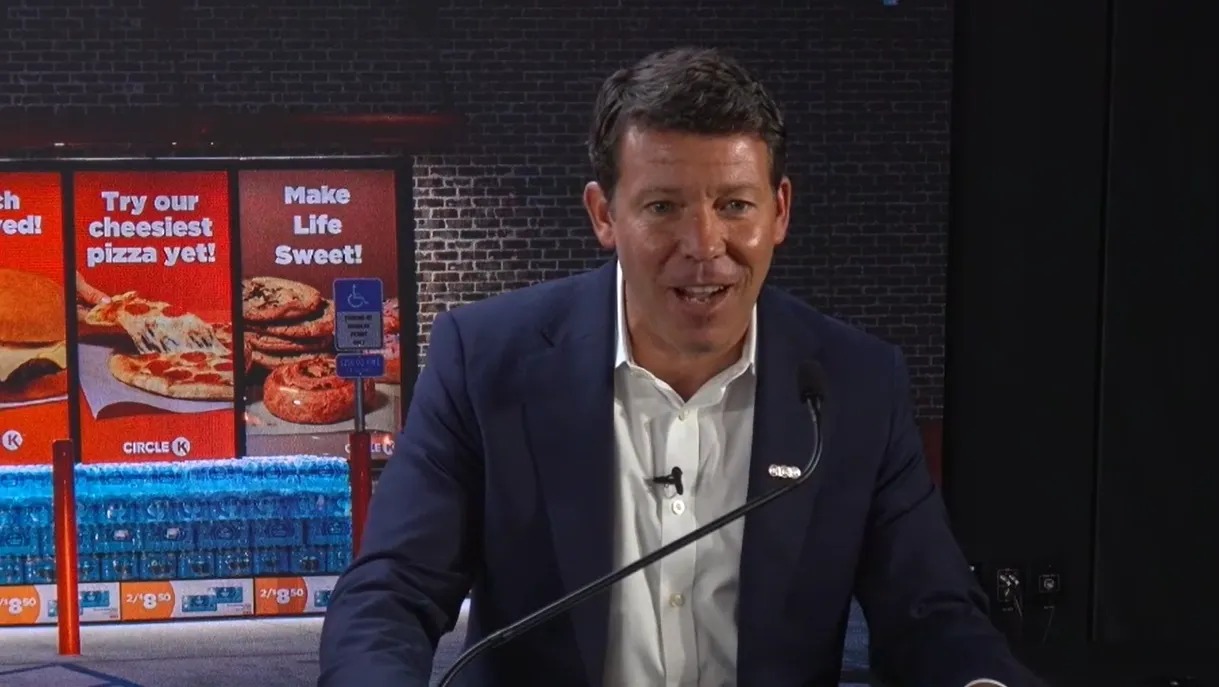
“When we first rolled out our food program, it was too complex,” President and CEO Alex Miller said during the meeting. “It had too many SKUs. The processes weren't tight enough.”
For the past 18 months, Couche-Tard has been in the thick of what Miller called a “reset” for its foodservice program in North America, in which it reduced the number of menu items and tightened its processes. Thanks to those and other adjustments, Couche-Tard’s food penetration is up 72 basis points in the past year as a percentage of revenue, according to the company’s investor presentation.
“We have learned from our mistakes… and we’re in action now,” Miller said.
Sell what customers want
At the start of the reset, Couche-Tard’s foodservice programs in Europe were performing to expectations. This led the company to examine why its offerings in North America weren’t hitting the mark, Louise Warner, executive vice president of North America operations and global commercial optimization, said during the presentation.
To start, Warner said, Couche-Tard needed to meet the needs of customers in different communities in North America, especially the U.S.
“We also know from our experience in retail across many decades that this is not something that is exactly the same in all of our geographies,” Warner said. “We know that we need to tailor our offers and our operations to our local markets.”
Couche-Tard began segmenting its customer base into groups based on how often they purchase its food. It then tailored new food offerings to existing food shoppers as well as regular in-store shoppers, compared to forecourt customers or new guests.
“We have potential food customers all the way around us, but we wanted to make sure that we were successful in the customer groups that were easiest, or the most likely food customers for us,” Warner said.
“We realized that we were trying to sell products to our customers that they didn't actually want to buy."

Louise Warner
EVP of North America operations and global commercial optimization, Alimentation Couche-Tard
Couche-Tard committed to improving in four key areas: operational execution, more targeted menus and deals, innovation and better control of its food supply chain. Over the past 18 months, it has reduced its SKUs by 50% and dropped spoilage by 230 basis points, according to the presentation.
The company also made sure it began offering its customers food that they desired — which hadn’t always been the case.
“We realized that we were trying to sell products to our customers that they didn't actually want to buy,” Warner said.
The winning formula
Enter Couche-Tard’s value deals, which have become the face of its Fresh Food, Fast program over the past 18 months.
Launched in September 2024, these include three options — priced at $3, $4 and $5 — that feature a meal and drink. For example, for $3, customers can buy a Taquito with a 2-ounce bag of Frito-Lay chips and a Pepsi. For $5, that bumps to two slices of pizza with a 20-ounce Pepsi.
At the end of 2025, Miller told investors that Couche-Tard sold over 10 million meal bundles across its global store network in the program’s first year, including over 1 million weekly sales in North America.
During the investor call earlier this month, Warner emphasized that Couche-Tard has “gone all-in across all of our geographies on meal deals.”
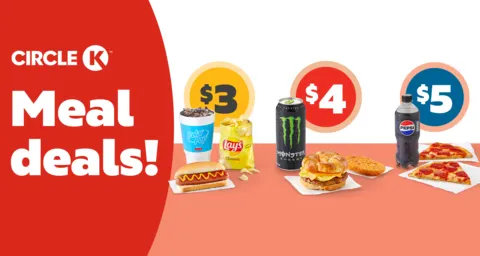
“This now allows us to innovate, to pilot different things that we're doing,” Warner said.
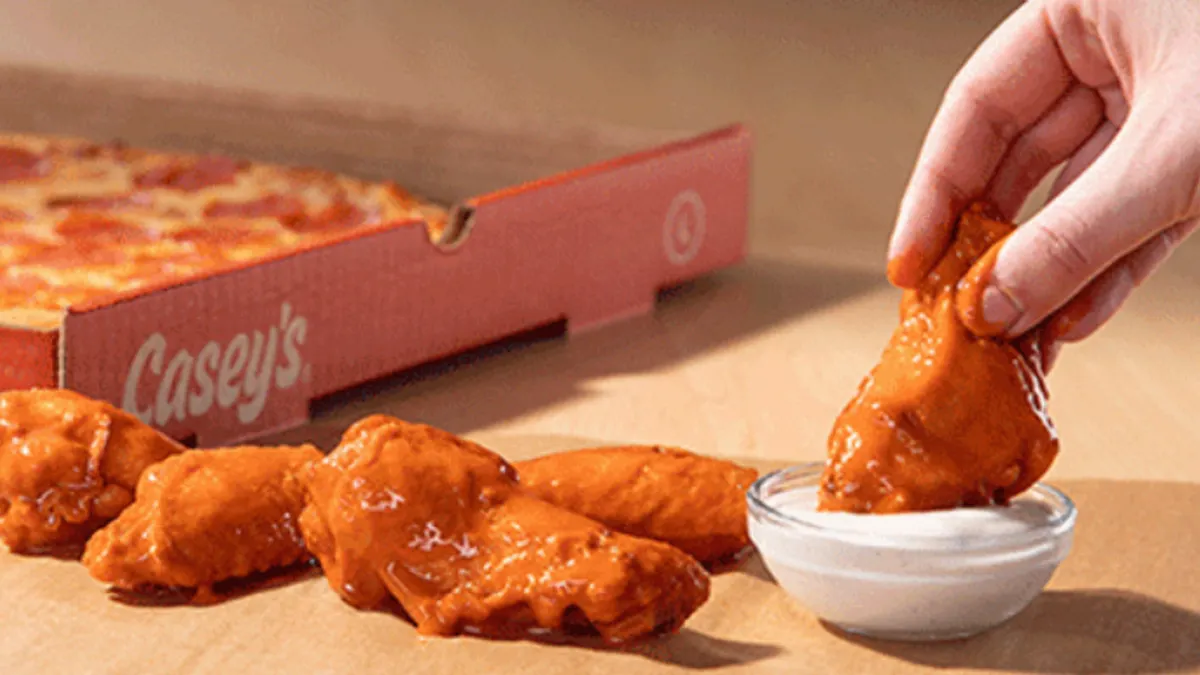
Besides its meal deals, Couche-Tard has also focused on hero items in its Fresh Food, Fast program. These are a couple products that retailers are either known for — such as Casey’s with pizza — or highlight to drive traffic. For instance, in Warner’s home base of North Carolina, Couche-Tard’s hero items are spicy chicken sandwiches, hot dogs and fresh-baked cookies.
In the past 18 months, Couche-Tard’s hero item availability has increased over 1,800 basis points in North America, according to the presentation.
“We looked at our heroes and made sure that these were the focus of our menu and the focus of what we were selling, and made sure we had those heroes available at the times of day that our customers wanted to buy,” Warner said.
The reset has been so successful that Couche-Tard recently set a goal to grow food revenues at four times the pace of merchandise revenues in the U.S., Warner said. While she acknowledged that not all new rollouts will be successful, Couche-Tard’s multiple business units allow the company to experiment to see what its customers like and dislike, which helps determine what it then chooses to scale.
“We believe that we have the winning formula,” Warner said.