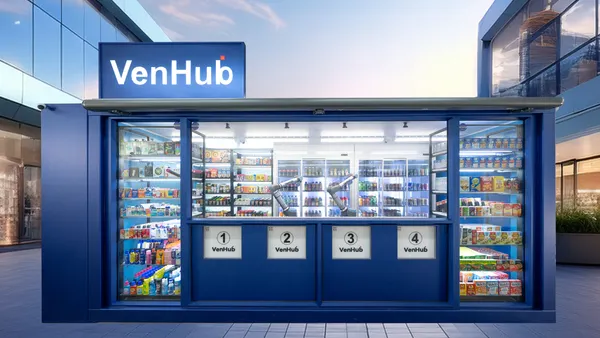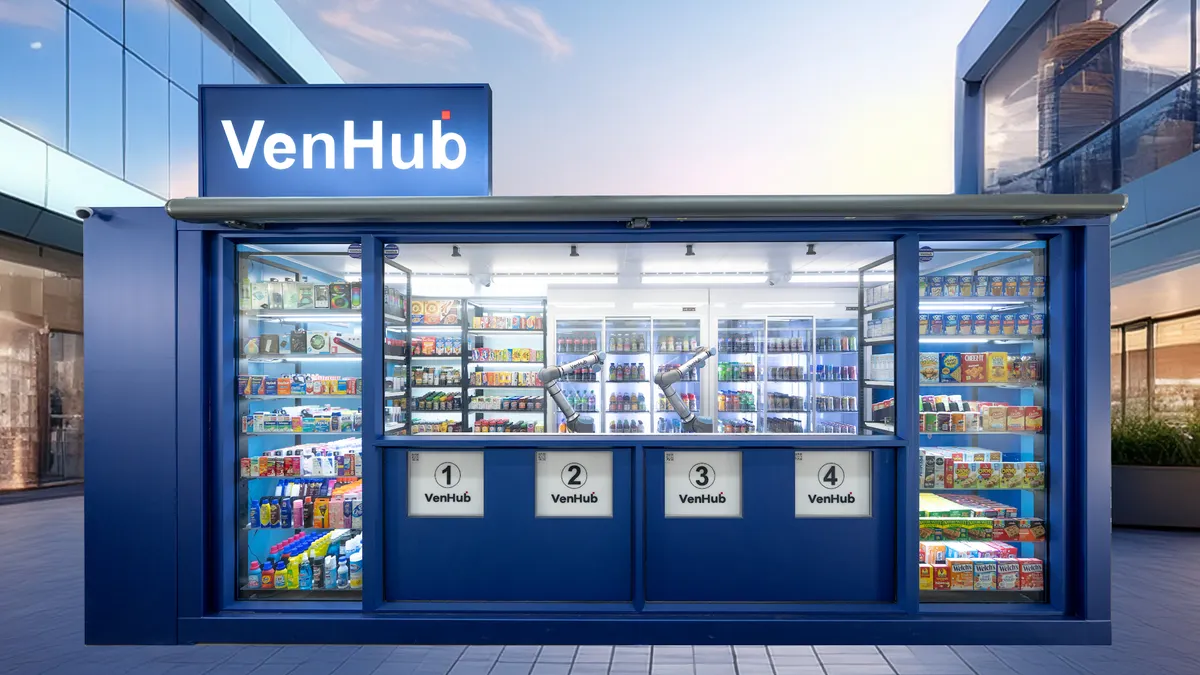
No retail technology company has had a more explosive start to 2026 than VenHub, the developer and manufacturer of fully autonomous, unattended convenience stores.
Since January — about three years after announcing its concept, in which customers order through a mobile app and AI-powered robots do the shopping — VenHub has gone public on the Nasdaq, hired execs from BP and Amazon and launched multiple AI-driven systems to enhance its store model.
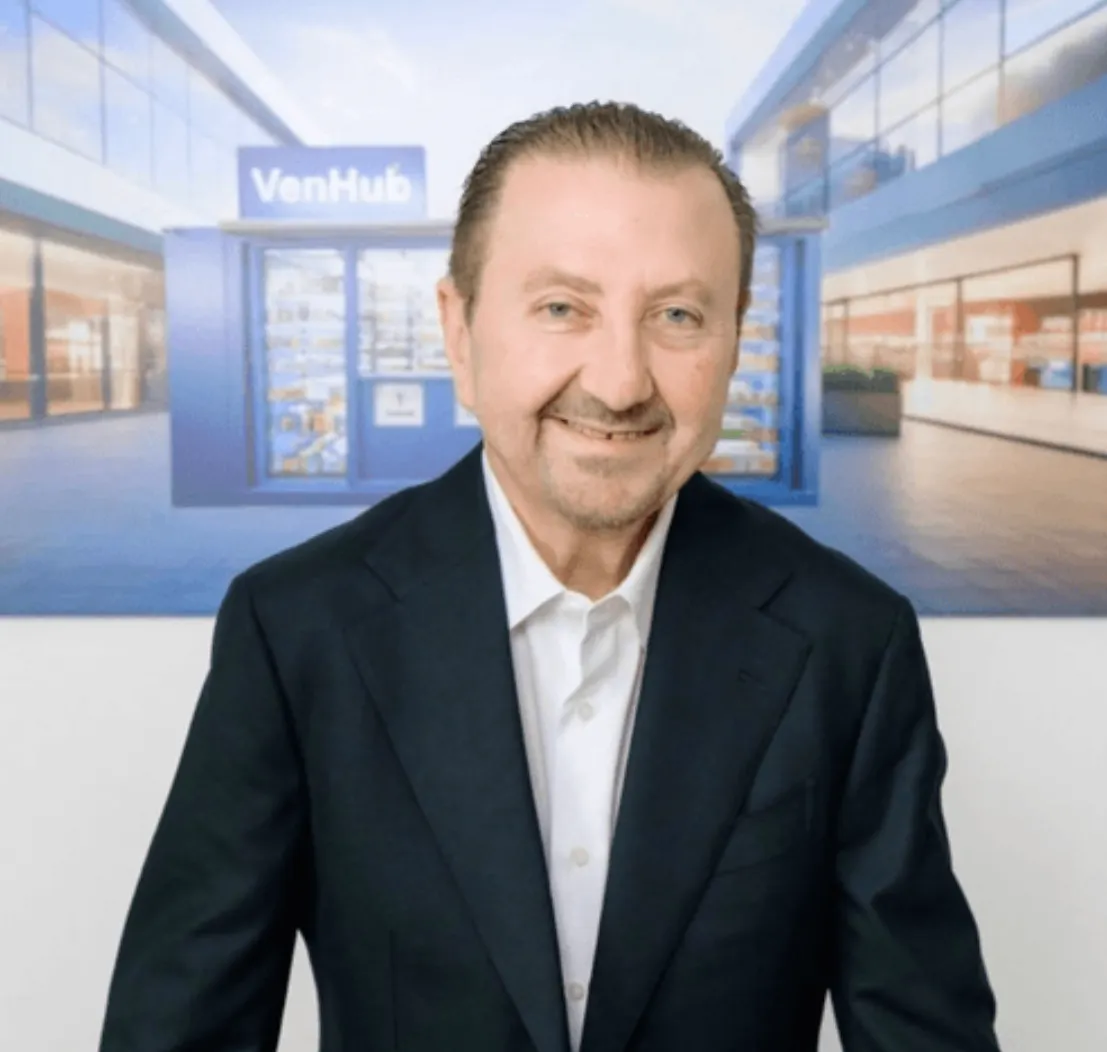
When it went public, Founder and CEO Shahan Ohanessian touted plans for VenHub to scale both its number of locations and types of technology. VenHub, he said, can both operate its own stores and sell them to existing retailers.
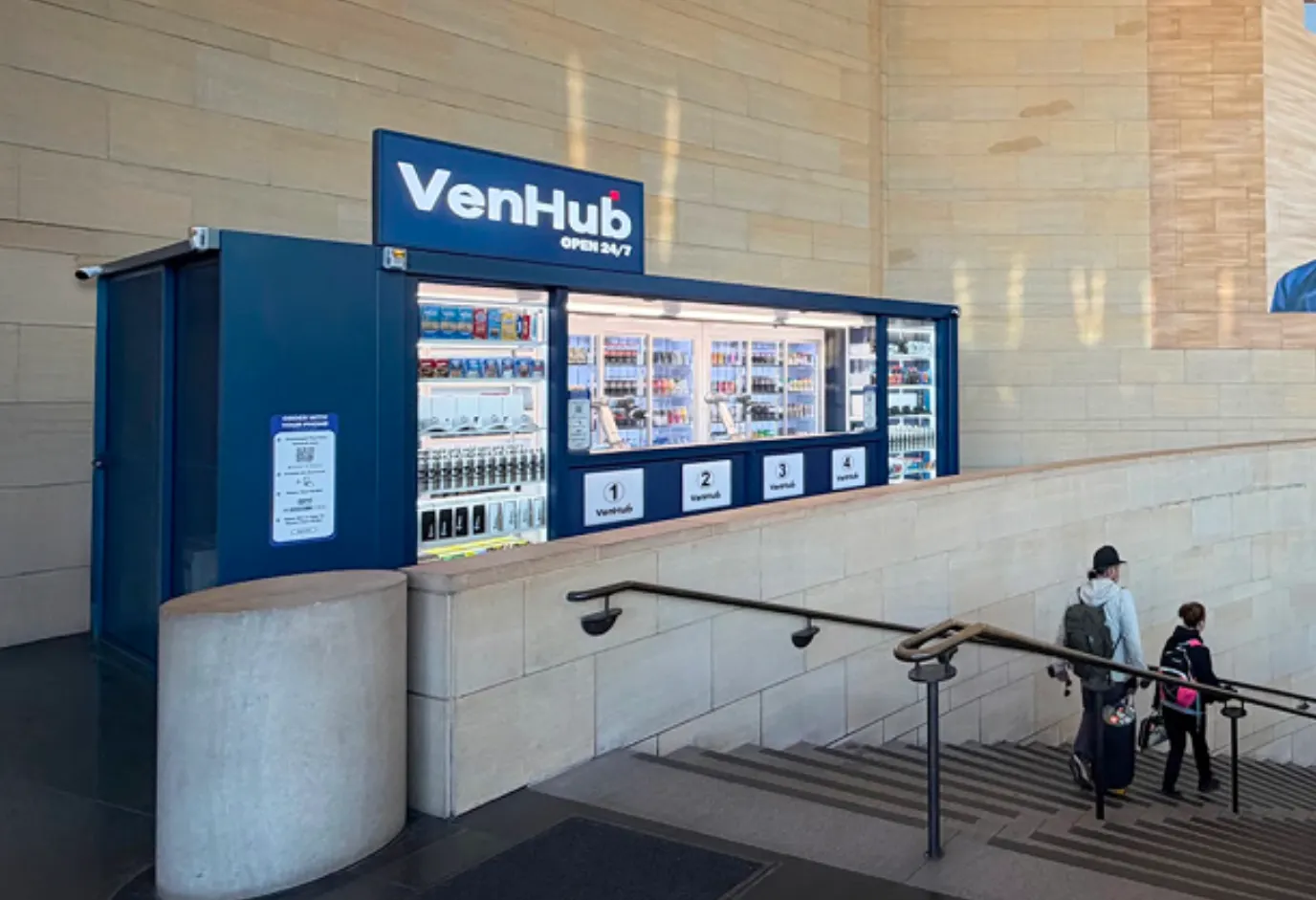
VenHub, which currently has five 24-hour c-stores in the Los Angeles area, appears set on spreading its footprint quickly.
“We expect well in the hundreds [of locations] sometime early next year, and our pre-order log is well over 1,000,” Ohanessian said in an interview.
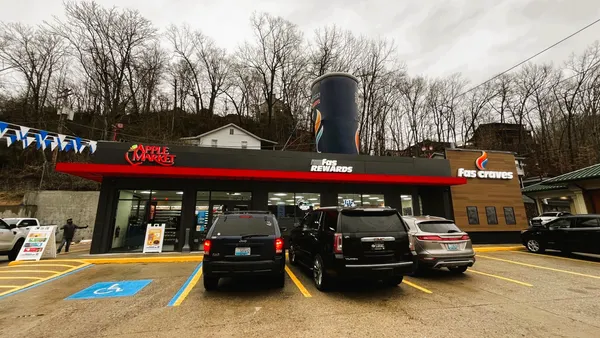
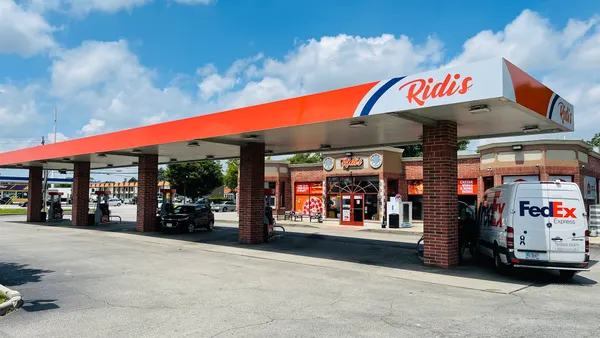
This staggering goal is hard to square with the chilly reception that automated checkout and next-generation c-stores have gotten in convenience retailing. Popular operators such as Wawa, QuikTrip and RaceTrac have struggled to keep fuel-less c-stores up and running, and most recently, Amazon Go — the face of frictionless c-stores over the past decade — ceased operations. Tech vendors like Grabango have tried to convince c-stores to automate their checkout setups with little success, although VenHub’s completely unmanned approach appears to take a different approach.
Whether or not VenHub can differentiate itself from its competitors and capitalize on its lofty growth plans remains to be seen. But the company, at least for now, is confident in its ability to do so. C-Store Dive sat down with Ohanessian to discuss VenHub’s aspirations and its future.
This interview has been edited for length and clarity.
C-Store Dive: Take me back to the starting point with VenHub and why you were interested in the convenience retail world to begin with.
OHANESSIAN: I saw where a lot of the retailers were having a lot of issues and challenges. So in 2020 I came to my team and I said, ‘Look, we've got smart cars, we've got smart homes, we've got smartphones, but we don't have smart retail, and retail is suffering more than any other industry.’ And they asked me, what do you have in mind?
I wanted a store that’s super customer friendly, smart but fast, safe and secure for the operator and for the consumer, open 24 hours a day, easily installed, [and] remotely managed — so no employees. I wanted it to be low cost to buy, I wanted it to have a high profit margin and I wanted to be in every vertical. That’s how the journey started.
So you have five locations right now — as you are getting this growth plan kick-started, is there a certain number of public-facing stores that you're shooting for? Maybe by the end of this year, or within the next five years?
OHANESSIAN: The initial goals were [to] get five boots on the ground, learn from it, then we get another five boots on the ground [and] continue learning from it. Then we go to 20, and then 20 to 100. That's what our plans are for this year. We will announce our numbers at our shareholder meetings, but those were the plans from day one.
What's the financial investment for rolling out one store?
OHANESSIAN: It costs us about $150,000 to build a store out, and we sell it for $275,000 to $300,000, so we're profitable from day one from the sale of the store. And then we have a SaaS [software as a service] fee, so we charge the SaaS fee for the operator, and then we charge a maintenance fee, and we have absolutely no revenue share with our store operators.
So you build the stores, you develop them, you sell them, and then in some cases, you continue to operate them, even though you're not the owner. Is that correct?
OHANESSIAN: That is correct.
A lot of convenience operators that have sites without fuel are struggling to stay open. Obviously VenHub is a totally different concept than a traditional convenience store, but at the end of the day, we're still seeing that the main driver to convenience stores is for people to fill up on gas. What do you think when you hear that?
OHANESSIAN: We clearly understand the c-store standing alone on its own without either VenHub support or other traffic support is a struggle. But [we’re] also understanding that c-stores truly don't know what their consumers want and need.
Let's just say you're running your own VenHub store, and you're loading up both brand A and B. The store will tell you next week, ‘stop getting me brand B, I'm only selling brand A. And by the way, customers are requesting brand C.’ The store will start giving you an understanding of what you should be filling up on inside the store, instead of you having to guess and having not only to deal with shrinkage but also spoilage.
What are you trying to eventually do with these stores from a technological standpoint that you are not already doing?
OHANESSIAN: Our AI system has become so smart, it's incredible, but we're making it smarter. We own our own source code, software and machine learning processes. One of the things that we're working on is having the store restock itself versus somebody inside going in and restocking.
That just kind of rattles my brain. How is that even possible?
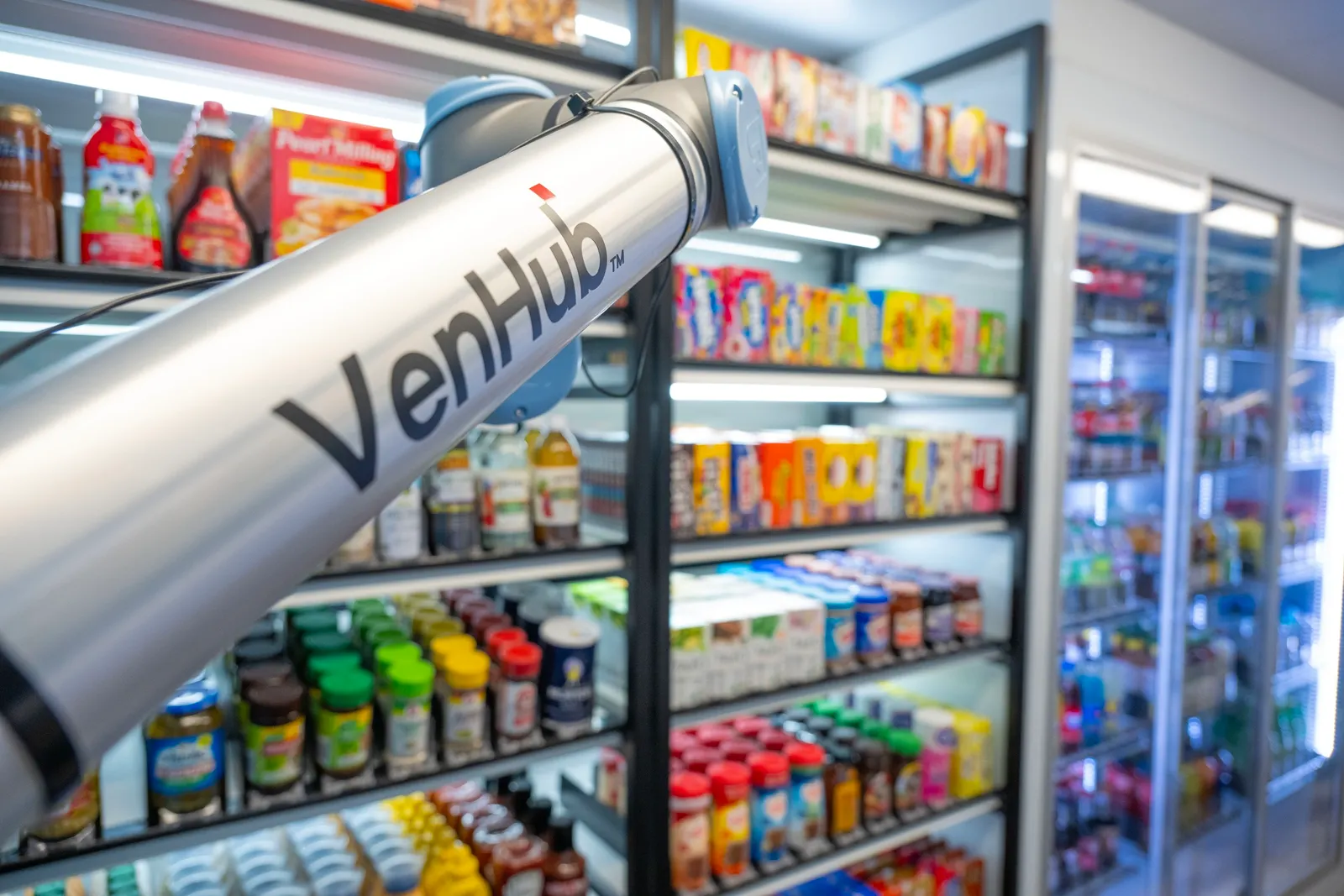
OHANESSIAN: The robots' names are Barb and Peter. Barb knows what a Coke looks like, and if she picks up a coke from the shelf, then we can put the box in the delivery window. Barb can open the box and say, ‘Oh, this is a Coke. Let me put it on the Coke shelf,’ versus somebody physically having to go do it.
So you still need a person to bring the product to the VenHub site. It would just be Barb taking it out of the box and putting it in that respective spot on the shelves. Is that correct?
OHANESSIAN: Correct, on the short term vision. The longer vision is, can we then engage autonomous fulfillment vehicles.
It sounds like you are open to extending VenHub to outside of unmanned convenience stores — you said lockers and other types of setups where the technology is used. Is that right?
OHANESSIAN: That is absolutely correct. We're also looking at a mobile version… it would be autonomous, [with] you sitting at home ordering something from VenHub, the store can come to you and give you the products that you want, versus you having to go to the store.
You mentioned that a lot of independent c-store operators are showing interest [in buying a VenHub store]. Any interest from bigger c-store operators?
OHANESSIAN: As many [inquiries] that we have for the consumer [division], which is the smaller operators, the enterprise division demand and requests is substantially even higher. They have the same pain point, except it’s times 100 or 1,000.