
For c-store leaders looking to grow food and foodservice, there is a developing trend in grocery retail that translates well into convenience. Global foods, when offered strategically, are a clear cut winner.
Global foods include both imported products and domestic items inspired by international cuisines. So, for example, this would include both a jar of kimchi imported from Seoul, as well as a ready-to-eat Korean barbecue product manufactured domestically or fresh prepared onsite.
In a recent webinar for the International Dairy Deli Bakery Association (IDDBA), Nick Lenzi, Senior Vice President of Marketing at Lipari Foods, shared data that underscores the global foods trend and the opportunity for convenience. He noted that retail food growth has remained mostly flat in recent years. However at the same time, 82% of category growth has come from global foods.
Global foods leading the way
According to Lenzi, two global food segments stand out in terms of category growth over the past few years. Mexican, Central and South American products taken together represent a $16 billion market. They are growing at 6 to 8% over a three-year period. And Middle Eastern and Mediterranean products are growing at 7 to 11% year over year.
The common thread in their popularity? These cuisines benefit from long-term demographic trends in the U.S. as well as strong consumer perception around health and freshness.
Winning on the perimeter
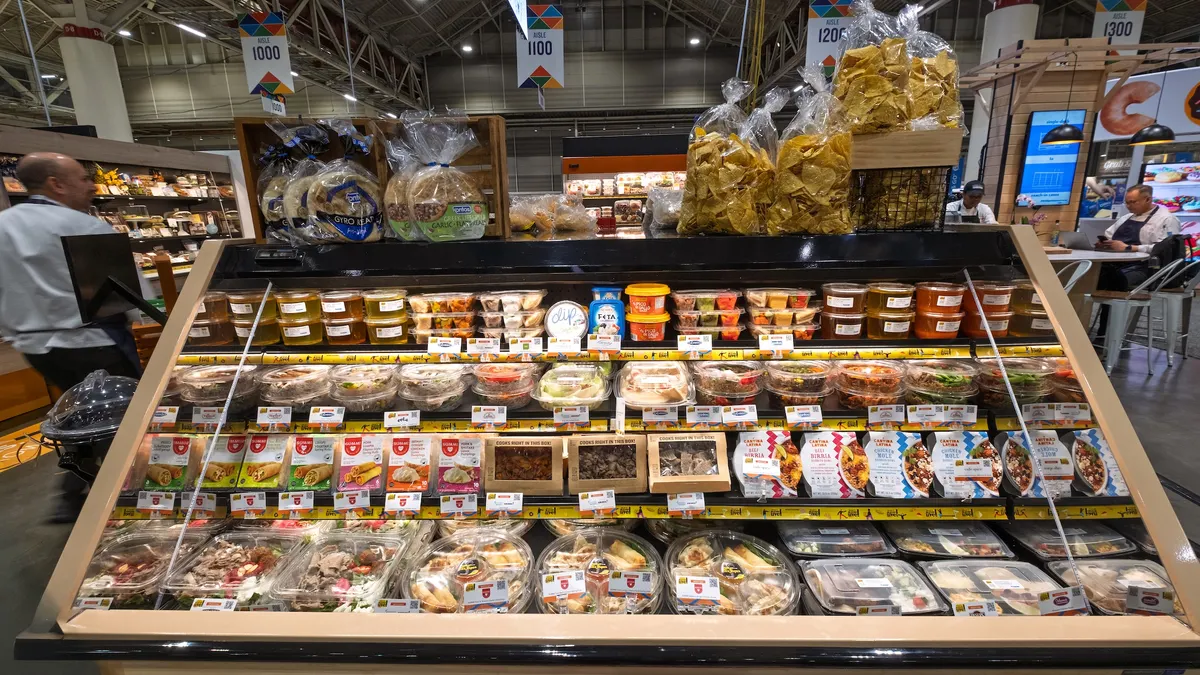
These segments perform well throughout the store, but the strongest performance is often on the perimeter with the refrigerated and perishable categories. Items such as yogurt drinks, specialty cheeses, breads and prepared foods are driving higher turns than shelf-stable grocery.
Lenzi shared that in one test, a six-foot refrigerated Middle Eastern set with 37 SKUs generated nearly 60% of category sales while outperforming 20 feet of dry grocery. He explained that the short shelf life led to repeat purchases, supporting both frequency and basket growth.
Focus on demographics, seasonal shifts
Demographic trends in the U.S. also support long-term growth in global foods. By 2028, between 21% and 26% of the U.S. population is expected to identify as Hispanic. And states including California, Michigan, New York, Texas and Florida have significant Middle Eastern populations. In fact, southeast Michigan represents one of the largest Arab populations outside the Middle East. Operators who understand these demographic trends and how they are reflected in their own areas can align their assortment of global foods with specific customer demand.
Additionally, Lenzi noted that there is a great opportunity to capture demand with shifts based on seasonality and cultural moments. For instance, during Ramadan, sales of Middle Eastern products increased 35% over a recent three-year period across major retail channels. That demand centers on dairy, bakery, nuts, dried fruits and protein items. Preparation and timing of shifts is critical to capturing this lift.
Global (and premium)
Growth in global foods is also driven by premium attributes. Products positioned around function and lifestyle are outperforming conventional items. “Items that have better for you concepts are commanding a bigger share of people's dollars,” said Lenzi.
As an example, digestive health products, including prebiotic and probiotic items, are up more than 17% year over year. Clean label, organic and sustainability-focused products are up nearly 14%. Gluten-free and plant-based items continue to post strong gains across multiple global segments.
These attributes align with younger consumers. Millennials and Gen Z shoppers are open to new flavors. They also prioritize products that are high in protein, nutrient dense and responsibly sourced. In other words, global food is not only an ethnic category, it is a quality-driven category that aligns with broader consumer values.
Drive growth with global foods
Global foods have outgrown niche category status. They are becoming a differentiator and currently represent one of the most consistent sources of growth in food retail. “When you look at volume growth and you look at the percentage growth over the last couple of years, recognize that 82% of any growth (that retail food) experienced is coming from global brands. Recognize that this is a very important space, “ said Lenzi.
Global foods are a clear opportunity for convenience retailers, especially those seeking to strengthen or build fresh and prepared programs. However, success requires a complete approach. Operators should integrate global products across ambient, refrigerated and frozen sets. Adding in fresh-prepared offerings can further strengthen guest frequency.
C-store operators who strategically shift assortments, emphasize premium attributes and execute across the perimeter can convert this demand into sustained sales growth.
More resources at IDDBA.ORG
To watch the full webinar, Capitalizing on the Growth of Global Foods and to access other resources that will help you accelerate growth in Foodservice and Merchandised Food, visit iddba.org. There, you will also find information on IDDBA membership and its benefits, including discounted admission to IDDBA 2026–the association’s annual show that hosts over 10,000 professionals connected to the retail food industry.