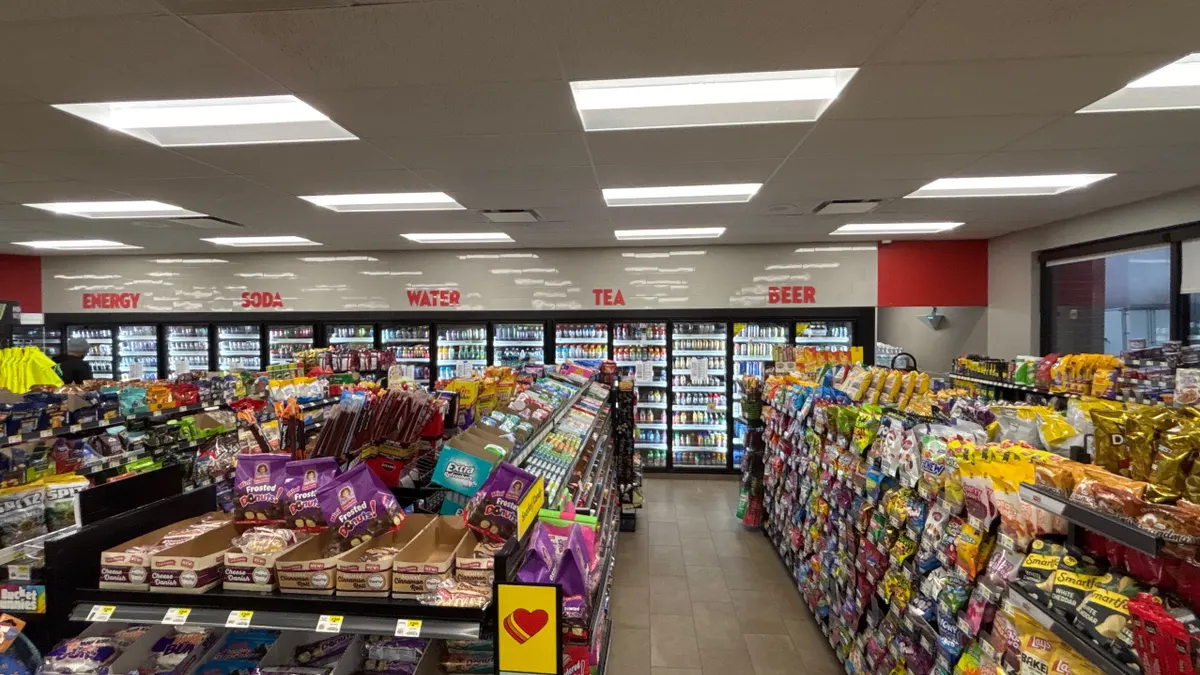

Staff is one of the most valuable and limited resources for C-store operators. With average turnover rates over 100%, you need to keep great employees focused on customer service, food service, and transactions. Asking employees to set and reset merchandising displays stretches staff too thin and risks incorrect setups.
“Retailers shouldn’t have to choose between serving customers and executing merchandising programs,” said Alan Chafin, vice president of operations at Merchandising Services Company (MSCO), a third-party merchandising solution partner for convenience stores.
A merchandising partner can help expedite setups or resets without adding staff, in time to maximize the hottest-selling season of the year—the 100 Days of Summer. Choosing the right merchandising partner helps you reset in a shorter timeframe while staying in compliance, and you don’t have to rely on store personnel to do it.
Achieve efficient resets with short staff
The clock has already started counting down to Labor Day, and you don’t have time to waste resetting displays. Finding reliable staff is one of the biggest challenges convenience retailers face today, with operators reporting more than 60% turnover in the first half of the year alone. Every hour staff spends resetting is an hour they are not focused on serving customers.
“Stores are trying to get more for less; they want more sales with less labor hours, so their operations are stressed to their max, just trying to run the stores and keep sales up,” said Chafin. “Adding merchandising execution to that workload often creates inconsistencies.”
When you work with a merchandising partner, you don’t need to hire more staff or distract your existing team to execute resets during the most important selling season of the year. A partner that can provide end-to-end solutions ensures your store is within planogram compliance and optimizes shelf space to boost sales and elevate the consumer’s shopping experience.
“When you use a third-party reset team, you typically have better results with compliance, and completion within the timeframe the operations teams need it in,” said Mike Buschelmann, president and owner of MSCO. “There is also cost savings. It is cheaper to use a third-party partner than store personnel.”
Set and reset displays with confidence
You’ve seen customers who walk into a store, discover the product they want is out of stock, and turn around and walk out the door. Every empty shelf or poorly set merchandising display translates into lost revenue.
“Manufacturers invest heavily in planogram design because placement matters. If products aren’t where shoppers expect them, sales suffer,” said Chafin. “Consistency across locations creates a better customer experience and stronger results for both retailers and suppliers.”
Research has shown that maintaining planogram compliance can increase sales by 7-8%, while poor merchandising can cause at least a 1% sales drop. In addition to lost customer sales, displays that don’t meet retailer or manufacturer contractual planogram obligations risk accruing penalties or missing rebates, co-op marketing funds and slotting fees.
“When a reset schedule is not put into place or you have the operations team at the store level implement it, there’s no way to check compliance with the planogram,” he said. “You want it completed fast and in compliance to get the sales lift.”
Boost sales of innovative items
Innovative products, such as energy drinks, snacks, and beverages tied to health benefits, often generate higher-margin sales than legacy brands. Whether consumers are making a planned purchase or an impulse buy, the faster you can complete a reset, the greater your chances of driving high-margin revenue growth.
“Shoppers want the newest thing and the newest taste, and you can’t sell that hottest item if it’s sitting in a warehouse,” Buschelmann said. “We’ve helped several clients complete their resets in as little as two weeks.”
C-store operators who can quickly introduce new products and adapt to changing customer preferences realize a faster sales lift and remain in compliance with manufacturer planograms.
“When you get the execution you want, you see 10-15% sales lifts and up to 20% fewer out-of-stocks on your highest velocity categories,” Buschelmann said. “Having a true partner who can provide strategic planning and precise execution, you gain an execution advantage your competitors don’t have.”
When you treat planogram execution as a strategy rather than a store-level task, you capture seasonal demand, strengthen supplier relationships and capitalize on changing consumer preferences without burdening overextended staff.