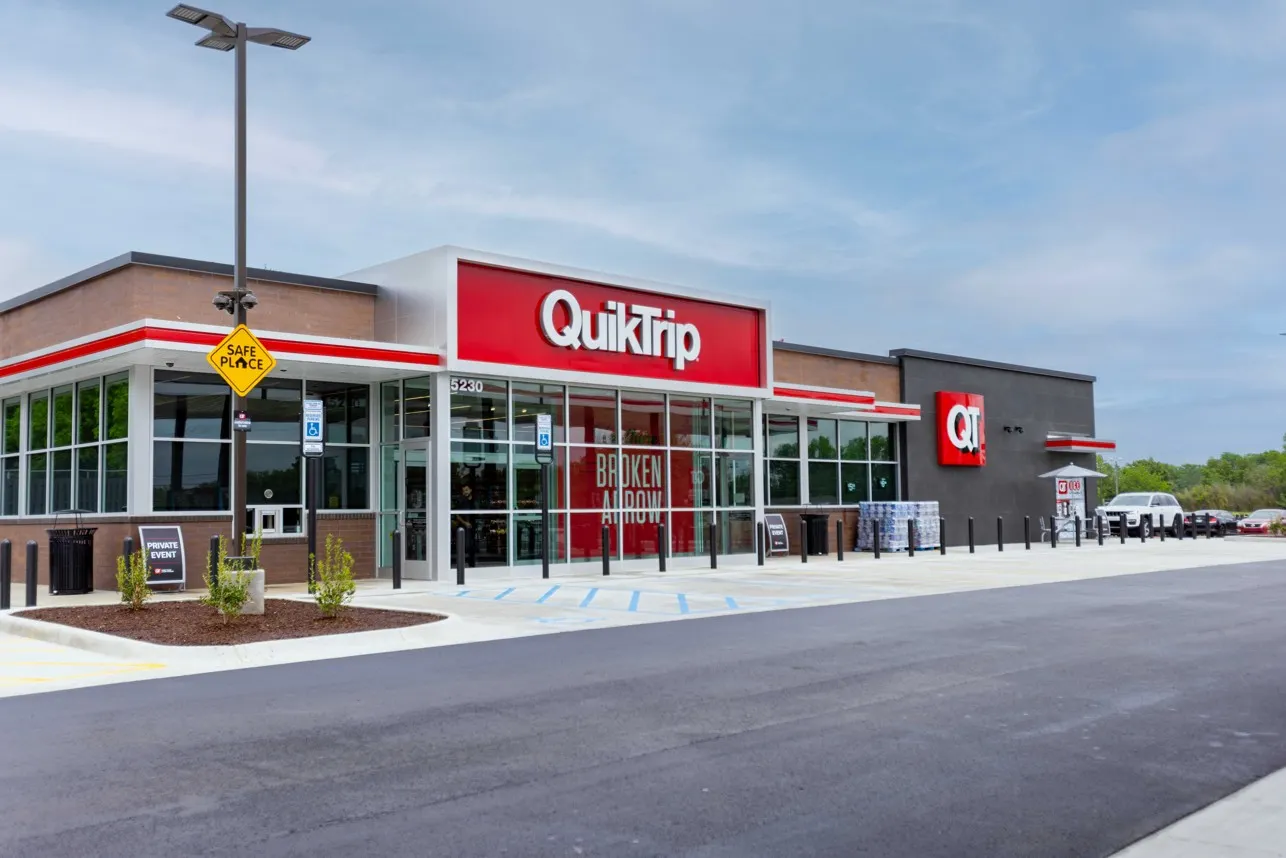
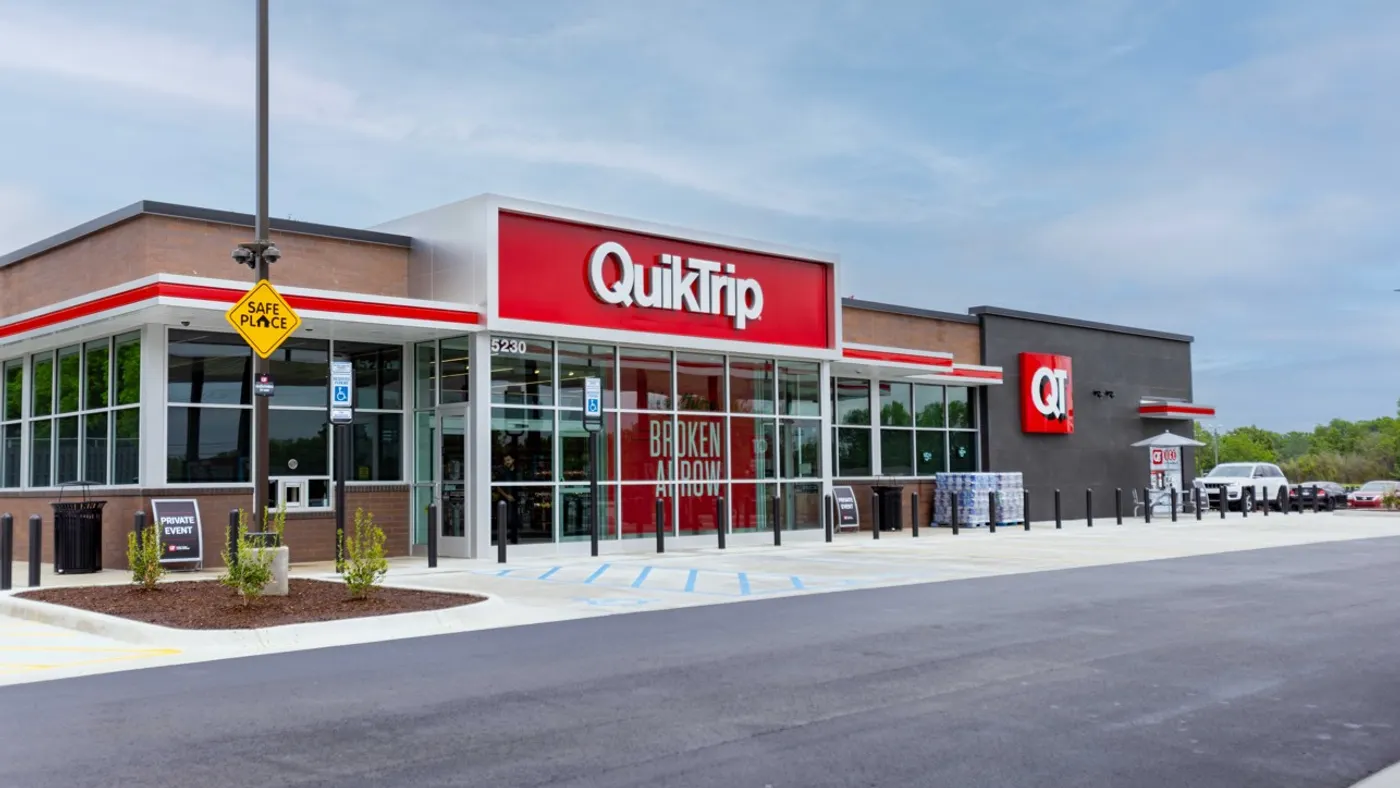
Here’s a look at the convenience retailer’s Generation 4 format that debuted last month in Broken Arrow, Oklahoma.
Convenience retailers of all sizes have spent the past few years exploring new ways to build and remodel their locations as a means to draw in more customers. Tulsa, Oklahoma-based QuikTrip has been a big part of this trend with the fast rollout of its remote travel centers. Now, the company has its sights set on another store format that marks the next evolution of its standard locations.
QuikTrip has launched the first set of its Generation 4 convenience stores near its home base in Tulsa, as well as in Wichita, Kansas, and Joplin, Missouri. Two more are set to debut this year in Tulsa and Crestwood, Missouri. Each new Gen 4 location creates about 24 new jobs, QuikTrip has said.
The 6,400-square-foot Gen 4 c-stores are about 1,000 square feet larger than a traditional QuikTrip.
Permission granted by QuikTrip
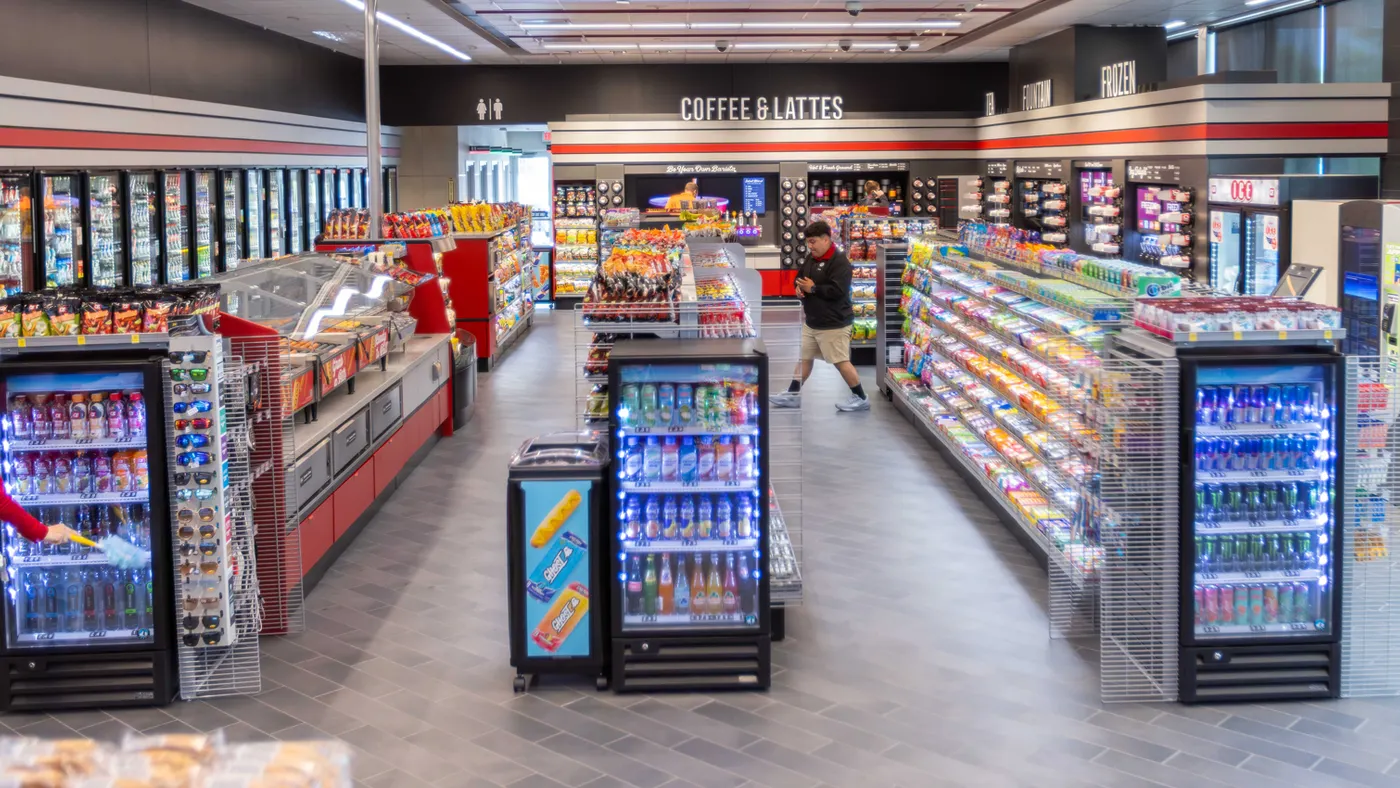
The 6,400-square-foot c-stores are about 1,000 square feet larger than a traditional QuikTrip — but still smaller than the 8,200-square-foot travel centers — and aim to give customers a smoother shopping layout and help employees work more efficiently.
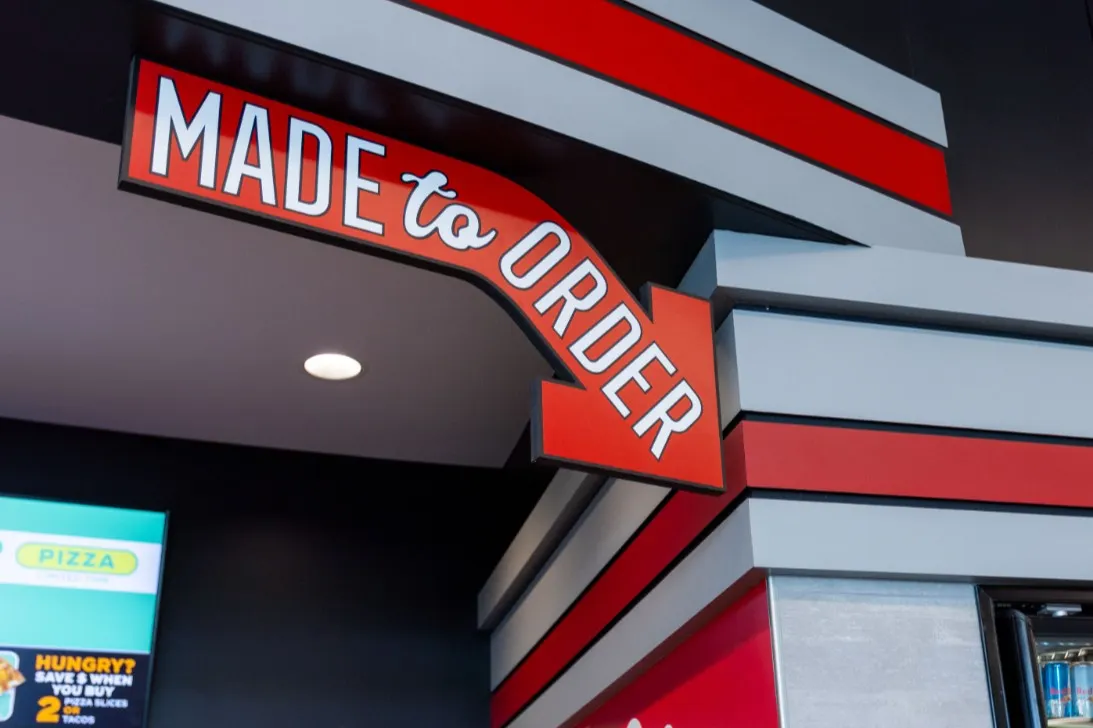
The store includes an expanded QT Kitchens foodservice program, featuring made-to-order and grab-and-go offerings.
Permission granted by QuikTrip
In an announcement for both the Wichita and Joplin stores, QuikTrip said it took three years to develop the Gen 4 concept, implementing feedback from customers as well as employees across operations, store development, food service and real estate.
“Gen 4 shows what happens when you design around the people who know our customers best and give them the tools to serve them even better,” QuikTrip Corporate Communications Manager Aisha Jefferson said in both announcements.
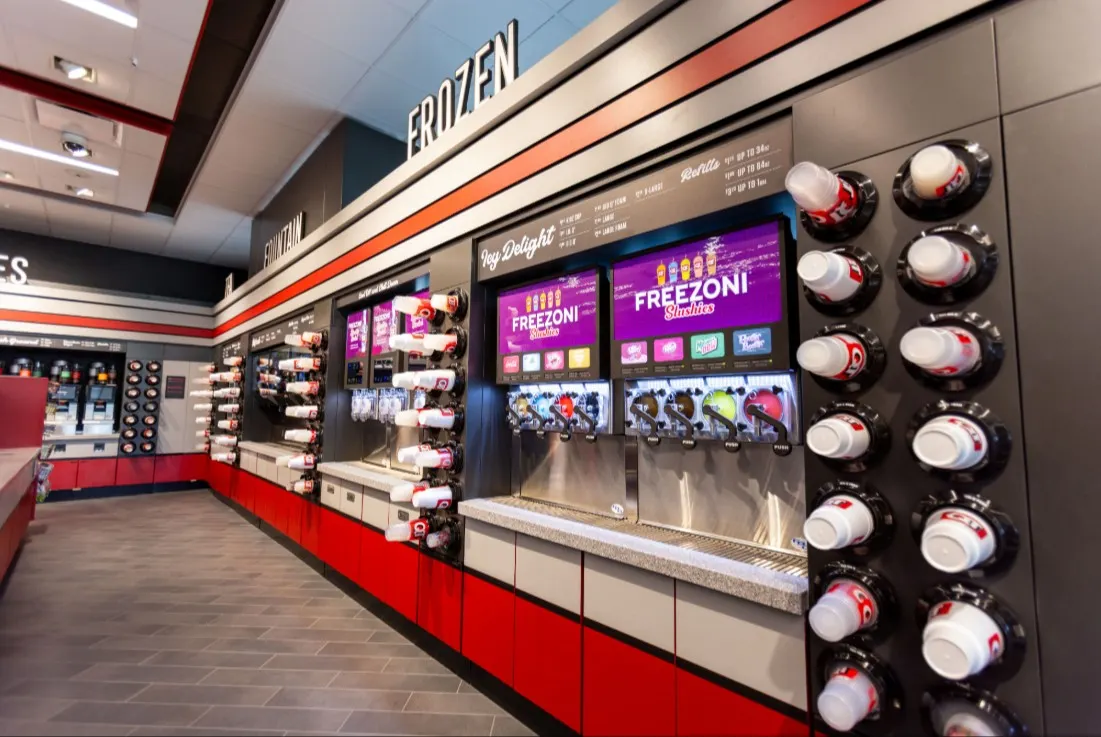
The frozen beverage section of QuikTrip’s Gen 4 store features several flavors for guests to customize their own drinks.
Permission granted by QuikTrip
The building features expanded storefront windows and a glass vestibule, which aim to create a brighter, more welcoming environment while improving temperature control and cleanliness. A spokesperson for the City of Crestwood confirmed back in January that location will also feature 12 gas pumps in the forecourt.
Once inside the store, customers can find an expanded QT Kitchens foodservice program, featuring made-to-order and grab-and-go offerings like burritos, pizza, sandwiches and frozen beverages.
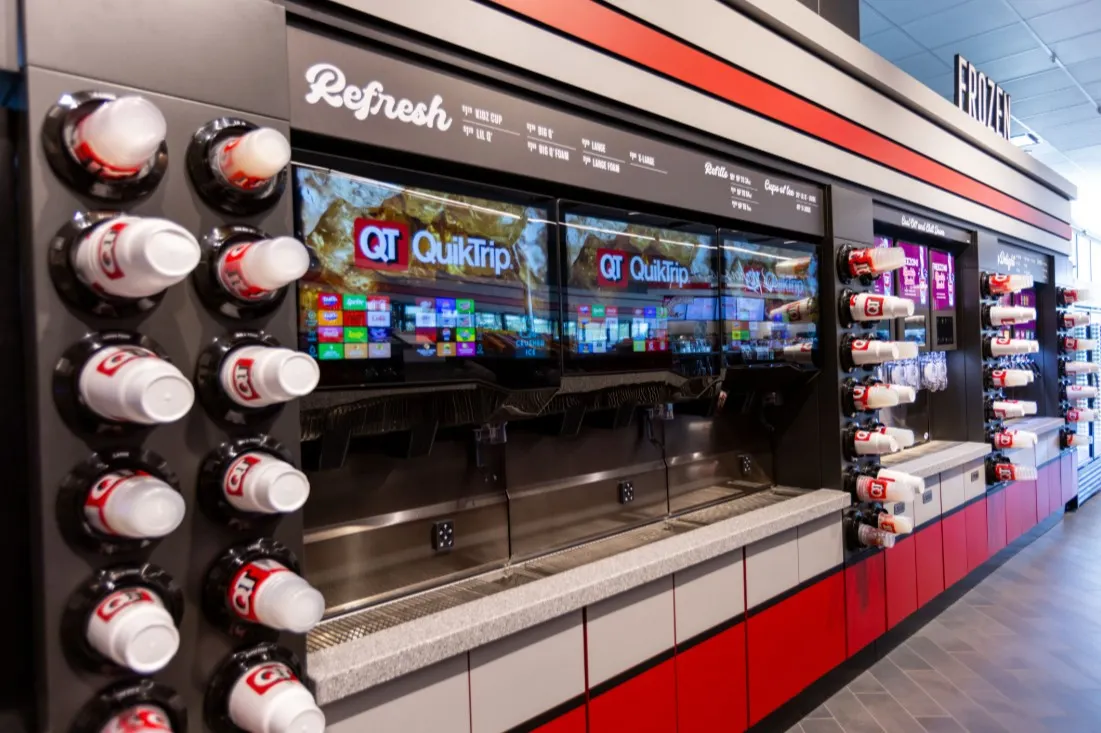
The dispensed drinks area features the revamped beverage program QuikTrip unveiled last summer in a bid to become a leader in beverage innovation.
Permission granted by QuikTrip
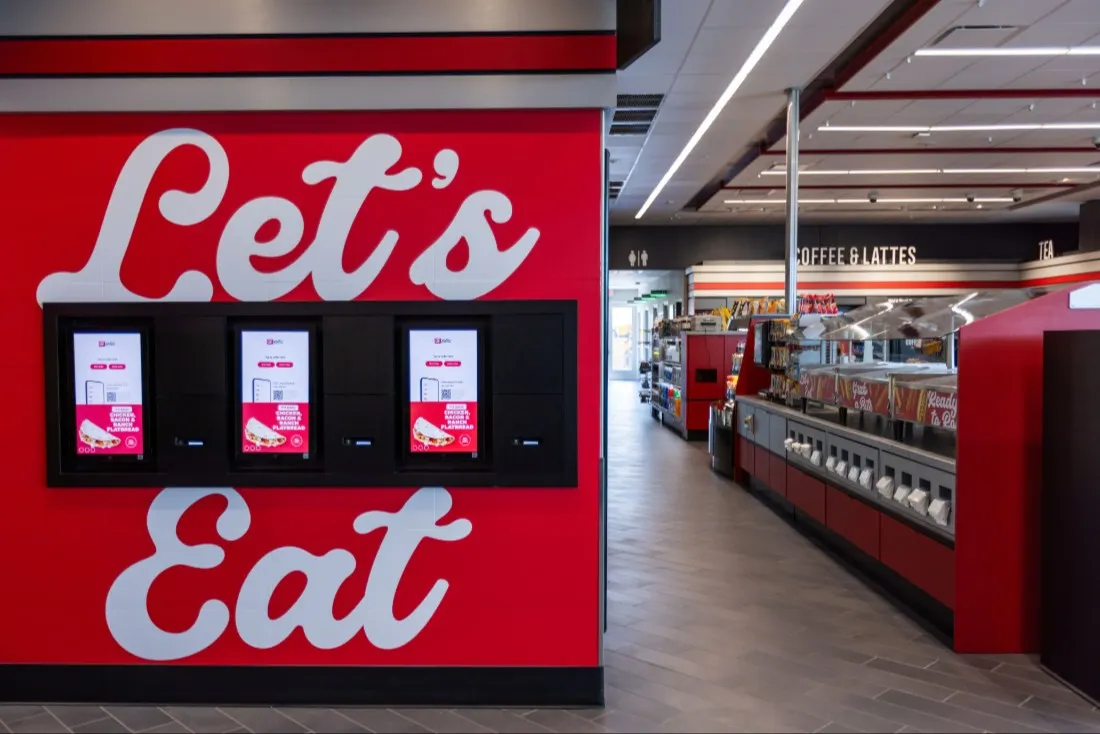
Back in January, QuikTrip’s spokesperson said the kitchen is twice the size of that of a standard location. There’s additional space for kiosk ordering and food pickup, as well as a dedicated waiting area that helps reduce congestion and improve flow during busy periods.
The dispensed drinks area features the revamped beverage program QuikTrip unveiled last summer in a bid to become a leader in beverage innovation.
QuikTrip’s Gen 4 store features additional space for kiosk ordering and food pickup.
Permission granted by QuikTrip
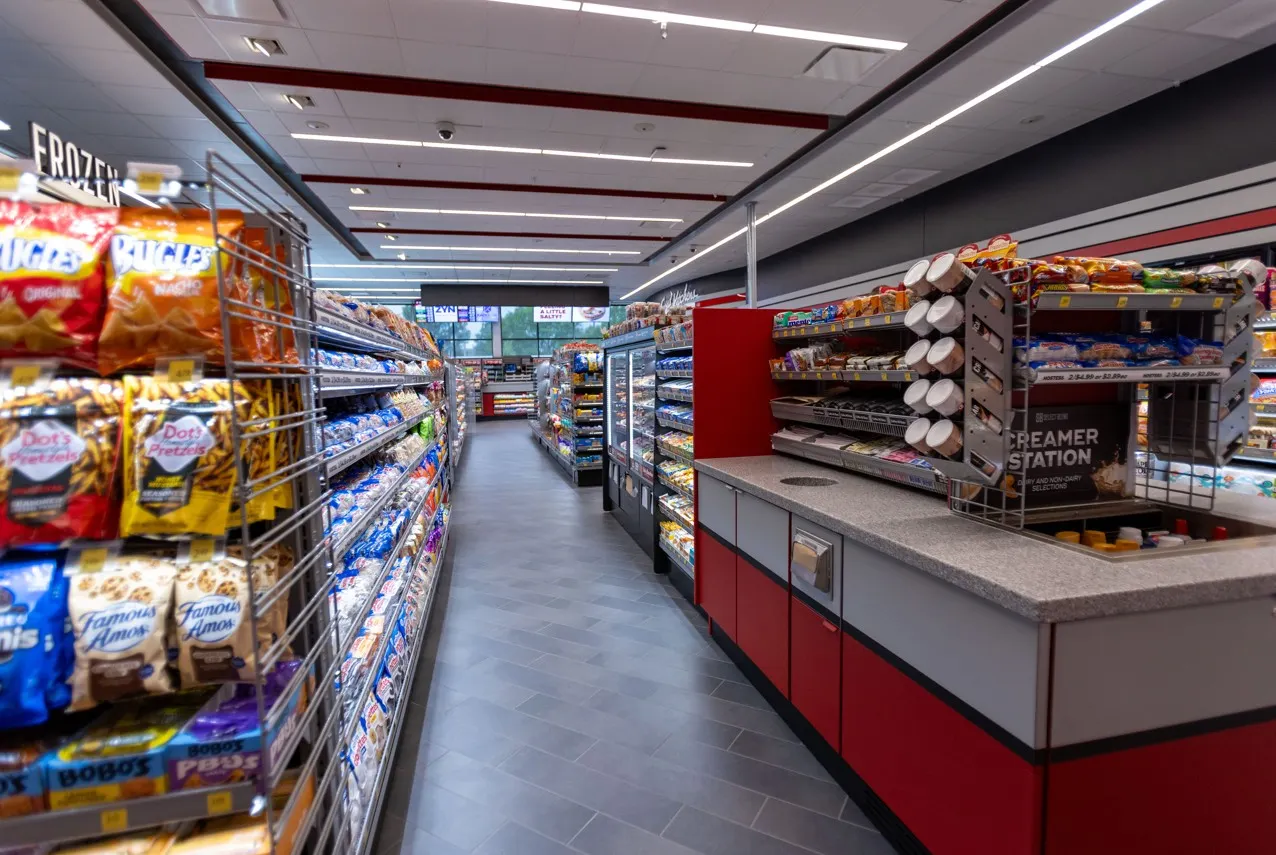
The store also includes eight individual, family-friendly restrooms — including four ADA-compliant units with baby changing stations — allowing for easier maintenance and greater availability. It also includes a “streamlined checkstand layout” to help employees move customers through more quickly during peak hours, QuikTrip has said.
Beyond its public areas, the Gen 4 store design includes expanded storage space. That, along with the improved kitchen layout, make it easier for employees to manage inventory, maintain equipment and keep popular items in stock.
The new design also includes a “streamlined checkstand layout” to help employees move customers through more quickly during peak hours.
Permission granted by QuikTrip
The design allows for future testing of features like site-specific pickup or delivery options without requiring major structural changes.
“Gen 4 is about getting it right – and staying flexible so we can keep delivering the excellent experience our customers expect,” QuikTrip Vice President of Store Design and Projects Kelli Ostmeyer said in both announcements.
Article top image credit: Permission granted by QuikTrip
Fueling Up: The fastest growing small and midsize US c-store chains in 2026
Here’s a close look at some surging players that are taking advantage of other retailers’ exits in an evolving consumer landscape.
Fueling Up is a column from C-Store Dive offering a fresh perspective on the top news and trends in the convenience store industry.
Convenience retailing continues to consolidate at a rapid pace, with the industry’s largest players scooping up smaller competitors that are struggling to profit in a difficult operating environment. And when they’re not buying, these large operators are building new sites and reaching new markets.
Although major players like Circle K and Casey’s dominate this growth, many small and midsize c-store operators are growing just as quickly, albeit on a reduced scale. Since most of these operators don’t have hundreds or thousands of stores, the impact of each acquisition or series of builds is more significant.
In late 2024, we broke down the fastest growing small and midsize c-store chains in the U.S. We’re bringing this list back in 2026. Some names remain firmly in place, while others are making their debuts.
Before we dive in, a few parameters:
This is solely based on store count growth in recent years for chains that had less than 600 company-operated locations at the end of 2025. We kept this list at 350 stores in 2024, but are upping the ante this time around.
Although Buc-ee’s technically fits that bill, we’ve harped on their ambitious growth plans plenty, so I’m excluding them. They’re a small operator with the recognition of a major chain.
Here are the under-the-radar convenience retailers that have carried out fast and significant growth plans over the past year.
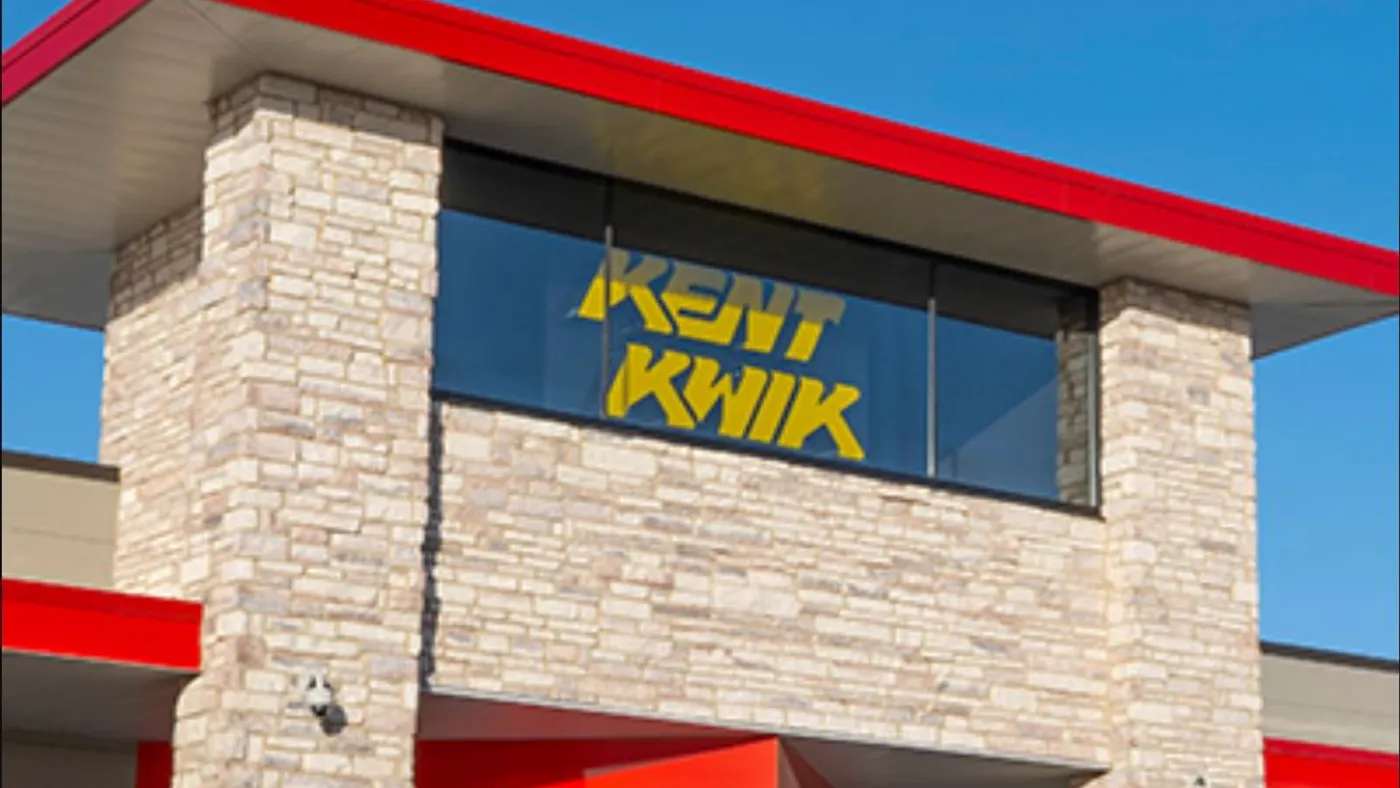
Kent Kwik (Kent Companies)
The Kent Companies, operator of the Kent Kwik banner across nine states in the Southwest and Southeast, has nearly doubled its store count in less than three years — a pace rarely seen among small and midsize convenience operators.
Kent only had about 75 company-operated c-stores as of spring 2023. The company embarked on a buying and building spree around then that hasn’t slowed down yet. It reached 110 locations at the end of 2024, and that number surged to 132 by the end of last year.
Kent’s most notable acquisition last year was its purchase of regional competitor B&B Petroleum and its 15 c-stores, which introduced Texas-based Kent to Louisiana. On the NTI side, Kent is rolling out a food-focused c-store format that features a made-to-order kitchen and drive-thru.
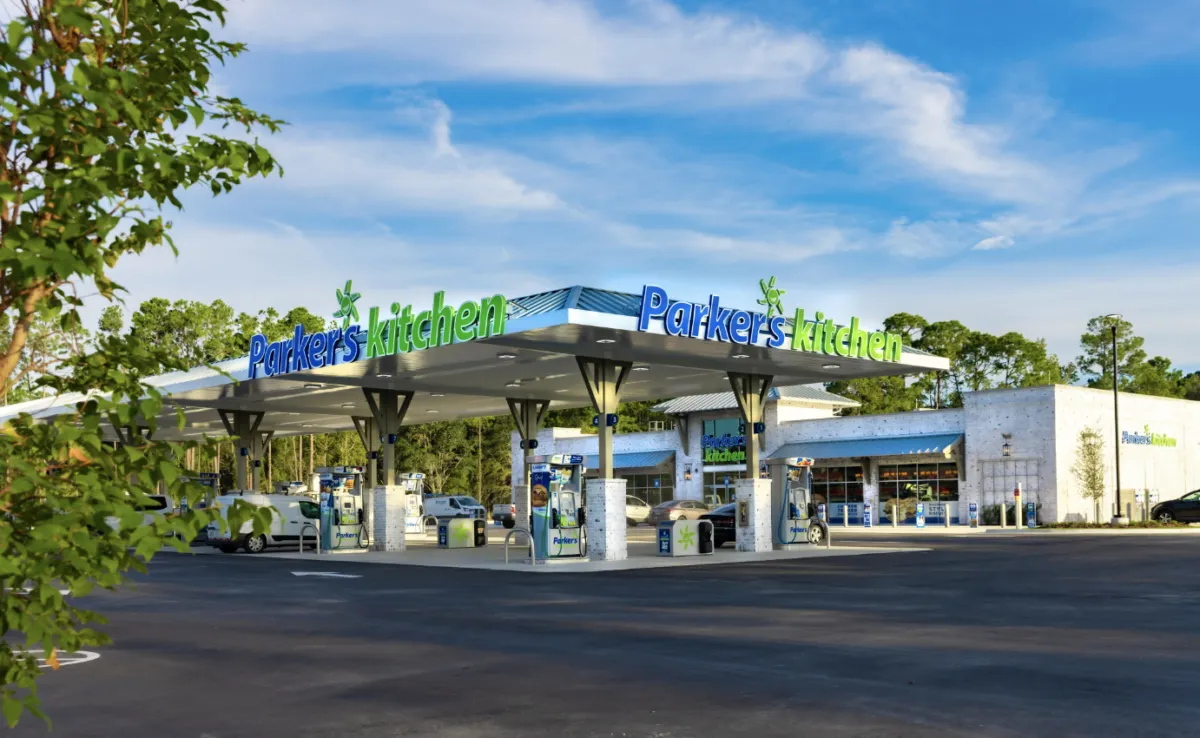
Parker’s Kitchen
Popular southern convenience retailer Parker’s Kitchen is also opening new stores at lightning speed. In October 2023, the retailer had about 76 locations and outlined plans to open 75 new locations by 2027.
At the end of 2024, Parker’s reached 93 locations, and improved to just over 100 sites by the close of 2025. But the expansion appears ready to ramp up.
Parker’s is aiming to open between 20 and 25 c-stores annually over the next five years.
Courtesy of Parker's Kitchen
During the 2025 NACS Show in October, Tom Rutledge, the company’s senior director of construction, said Parker’s is aiming to open between 20 and 25 c-stores annually over the next five years. The expansion, Rutledge said, will focus on Parker’s core markets of Georgia and South Carolina, notably in Augusta, Savannah, Charleston, Myrtle Beach and Columbia.
The company could reach as many as 229 convenience stores by the end of the decade — an astronomical jump from the 76 locations it had just a few years ago. That would cement the Savanna-based company as a significant competitive threat in the Southeast.
Mega Saver
Prior to 2025, I had never heard of Mega Saver. But the Omaha, Nebraska-based company made a splash last year that has resulted in the electronics-focused c-store retailer becoming one of the fastest growing players in his industry.
At the start of last year, Mega Saver operated around 40 c-stores across Nebraska, Iowa and Florida. Over the course of several months, the company agreed to acquire 52 sites across Iowa, Kansas and South Dakota from players like Yesway and Maverik. Once all of these deals close, Mega Saver’s c-store network will include nearly 100 locations across five states.
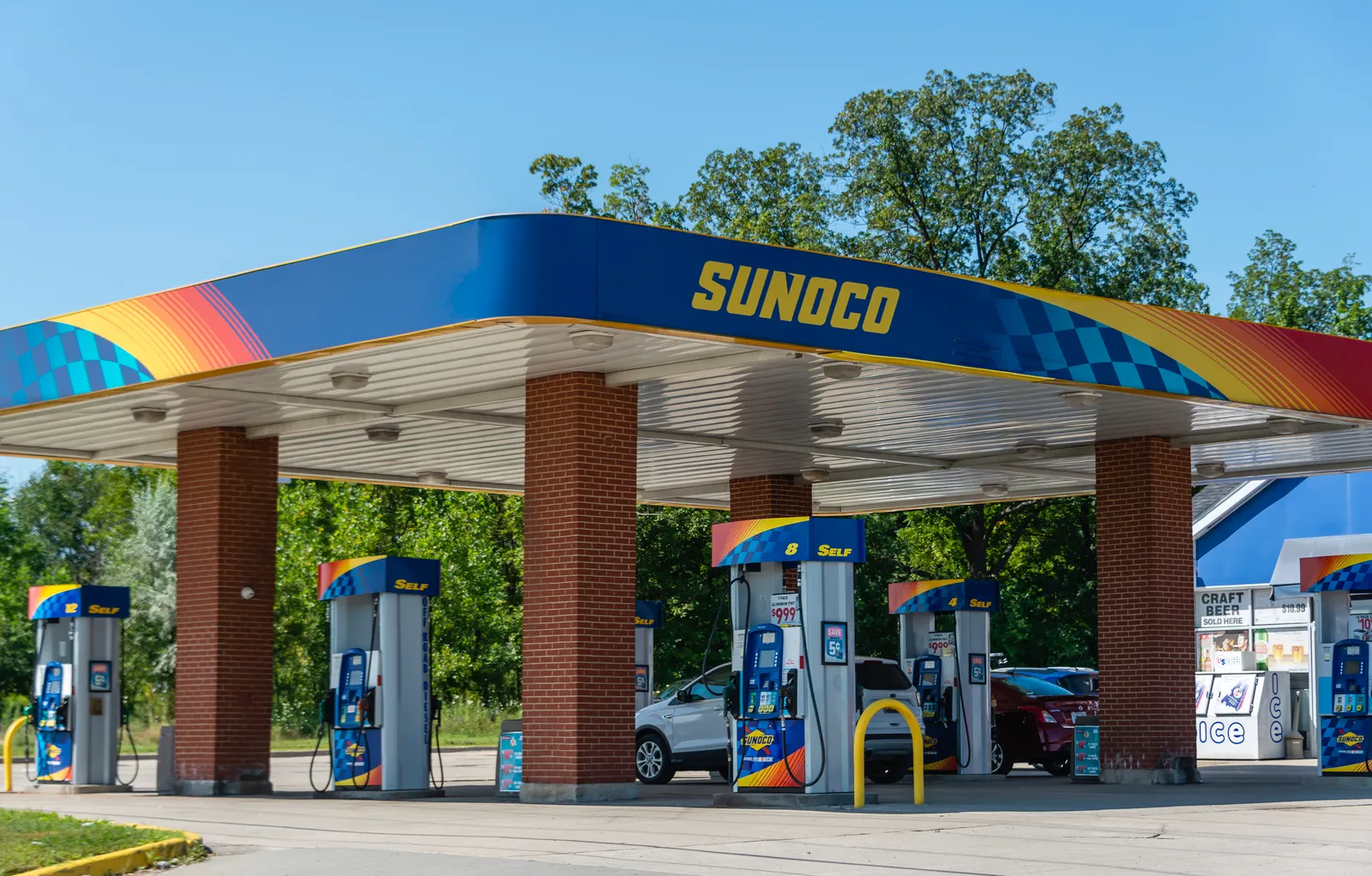
Sunoco
Sunoco probably didn’t expect to find itself running hundreds of U.S. c-stores by the end of 2025 considering it sold most of its company-operated locations to 7-Eleven the year before. With that deal, the Dallas-based oil retailer lowered its company-operated c-store count to 76 locations in New Jersey and Hawaii, barely enough to crack the top 100 largest c-store chains in the country.
That all changed when Sunoco closed on its $9.1 billion acquisition of Canadian c-store and fuel retailer Parkland Corp. in November. The deal brought Parkland’s 122 company-operated c-stores across the U.S., as well as another 128 across Canada and the Caribbean, under Sunoco’s ownership. As a result, Sunoco suddenly found itself with 320 company-operated c-stores across North America, including just under 200 in the U.S.
Sunoco has already acquired 140 c-stores on the East Coast since the start of 2026 through three separate acquisitions.
Getty Images
The industry spent months wondering if Sunoco would sell many of these c-stores or invest more in its retail network. Although the company has yet to say how it plans to handle its now expansive c-store network, Sunoco’s actions speak for themselves: The company has already acquired 140 c-stores on the East Coast since the start of 2026 through three separate acquisitions.
Sunoco announced earlier this year that it has a multiyear acquisitions plan totaling at least $500 million annually. The three acquisitions, according to a spokesperson, were part of that plan, meaning the once fuel-focused company is now a serious retail competitor.
Anabi Oil
Anabi Oil operated over 500 locations, mainly through its Rebel Convenience Stores banner, heading into last year. Then it purchased 99 locations through two acquisitions, growing its store network by about 20%.
Its first purchase, which netted the 87-store Green Valley Grocery chain in Nevada in October, ended up as the third-largest deal in 2025. About eight weeks later, Anabi acquired 12 convenience stores from California-based C&J Cox Corporation.
Unlike the rest of the companies on this list, Anabi has not said if it intends to keep growing its network at such a rapid pace, or if last year’s deals were simply a case of being in the right place at the right time. But there’s no doubt that the California-based retailer made a serious jump last year, putting itself in a position to keep running if it wants to do so.
Article top image credit: Permission granted by Kent Companies
8 c-store companies we’re watching in 2026
From upcoming IPOs to ambitious expansion plans, 7-Eleven, EG America, Anabi Oil and others are poised to make big moves this year.
By: Jessica Loder• Published Jan. 12, 2026
From M&A to economic challenges to the slow death of cigarettes, the convenience retail industry is facing a number of macro headwinds that touch virtually every operator.
But some companies have big changes, compelling narratives or significant challenges that make them particularly worthy of attention.
Below are eight of the companies we’re keeping a close eye on in 2026.
7-Eleven in transition
As the largest c-store chain in the world, 7-Eleven is always worth watching. But 2026 promises to be a particularly transformative year for its North American operations — mainly the U.S. — with two big changes on the horizon.
The first is new leadership. After two decades at the helm, CEO Joseph DePinto stepped down at the end of 2025. Stan Reynolds and Douglas Rosencrans, president and COO of 7-Eleven, respectively, will serve as co-CEOs until a permanent replacement is hired. That person will take on a company that’s shifting toward larger stores and focusing on its food program.
As the company searches for a new leader, it is also gearing up for an IPO in the latter half of the year. That move is expected to give 7-Eleven more agility and independence as it faces rising competitive threats.
An IPO could also put more scrutiny on 7-Eleven’s North American operations, as they’ll have to stand on their own for the first time in decades, independent of Japanese parent company Seven & i and its well-regarded c-store footprint in Asia.
7-Eleven will continue rolling out its larger, food-focused c-stores.
Brett Dworski/C-Store Dive
Couche-Tard’s food renaissance
We entered 2025 laser-focused on one Alimentation Couche-Tard storyline — would it buy 7-Eleven? The answer ended up being “no,” but a different and equally interesting topic grew up around Couche-Tard over the course of the year.
While Circle K may not be known for food the way competitors like Casey’s General Stores, Wawa or Royal Farms are, it’s making moves to change that perception. This pursuit led to Couche-Tard acquiring GetGo Café + Markets, the 270-store convenience store chain formerly owned by supermarket company Giant Eagle.
The backbone of these efforts is a value menu Couche-Tard debuted in 2024, which includes $3, $4 and $5 options targeted at price-conscious consumers.
“We will continue to lay into meal deals,” Alex Miller, president and CEO of Couche-Tard, said during the company’s fiscal Q2 earnings call in November. “We think we’ve really found something here that is really resonating with consumers that are strapped for cash.”
The meal deals are just one part of a larger food-focused reset for the company, Miller said in that same call. With that process mostly complete, 2026 will tell just how big of an impact the changes will bring.
Maverik’s next steps
For well over a year, one of the biggest stories with Maverik has been its handling of the Kum & Go banner, which it bought in 2024. In 2025, Maverik wrapped up the rebrands of most of that company’s stores and sold a few others.
Now, Maverik must turn its attention to integrating itself into many states and communities where it hasn’t previously had a presence.
Operationally, Maverik has a lot going for it. The banner ranked seventh in USA Today’s top 10 gas stations list last year, with the publication calling out its “top-notch food.” Maverik also made it onto Forbes’ list of the top 300 companies for customer service. And with the rebrands in the rearview mirror, the company can focus all its attention on in-store execution.
What remains to be seen is how well its adventure-themed brand meshes with some of the less rugged areas it’s now competing in, notably Kum & Go’s former home of Iowa.
Maverik has fully entered a number of new markets.
Brett Dworski/C-Store Dive
Will EG America make more changes?
While some companies have made bigger announcements or unveiled more broad-reaching initiatives, few companies have been as busy as EG Group and its U.S. arm, EG America, over the past few years.
Last year, EG Group named former CFO Russell Colaco as its new CEO in April, then handed him the reins to EG America a week later. During the summer, the company streamlined operations by agreeing to sell its Italian and Australian businesses and announced it would move its global HQ from the U.K. to Charlotte, North Carolina.
Inside its U.S. stores, the retailer launched online ordering and delivery, debuted a fleet card and revamped its loyalty program. Foodservice wasn’t left out either, with EG America debuting and then quickly expanding a grab-and-go program and making big plans with chicken QSR Krispy Krunchy Chicken.
We’ll be watching to see if developments continue at this quick pace again in 2026.
Anabi Oil, M&A leader?
Anabi Oil, owner of the Rebel Convenience Stores banner, made a splash in the M&A markets in 2025. In October, it made one of the year’s biggest moves when it acquired the 87-location Green Valley Grocery chain in Las Vegas.
Then in December, it added another 12 locations in California with the acquisition of Cox Family Stores.
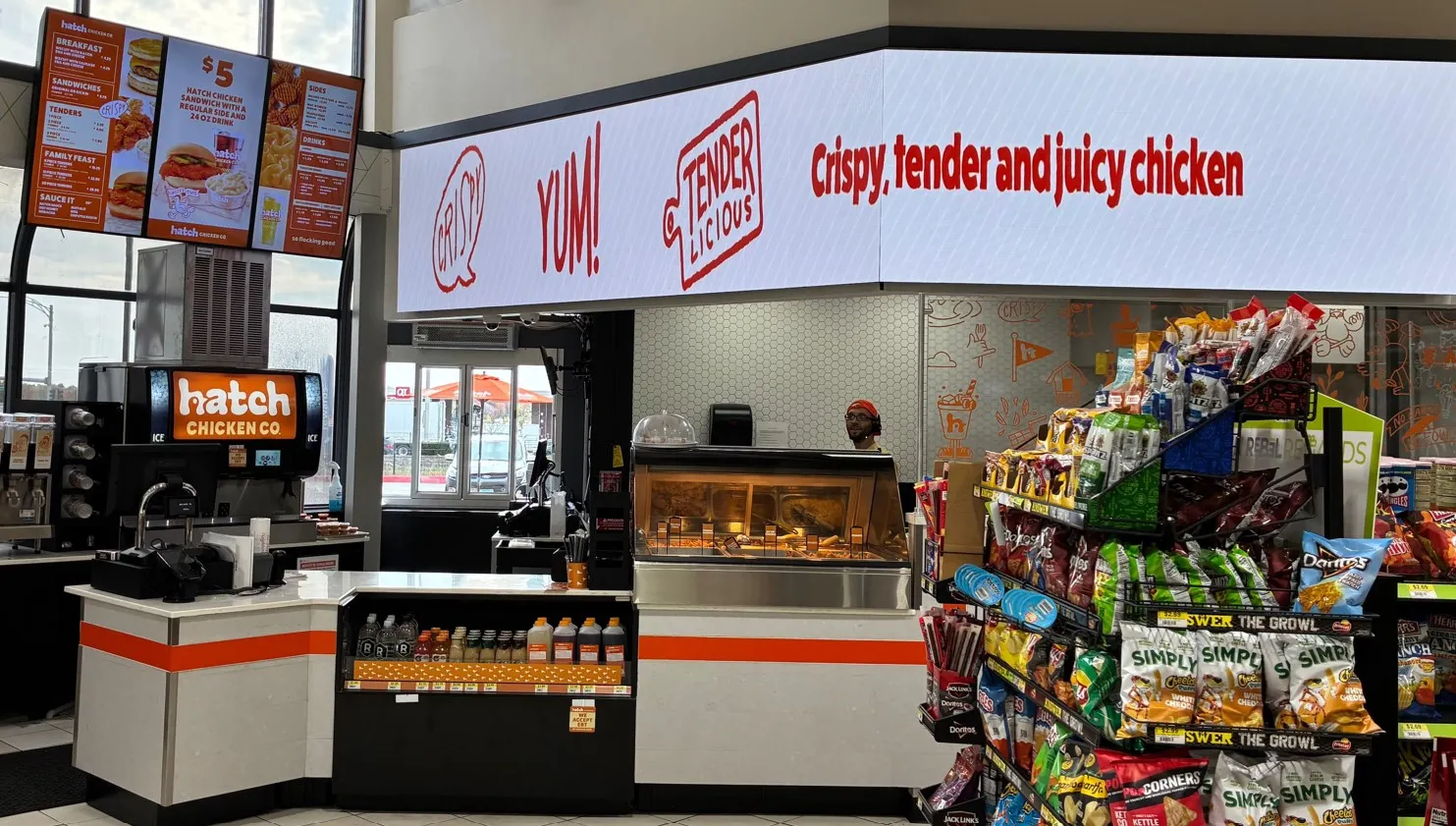
M&A wasn’t Anabi’s only major move last year. The retailer also began expanding Hatch Chicken Company, a proprietary QSR that it debuted in 2024. The menu includes a variety of chicken tenders, sandwiches and sides like mac and cheese, biscuits and waffle fries, as well as lemonade and a line of organic teas.
It’ll be interesting to see if Anabi keeps its foot on the gas when it comes to acquisitions and its QSR rollout this year.
Rebel Convenience Stores is expanding its Hatch Chicken QSR.
Permission granted by GSP Retail
Yesway’s shifting outlook
Yesway’s agreed-upon sale of all of its c-stores in Iowa and Kansas last year to Mega Saver raised some eyebrows, since it wasn’t so long ago that the Midwest was a key market for the Texas-based chain. At the time, a company spokesperson noted that the sites no longer fit its strategy.
As it navigated a looming exit from these states, Yesway added some experienced executives to its leadership team. Chuck Sanders, vice president of merchandising, came to Yesway after spending a year and a half as soft drinks category manager for 7-Eleven while Robert Drake, vice president of facilities, was most recently director of strategic maintenance and facilities for Murphy USA.
This year might shed some clarity on if Yesway has reworked its footprint to its liking and what its future direction will look like, including if its previous IPO plans — or more store sales — are coming.
Parker’s expansion plans
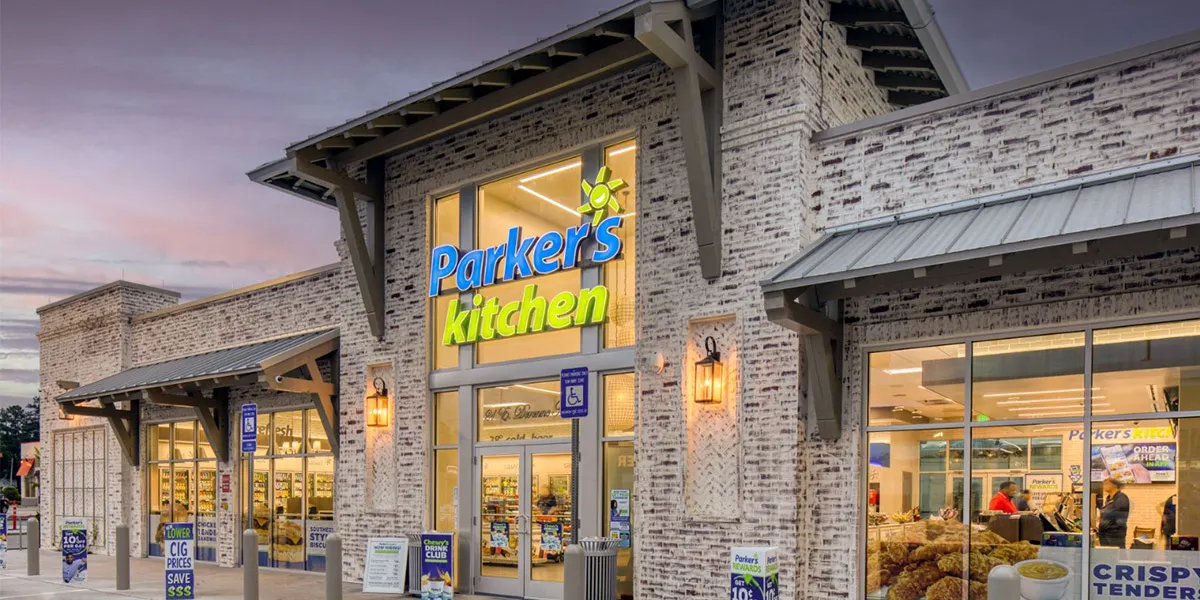
Southeastern staple Parker’s Kitchen has been quietly expanding its footprint for years. At the NACS Show in October, Tom Rutledge, Parker’s senior director of construction, said the company plans to open between 20 and 25 c-stores annually over the next five years. This would more than double its current store count, which currently stands at a little over 100 locations.
One measure of that growth will be the company’s long-awaited Florida debut. In the works since at least 2023, a move into northern Florida opens up a lot of new communities for the retailer, which currently only has stores in South Carolina and Georgia.
Also worth watching is how well the company’s new organizational structure works out. The company named Brandon Hofmann its new CEO in March 2025, then appointed CFO John Rudolfs to co-CEO in September.
Parker’s isn’t the only c-store with co-CEOs. Refuel Operating Company named Travis Smith and Jon Rier co-CEOs in June and 7-Eleven is operating under two executives while it seeks a replacement for former CEO Joseph DePinto. But given Parker’s ambitious growth plans and the unconventional way it established the dual-leader structure, many eyes will be on the chain in 2026.
Parker’s is looking to expand into Florida.
Courtesy of Parker's Kitchen
Oxxo’s U.S. growth
In 2024, Mexican c-store giant FEMSA bought all of Delek Holdings’ 249 U.S. stores. Since that time, the company has begun rebranding the locations to its Oxxo banner and expanding its ambitions in the country. The company expects to have all the former Delek stores under its own banner by 2028.
In addition to taking a careful pace with these store updates, the company is also testing out fuel-less sites — an approach that many U.S. retailers have tried with limited success.
As Oxxo and FEMSA get more comfortable with U.S. operations, the industry will be watching to see how the c-store giant decides to further its reach. Will it build new stores, make more acquisitions or maybe stand pat for a while as it learns from the locations it has already updated?
Article top image credit: Courtesy of EG Group
How 5 super regional c-store chains are reshaping the competitive landscape
Companies like Wawa, QuikTrip and Sheetz are pushing aggressively into new states and challenging incumbent players both small and large.
Some of the fastest growing chains in the c-store industry are super regional powerhouses that have developed strong foodservice programs and loyal followings over the years.
Chains like Wawa, Sheetz and QuikTrip are betting the strategies that made them successful in their home regions will also resonate with consumers in new markets — particularly as competitors like 7-Eleven struggle to get their foodservice operations in order.
In areas like the Midwest and Southeast, these super regionals are redrawing long-standing competitive battle lines and pressuring incumbent players to step up their game. For example, over the past five years, Northeast stalwart Wawa has opened more than 100 stores in the Southeast and introduced more than a dozen stores across states like Ohio and Indiana, according to NACS data.
Super regionals’ growth plans have begun to intersect, setting up battles that industry observers will be eagerly watching. Indiana, for one, recently welcomed its first QuikTrip and Wawa stores right down the street from each other.
As these super regional chains continue to grow and sharpen their operations, we’re taking a closer look at how five key players have expanded over the past several years.
Note: All data comes from NACS’ “Top 100 Convenience Retailers” research released in March from 2022 through 2026.
5 rapidly growing super regional chains
Wawa and QuikTrip have pushed speedy organic growth, while Maverik massively expanded its footprint with the 2023 acquisition of Kum & Go.
Wawa
Number of stores: 1,180 Stores added since 2022: 224 Region with highest growth: Southeast
Among super regionals, none have more aggressively moved into new markets than Wawa. Since 2022, the chain has more than doubled the number of states where it operates.
And the company has been anything but quiet about its growth strategy. Its CEO has publicly outlined a plan to reach 1,800 stores in the coming years, and its expansion into new territories has been trumpeted by local news and presaged by a company roadshow in some areas.
Alabama, Tennessee, Virginia, North Carolina and Indiana are just a few of the states where Wawa has made its debut in recent years. In each of these places, the company has not just introduced itself but outlined a plan to build store density. In North Carolina, for instance, Wawa plans to open around 80 stores in the eastern part of the state through 2033.
Powering this growth is a strong focus on foodservice and operational innovation, making Wawa one of the most formidable competitors in the c-store industry.
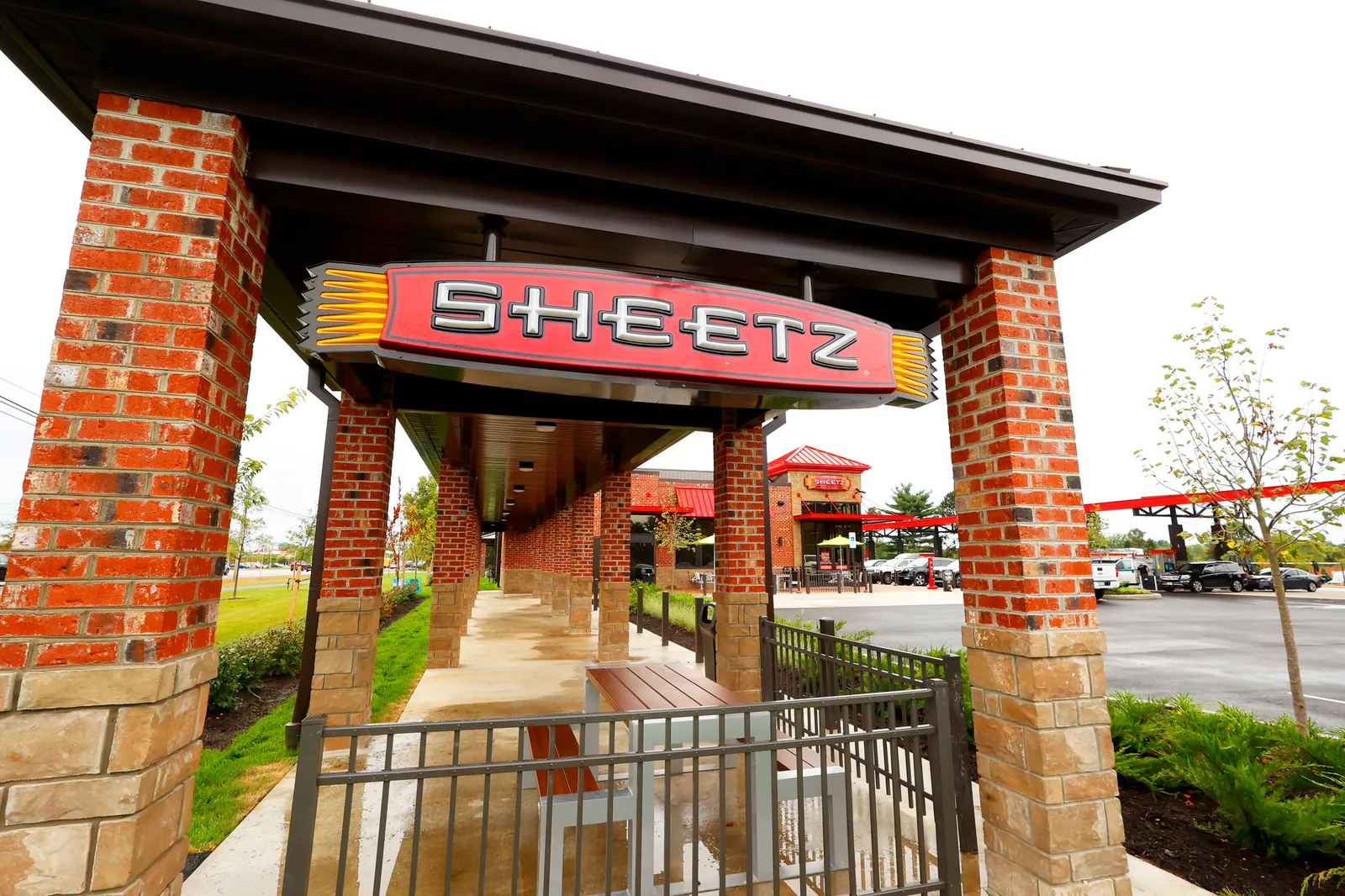
Sheetz
Number of stores: 814 Stores added since 2022: 178 Region with highest growth: Midwest
Sheetz’s expansion may not be as far-flung as Wawa’s, but like its fellow Pennsylvania-based competitor, it too is focused on zooming into new states.
The chain opened its first Michigan location in 2024 and expects to operate nearly 20 stores in the state by the end of this year. Indiana is also on Sheetz’s roadmap, with plans to spend nearly $1 billion over the next decade to open more than 100 locations.
Sheetz, which has stores in seven states, has also fleshed out its footprint in markets where it has long operated. In Ohio, where Sheetz debuted 30 years ago, it recently added dozens of stores and expects to open a distribution center in Findlay later this year.
The chain’s eye-catching foodservice menu and edgy marketing will no doubt keep competitors on their toes as this expansion drive continues.
Sheetz has added nearly 200 stores over the past five years and moved into new markets like Michigan.
Courtesy of Sheetz
Kwik Trip
Number of stores: 906 Stores added since 2022: 135 Region with highest growth: Midwest
Kwik Trip’s growth has focused on the Central and Midwest regions where it has long operated stores. Occasionally it will move into a new state, as it did late last year when it debuted in North Dakota with a Kwik Star location.
So far this year, Kwik Trip has opened several locations in its home state of Wisconsin as well as Iowa. All told, the company operates 923 stores across its Kwik Trip, Kwik Star, Kwik Spirit and Stop N Go banners, according to its website.
As it’s expanding, the food-focused chain is also remodeling stores at a steady clip. The retailer’s project manager of store engineering told C-Store Dive last year the chain typically updates 10 to 20 stores annually. In some cases, it’s adding space — like a store in Rochester, Minnesota, that recently got 1,800 square feet of additional space, including an expanded retail floor and kitchen area.
QuikTrip
Number of stores: 1,194 Stores added since 2022: 279 Region with highest growth: Southeast
QuikTrip has been firing on all cylinders lately. It recently surpassed Wawa in store count and had the highest organic growth since 2022 of the super regional chains listed in this story, including debuts in states like Indiana, Ohio, Kentucky and Florida.
Amid this expansion, QuikTrip is also making significant updates to its stores. In 2020, it introduced a remote travel center format that has led the way in its expansion into states like Florida and Nevada. Last year, the company revamped its self-serve beverage program, and this year it debuted a new store design that’s roomier and even more food focused.
Maverik became a true super regional in 2023, when it acquired Kum & Go.
Courtesy of Maverik
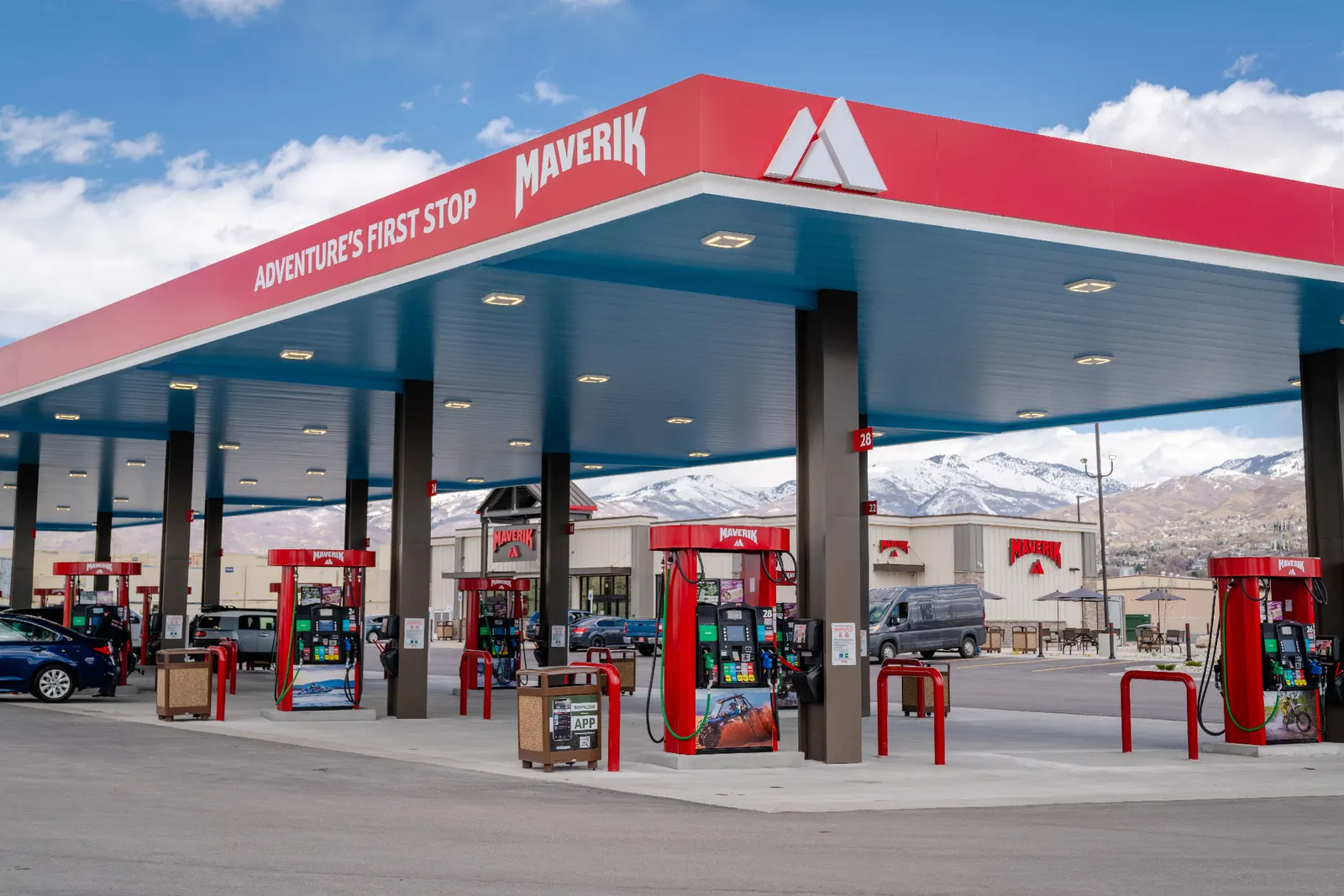
Maverik
Number of stores: 822 Stores added since 2022: 443 Region with highest growth: Central
Utah-based Maverik became a true super regional in 2023, when it acquired the popular Kum & Go chain. Since then, the company has rebranded all of the stores it acquired, signaling confidence that its operating model, including its Bonfire foodservice program, can win over shoppers who were loyal to Kum & Go.
Maverik has its work cut out for it to win over customers in states like Iowa and Missouri, where it hasn’t traditionally operated. But there’s no questioning the company’s ambition to become a top super regional player in the U.S.
Article top image credit: Permission granted by QuikTrip
3 c-stores taking car washes to the next level
From stand-alone spin-off brands to in-tunnel entertainment, operators are turning the wash bay into a loyalty driver.
By: Michael Brady• Published March 12, 2026
For convenience store operators seeking more revenue, the car wash is getting a second look — and, in many cases, a complete overhaul.
The shift is largely driven by economics. Traditional sites can bring in money, while adding subscription-based wash programs can generate recurring revenue and, more importantly, pull customers deeper into the broader loyalty ecosystem.
“Members aren’t just coming for a wash — they’re also fueling up and going inside the store, which is driving cross-category sales,” said Saurabh Swarup, general manager for North America at Liquid Barcodes, a digital loyalty platform provider.
With warmer weather on the horizon, here’s a closer look at how three c-store brands took unique approaches to this category.
Circle K’s standalone car wash brands
Circle K’s parent company, Alimentation Couche-Tard, operates two dedicated car wash brands that are independent of its convenience stores — Clean Freak and Rainstorm. Both banners, which Couche-Tard picked up when it acquired True Blue several years ago, function as full-service car washes offering subscriptions, unlimited vacuums, carpet beaters and on-site towels.
These sites are on trend for the industry, experts say.
“We’re seeing large c-store chains get completely immersed in the car wash business with stand-alone units, with all kinds of options for self-service,” Greg Dorian, vice president of national accounts at GSP Retail Marketing, said in an email.
“Our goal wasn’t just to build a car wash. We wanted to create a branded experience.”
Nick Triantafellou
Director of marketing and merchandising for Weigel's
Smaller companies are also taking this approach, with retailers like Maryland-based Dash In also offering some standalone sites.
However, the spinoff model creates the challenge of connecting two separate operations into one cohesive customer journey.
Rewards programs provide the basic connective tissue. But that integration has to extend beyond the app. Dorian noted that retailers need to make customers aware of these integrations at multiple touchpoints, including at the pump, in the store and across the retailer’s digital footprint.
Many c-stores, however, don’t promote their car washes effectively.
“When we look out in the field and see how c-stores promote their car washes, it’s usually very static,” Tino Feczko, senior account manager at GSP Retail Marketing, said in an email. “The on-site signage often looks weathered and worn. That seems odd since a car wash is supposed to help your car look new.”
Loop Neighborhood Market’s app-based experience
Loop Neighborhood Market’s, a California-based c-store chain, has focused its car wash strategy on a fully digital subscription model, managing its wash subscriptions entirely through its app and eliminating friction like codes and paper receipts from the process.
“Having that ease of tracking it, having the ease of using the car wash, all through digital means — that’s been very helpful in increasing the speed and reliability of a lot of these experiences,” CEO Varish Goyal said.
Loop ties car wash purchases to fuel rewards and in-store spending, making the wash part of a cross-category value proposition rather than an isolated transaction. As a bonus, it can also give the retailer more data on visitor’s needs and routines.
“The important thing is to constantly innovate with technology,” Goyal said. “So much more can happen through apps and customers’ phones. Customers are familiar with that. So, anything you can do to make the customer’s life easier will help you understand them better, including their wash patterns and other habits.”
But Goyal cautioned operators against letting the latest technology distract them from doing the fundamentals.
“Always prioritize good, reliable equipment, and keep up with your preventative maintenance,” he said. “If operators just keep those core beliefs and then dabble in all of this tech, I think they’ll find a winning combination in their markets.”
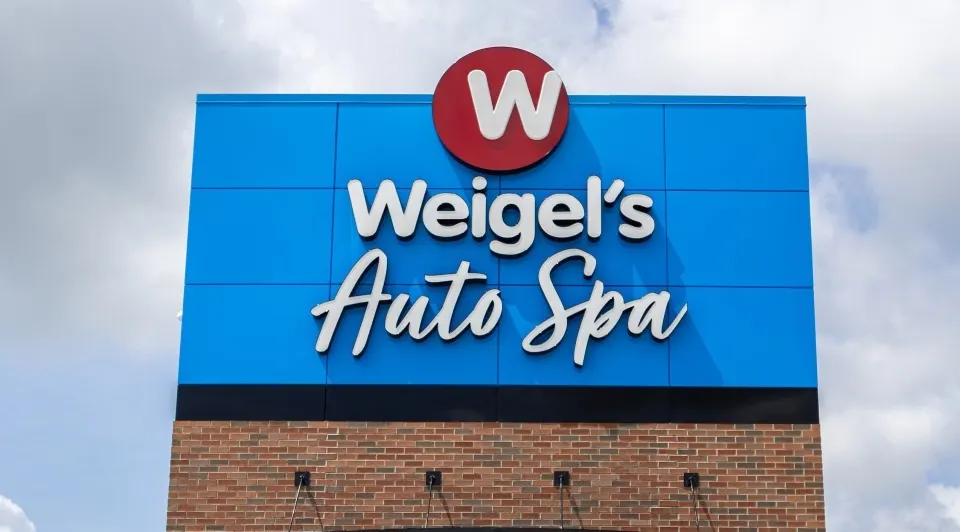
Weigel’s Auto Spa debuted in 2025.
Courtesy of Weigel's
Weigel’s branded experience
Weigel’s launched its Auto Spa car wash platform about seven months ago and is already scaling aggressively, with five additional locations planned this year.
What distinguishes Weigel’s approach is the degree to which the car wash is designed to feel like an extension of the brand, rather than a bolted-on service.
Inside the tunnel, an animated experience featuring the chain’s mascot, Ellie the Cow, guides guests through each stage of the wash, explaining what’s happening to the vehicle while turning the idle time into entertainment. The mascot draws from Weigel’s heritage as a dairy operation in Powell, Tennessee.
“Our goal wasn’t just to build a car wash. We wanted to create a branded experience,” Nick Triantafellou, director of marketing and merchandising, said in an email. “The animation and mascots turn a two-minute wait into something memorable, while the technology and loyalty connection make it easy and fast.”
Weigel’s partnered with Micrologic to integrate its car wash platform into the existing c-store rewards program. Art Ryan, director of car wash operations, sees AI-driven personalization as the next frontier. This includes using license plate recognition and purchase history to greet returning customers and make targeted offers at the pay station.
Weigel’s also took a distinct approach to its lot design. Rather than requiring customers to purchase a wash before using the vacuums, Weigel’s offers free vacuums to draw customers onto the lot. Then it uses QR codes, promotions and trained staff to convert visitors into single-wash buyers and, hopefully, members.
“We chose not to take the policy of ‘you’ve got to go through the wash first before you can vacuum,’” said Ryan. “The main focus we have here at Weigel’s is we want the customers on the lot.”
Article top image credit: Courtesy of The Wills Group