Of all the trends convenience operators face year after year, consolidation once again controlled the narrative in 2025.
Experts came into last year expecting M&A to intensify, specifically among retailers that have hundreds or thousands of stores buying out operators with 50 or fewer sites. The latter have struggled to maintain profitability in the current operating climate, and their larger competitors have smelled blood in the water. This rang true in 2025, and several experts foresee it continuing this year.
“Competition has gotten keener, and as a result, the small to mid-size operator has more difficulty competing with economies of scale,” said Dennis Ruben, executive managing director for c-store advisory firm NRC Realty & Capital Advisors. “Unless somebody's got a company with a succession plan or a family member that wants to keep in the space… frankly, there's a lot of incentives for somebody to sell right now.”
Convenience retailers are well aware that consolidation isn’t fading away anytime soon. It’s also not the only trend that’s expected to occupy the industry this year, as retailers continue to evolve their capabilities in foodservice and technology, as well as stretch the boundaries of what’s possible in convenience retailing.
Here are eight trends we think will dominate the c-store industry in 2026.
The economy won’t get any easier on retailers
Convenience retailers large and small will head into 2026 once again facing a difficult operating environment. Expenses continue to rise for both retailers and consumers, leaving c-store earnings in flux.
“Transaction counts inside the store are flat at best,” Chris Rapanick, managing director of NACS Research, said during the association’s annual show in October.
According to NACS, packaged beverages and other tobacco products were the only two merchandise categories that outpaced inflation through last summer. Additionally, unit sales were down across the top 10 in-store categories with the exception of packaged sweet snacks.
Overall convenience visits are also dropping. Total customer traffic in the foodservice industry was down about 1% as of Q3 2025, and c-stores saw double that drop rate during the same time period, said David Portalatin, senior vice president and industry advisor for Circana.
Richard Poye, a c-store consultant and former vice president of merchandise and foodservice for RaceTrac, said he thinks economic headwinds will once again ding trip counts and basket sizes, while tariffs will add even more headaches.
“I imagine when you go into the grocery store, you’re like, ‘Gosh, I don't remember spending that much on something,’” Poye said. “I think that overlaps into the basket-spend in a convenience environment.”
C-stores may also struggle with retail gas prices, which are expected to decline in 2026, Poye said. When gas prices are high, consumers generally make more fuel trips because they’re budgeting. But that changes when retail fuel prices drop.
“When gas is low, people buy more gas, so therefore they make less trips to a convenience store,” he said.
C-stores could be the new third places
The loss of third places — locations other than home or work and school where people can gather and socialize — accelerated during the COVID-19 shutdowns.
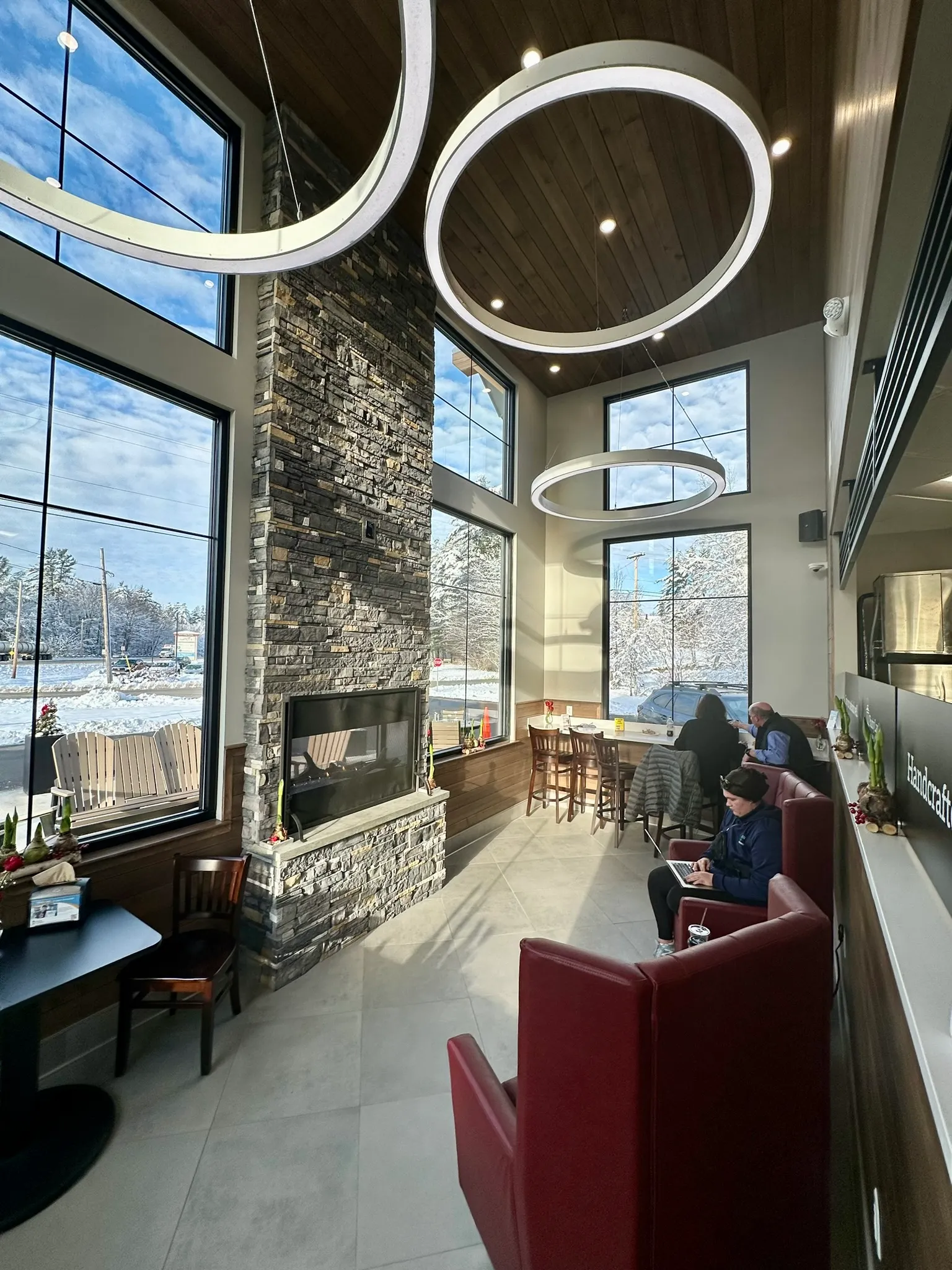
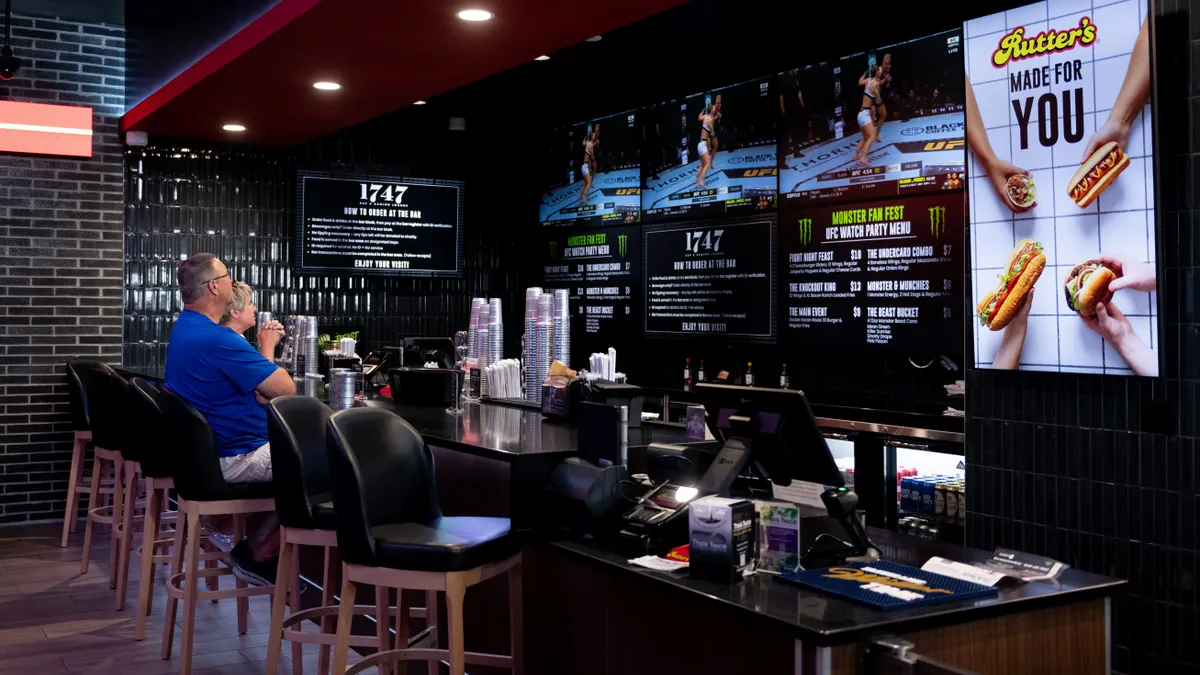
Some experts say c-stores can fill the gap. We’re already seeing this through operators tapping into unique store designs, like Rutter’s sports bar and Rusty Lantern’s seating area with a fireplace.
For companies with foodservice, seating areas for in-store dining can encourage longer visits.
“We're seeing on-premises consumption start to pick up a little bit of momentum at restaurants,” said Portalatin. “We're also seeing that at convenience stores … so anything around having an elevated experience is going to be important in 2026.”
Retailers can also consider unique amenities such as gaming machines or even a petting zoo to give shoppers a reason to hang out.
However, Margaret Sotrop, executive vice president of retail growth strategy, and Heidi Barnhart, retail environment account director, for GSP Retail pointed out that retailers pursuing this approach must also remember the basics. Cleanliness, a friendly staff and ensuring the store is the sort of place a customer would want to spend time, are crucial.
More retailers could look to acquire QSRs
RaceTrac’s $566 million acquisition of sandwich QSR Potbelly was the most surprising and potentially industry-shifting foodservice move any convenience retailer made in 2025.
RaceTrac already had an in-house foodservice program, but the Atlanta-based retailer took a major jump in its food evolution when it purchased Potbelly’s 445 sites across 32 states. The restaurant chain could augment RaceTrac’s in-house program and set the stage for other c-store retailers to do the same.
Robert Hampton, an industry consultant and former chief information officer for Jacksons Food Stores, said it’s entirely possible that another c-store retailer buys a restaurant in 2026. With many QSR chains struggling, that type of acquisition could help c-store operators expand into tangential markets and increase their footprint, he said.
One restaurant chain on the market is Pizza Hut. Its parent company may put it up for sale after seven straight quarters of same-store sales declines. Buying the pizza purveyor would be a tremendous undertaking, as the chain has over 19,800 restaurants globally, including roughly 6,500 in the U.S.
Dino De Iuliis, a Toronto-based retail consultant and former director of business transformation and corporate development at Walmart Canada, said he not only could see a c-store chain buy Pizza Hut, but that Alimenation Couche-Tard, parent of Circle K, is a logical candidate to do so because of its scale, focus on foodservice and interest in large acquisitions.
“I can see that happening,” he said. “I think it makes a lot of sense.”
De Iuliis noted that even as 7-Eleven continues to invest in large-format, food-focused stores that feature its proprietary QSRs, buying a QSR chain like Pizza Hut could also be significant for the world’s largest c-store operator at a time when it’s struggled to build a reputation for its food in the U.S.
“I can see a QSR play within 7-Eleven to be sort of that last major push to really bring some innovation into the banner,” he said.
Beverage innovation will be a major focus
Drinks are ripe for c-store innovation.
“Beverage will become a destination,” said Sotrop. “It's just bigger than cold [drinks]. It's hot and cold combined. It's an experience, it's a value. It's something [retailers] want to be known for.”
Dirty soda will stay popular but will expand beyond the soda fountain.
“I think customization will remain the key focus,” said Jon Cox, vice president of retail foodservice for McLane. He noted that consumers increasingly expect to make “your drink your way,” not just among coffees or sodas, but even into frozen beverages and energy drinks.
Even if there’s no room for a large condiment area, retailers can keep an eye out for dirty soda experiences in packaged beverage, said Scott Johnson, executive vice president of strategy and development for beverage consultancy Enliven, pointing to new options like Dirty Mountain Dew Cream Soda.
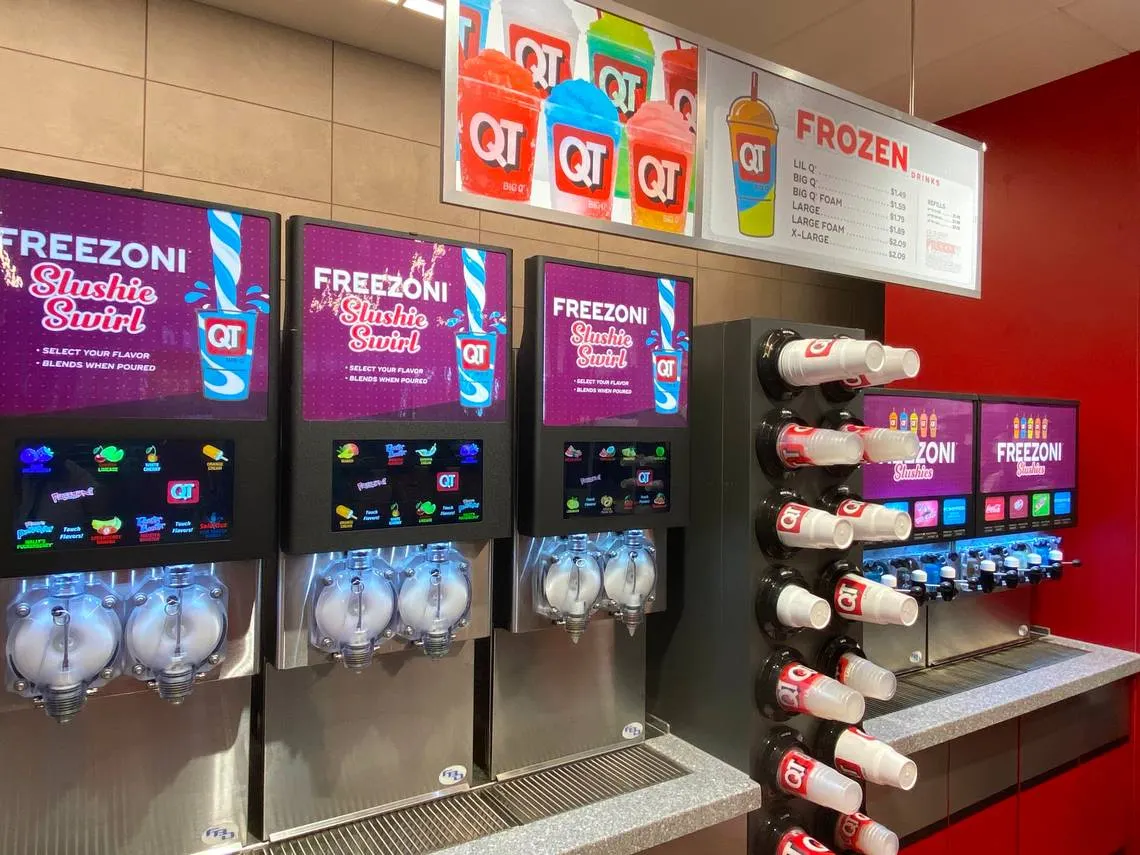
Companies may also follow QuikTrip and liven up their self-serve soda area, Johnson noted. In addition to more condiment options for dirty beverages, retailers should consider if any newly available flavors are a match to their customer base.
“I had an operator say the best thing they did last year was add Dr Pepper Zero to their fountain,” Johnson said.
More c-store-specific use cases for AI will emerge
After showing some hesitancy with tapping into artificial intelligence in previous years, convenience retailers are starting to come around on the technology to help simplify the employee and customer experience.
AI adoption is expected to continue in the industry in 2026, with retailers honing in on c-store-specific technologies rather than generic solutions — such as floor-scrubbing robots or scheduling assistants — that can be used across other industries, said Hampton.
Some c-store retailers are already doing this. Stinker Stores in February implemented a solution that uses camera vision to monitor roller grills, record which items are selling and when, and use that data to create actionable plans to improve sales and reduce waste. Last November, RaceTrac brought on an AI tool that lets the company remotely manage forecourt equipment to maximize uptime and reduce the need for on-site repairs.
“Competition has gotten keener, and as a result, the small to mid-size operator has more difficulty competing with economies of scale.”

Dennis Ruben
executive managing director for NRC Realty & Capital Advisors
“I think where we're going to start to really see some innovation in 2026 is how people are applying AI to more discreet tasks and things that are unique to convenience that don't cut across other verticals,” Hampton said.
Retailers will need to pivot from hemp and CBD
In November, Congress and President Trump passed legislation that changes the legal definition of hemp, which since 2018 has been cannabis with less than 0.3% tetrahydrocannabinol (THC), the psychoactive component of marijuana. The ruling goes into effect in November 2026.
According to hemp business advocacy group US Hemp Roundtable, if no changes are made to this ruling by next November, 95% of hemp products will be deemed Schedule 1 narcotics, while the remaining 5% “would be impossible to manufacture given the limits on extraction.”
However, in mid-December, President Trump signed an order to expedite the reclassification of cannabis to a less-restrictive category of drugs in a move to increase research on its health benefits. In that order, the President said he’ll work with Congress to update the statutory definition of hemp-derived cannabidiol (CBD) products “to allow Americans to benefit from access to appropriate full-spectrum” of these items while restricting the sale of any such items that improve health risks.
Many convenience retailers in recent years have invested in building out a category featuring hemp-derived products made with CBD, the non-psychoactive component of cannabis. Such items include gummies, beverages, tinctures, balms and more. But many others haven’t, often due to confusion around the legalities related to selling these types of products.
For operators who are still confused, these recent conflicting orders likely won’t help.
If the November ruling indeed goes into effect by the end of 2026, retailers selling CBD are likely going to have to pivot, both Hampton and Poye said.
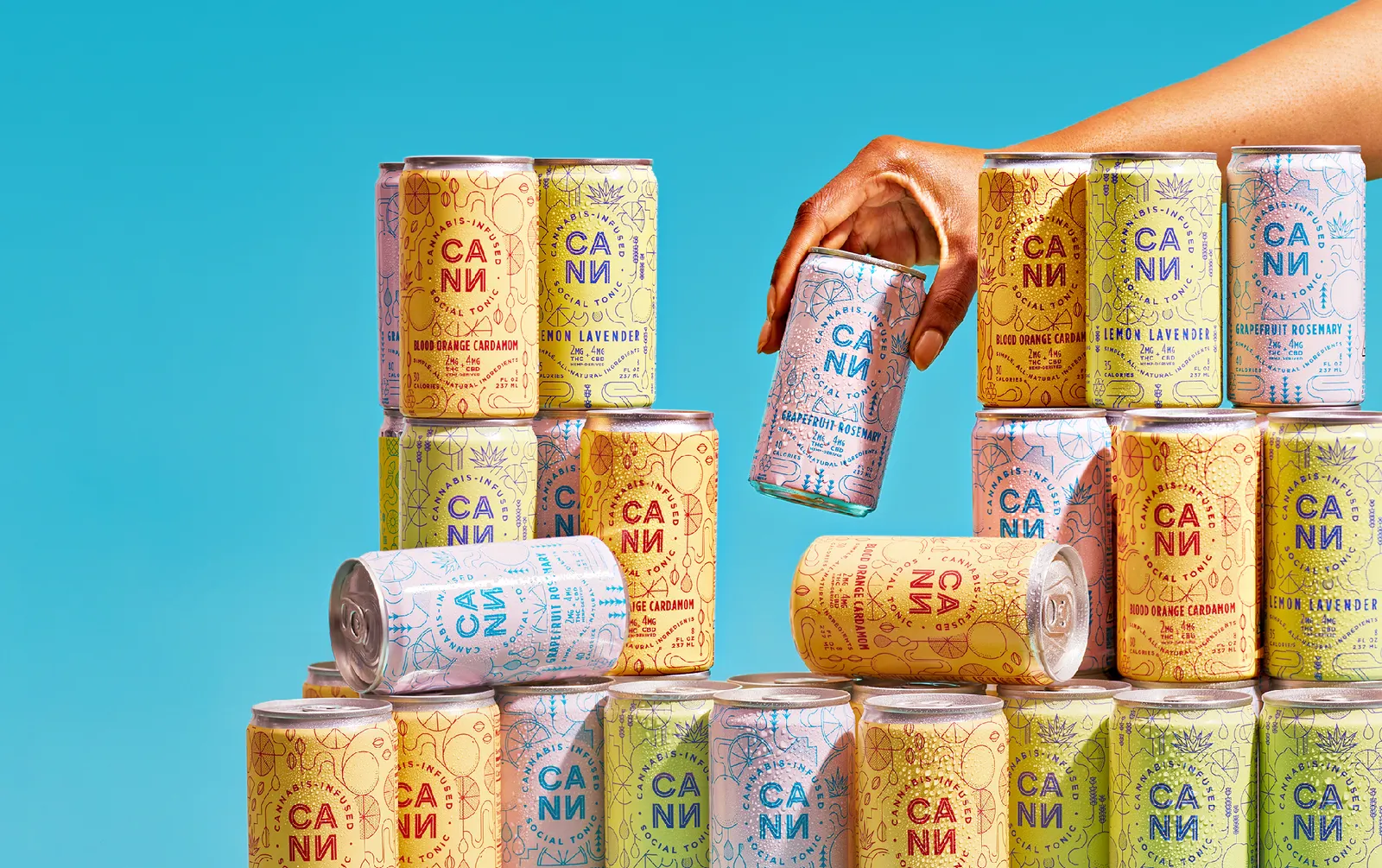
Poye added that the hemp ruling will be “super disruptive,” especially for smaller convenience retailers that have managed to carve out a niche through hemp-derived products.
“There are several retailers that are within close proximity to me here in East Nashville that have multiple doors in their cold beverage set that are fully dedicated to CBD products,” Poye said.
One pivot c-store retailers can make is to turn their hemp and CBD sections into what they used to be. For instance, in areas of the store that currently house cold CBD drinks, they can dedicate that space to packaged beverages or beer, Poye said. But even if beer and soda and energy drinks are moved into that part of the store, those products likely won’t make up the profits that premium hemp and CBD items generated.
GLP-1s will take hold
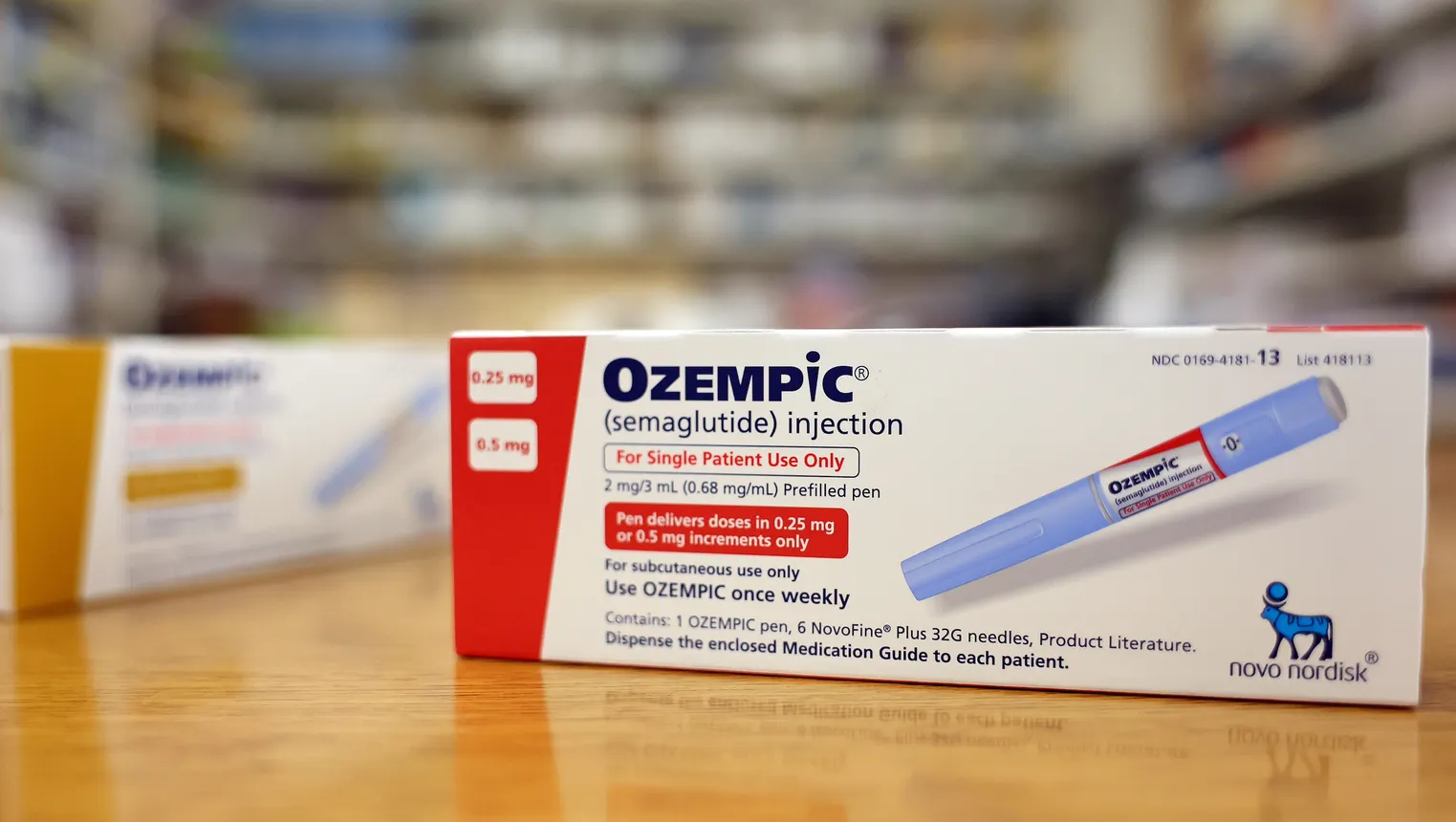
GLP-1’s are here to stay. Circana research found that about 23% of households contain at least one person using the medication, with overall usage at about 6% of adults, according to Portalatin.
While people on GLP-1’s eat less, Cox noted this cohort will still eat out if they feel what they’re getting is worth the price and the time to stop. But to capitalize, c-stores need to have attractive offerings for GLP-1 users — including items with protein.
“I think protein is just starting from a snacking standpoint,” said Cox. “I think you're going to see protein continue to evolve in big ways.”
It also opens the door to cross-category, multi-benefit items, like Spylt milk, a caffeinated dairy beverage with 20 grams of protein, noted Johnson.
Poye noted that retailers should consider adding “some sort of image that kind of says, ‘Hey, this is for the GLP-1 customer.”
Portalatin also pointed out that because of the health goals many GLP-1 users have, they may even add extra occasions
“You get to have that treat or reward because you've earned it,” said Portalatin.
Meal deals will evolve
While meal deals are a staple of c-store foodservice, experts see continued financial tension among consumers making them even more important in 2026.
Bundles can offer a great way for CPGs to encourage trial of new c-store items, and Sotrop said the space could see more of that in 2026.
“Everybody's trying to get out there and really see what they can do to kind of stretch their legs in terms of a combo meal using a vendor,” she said.
Beverages can be another way to push bundles forward. In addition to the growing ability to extensively customize drinks in c-stores, fountain drinks can also offer a cost benefit, since restaurants can sometimes charge $4 or more for a soda.
“The value doesn't have to just be on price, although convenience stores can clearly have a price advantage,” said Johnson. “It can also be around the overall quality and experience that they're getting by them being able to customize their drink and … bundle products.”
C-stores can tap into the variety of products found within their walls to give customers even more choice. Sotrop highlighted the $8 “Fuel Kit” promotion Pilot tried in summer 2025, which let shoppers pick any regular size candy bar, a small bag of any Frito-Lay chip variety, any size fountain rink and three chicken tenders.