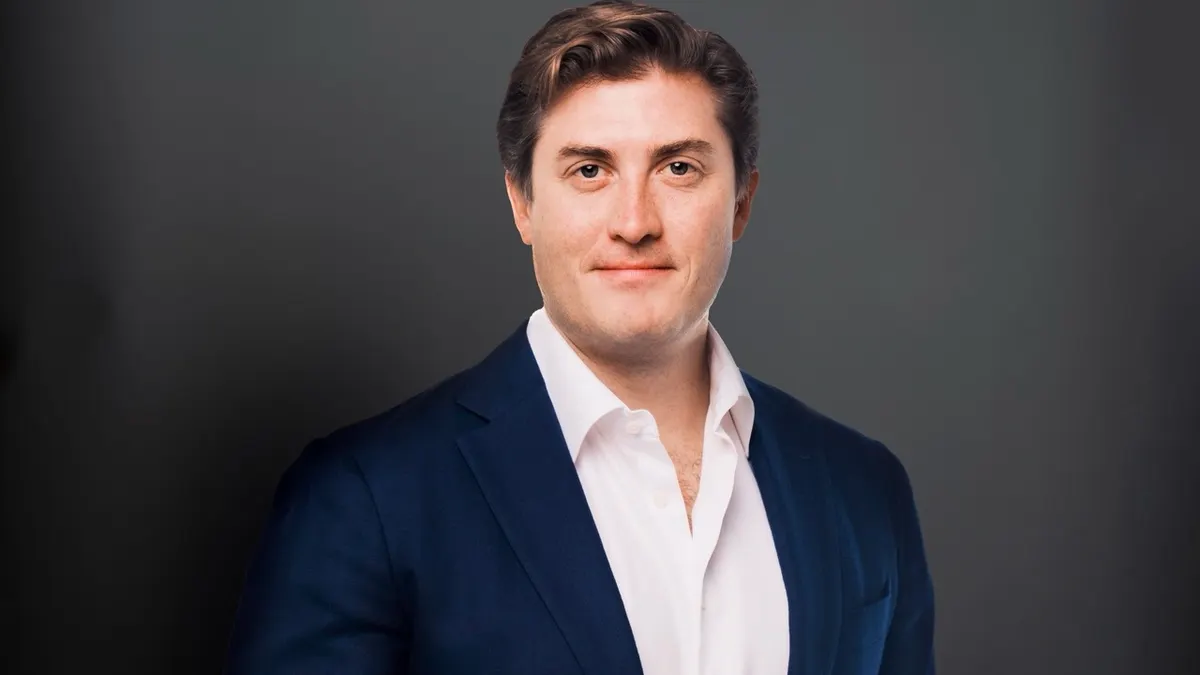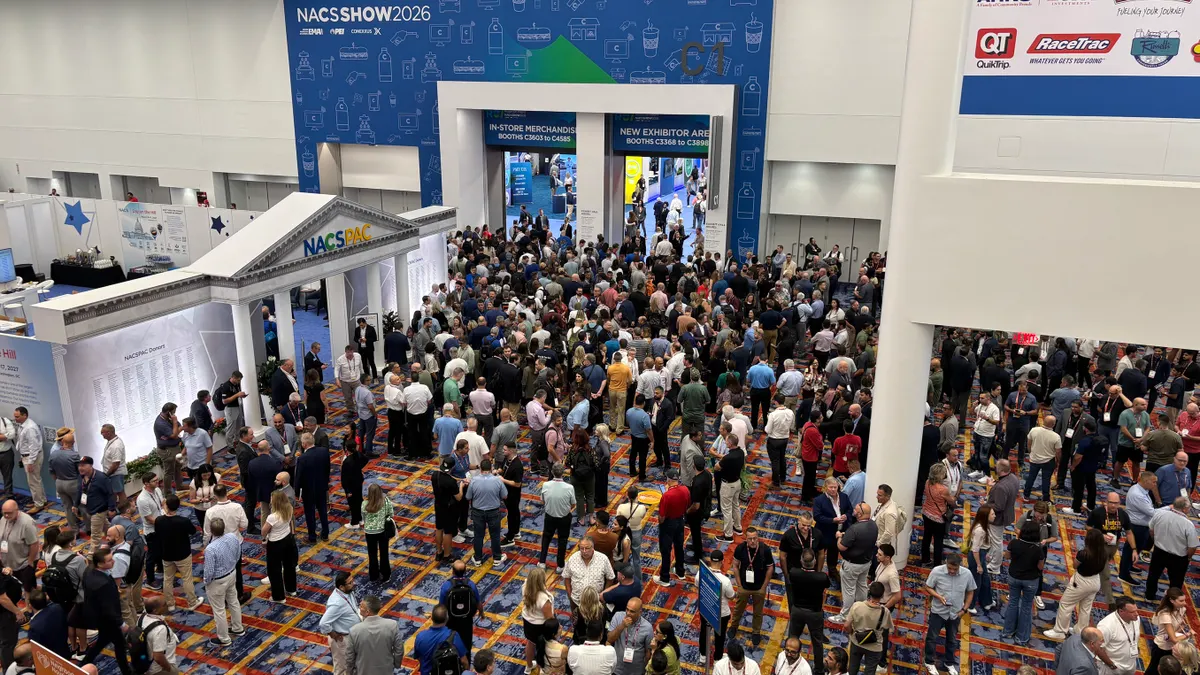
In a presentation to a room full of analysts and investors in New York City in late June, Darren Rebelez laid out the framework for how Casey’s General Stores intends to grow over the next three years.
The plan includes adding 400 convenience stores through a combination of new builds and small-scale acquisitions, growing inside sales by the mid-single digits and increasing EBITDA at an 8%-10% compound annual growth rate.
Before attendees had a chance to ask how the company would achieve those goals, Rebelez, the retailer’s president and CEO, said simply: Casey’s will keep doing what Casey’s does.
“What you will not see today is a radical departure from a strategy that's been clearly working,” Rebelez said.
At a time when tariffs, geopolitical uncertainty and other economic headwinds have made the convenience retail operating environment more challenging, Casey’s has continued to outperform the industry, particularly inside its stores.
Since the company began publicly reporting inside same-store sales in fiscal 2021, Casey’s has posted positive growth every year despite inflation and shifting consumer spending habits in a post-pandemic society.
Casey's inside same-store sales
Casey’s consistency has become increasingly unusual in convenience retail. Competitors including 7-Eleven, Alimentation Couche-Tard and Arko have reported softer merchandise demand and, in some cases, negative same-store merchandise sales growth.
So how is Casey’s accomplishing this impressive feat?
The answer, according to company executives and industry analysts, comes down to treating its c-stores like restaurants, operating an integrated business model that’s specific to Casey’s and executing that strategy with remarkable consistency.
Thinking like a restaurant
Although he’s spent most of his career in convenience retail, Rebelez brought a restaurant operator’s mindset to Casey’s when he became CEO in 2019. He had spent more than four years as president of IHOP, where he helped the pancake chain grow same-store sales, expand beyond its traditional breakfast positioning through a viral burger campaign and invest in digital ordering and delivery.
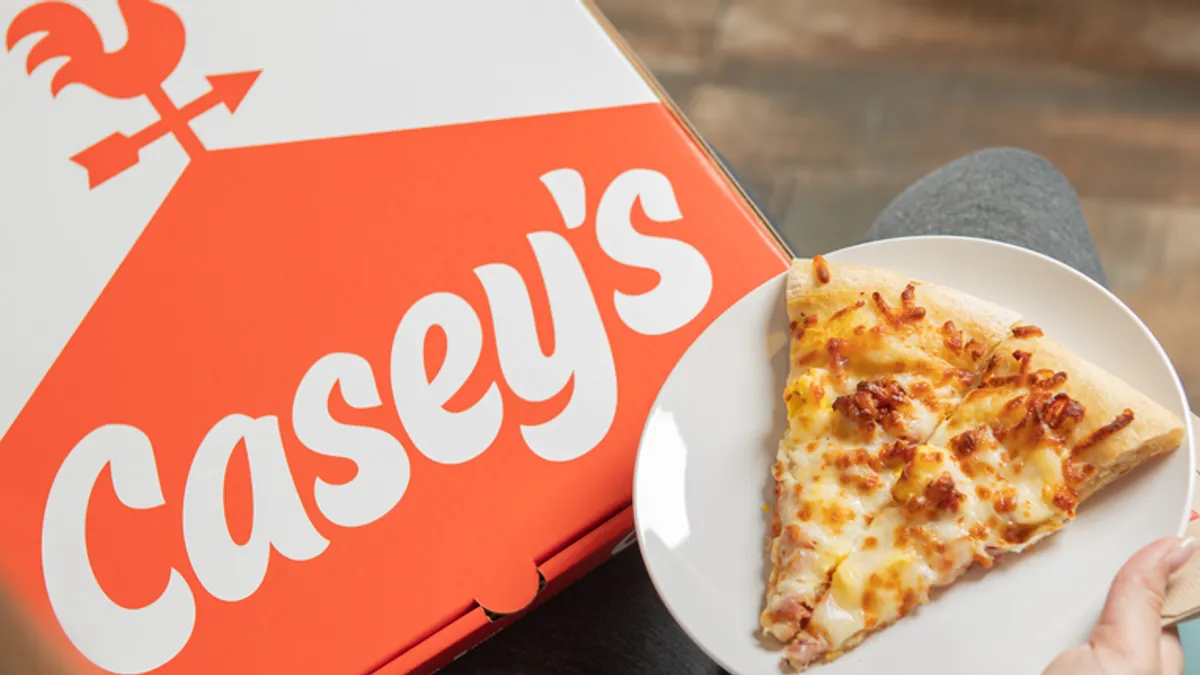
Seven years later, pancakes have given way to pizza and chicken wings as Rebelez has managed Casey’s less as a convenience store chain and more as a restaurant brand.
“We are not playing [the] c-store foodservice game — we are playing [the] restaurant game, and we're doing it the way restaurants do,” Rebelez said during a press conference on June 25. “I ran a restaurant company, I know how it gets done, and this is the way we're doing it.”
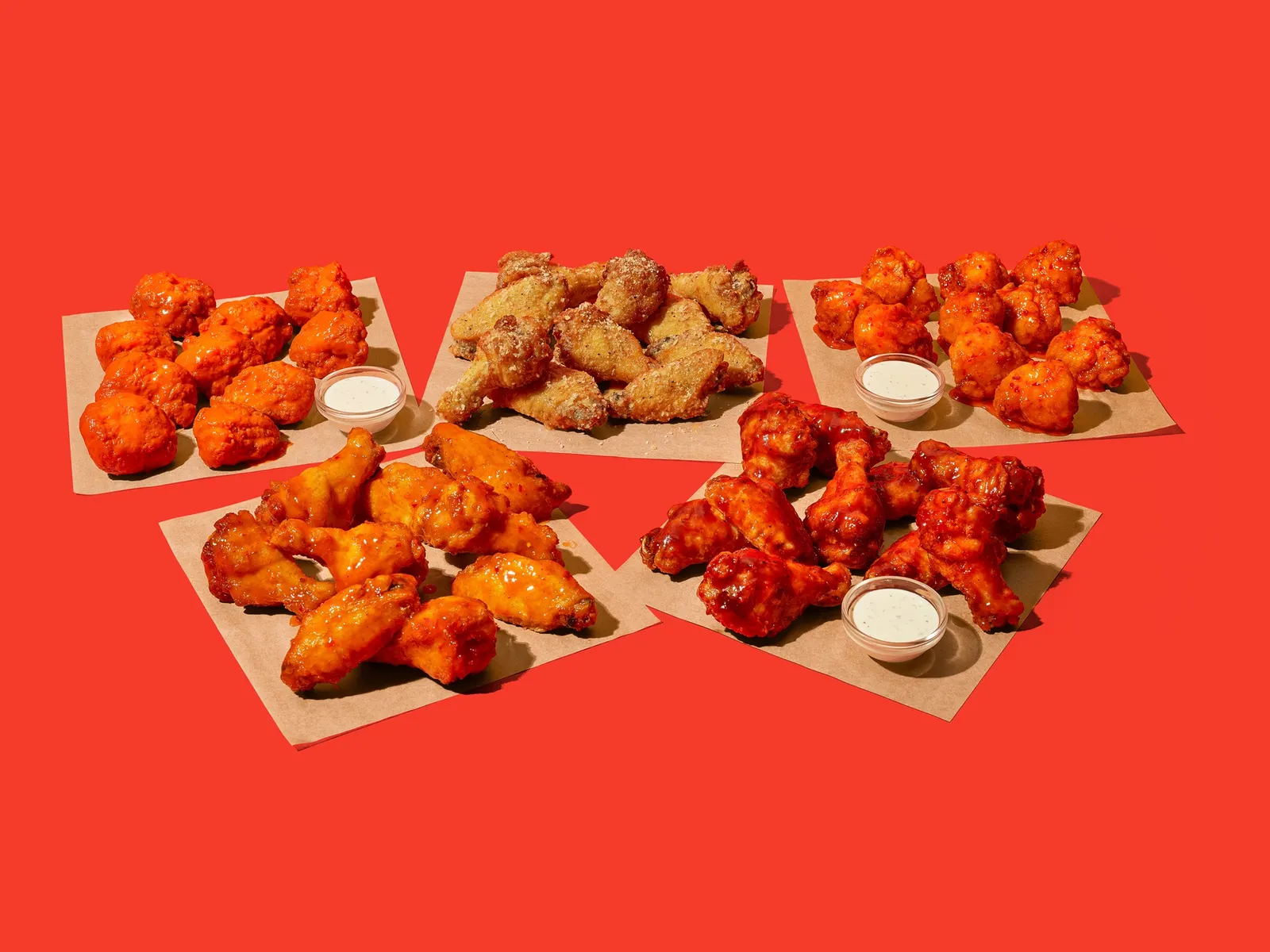
Wings have become a major growth opportunity. Casey’s has already introduced the new signature item in 850 stores and plans to have them available across its entire network by the end of 2028, Brad Haga, senior vice president of prepared food and dispensed beverages, said during the investor day presentation.
“I ran a restaurant company, I know how it gets done, and this is the way we're doing it.”

Darren Rebelez
President and CEO of Casey's General Stores
Rebelez said Casey’s food business is the company’s “true differentiator” — not only among convenience retailers, but also in competing against restaurant chains.
According to Casey’s investor presentation, QSRs are facing challenges from thin profit margins, heavily franchised operating models, increasing off-premise consumption, higher costs and declining traffic.
Casey’s believes its model provides a different path. Rebelez credits the company’s “flywheel” approach — a self-reinforcing growth model built around prepared food and dispensed beverages, grocery and general merchandise, and fuel — as a key reason for the company’s success.
He described the flywheel as “a three-legged stool,” with each of these three business lines operating under one shared cost structure. That structure allows Casey’s to generate diversified cash flow and reinvest into its value proposition, which drives more customer traffic and strengthens the business over time, Rebelez said.
“The success of this flywheel has led to strong financial results and has been doing so for a long time, but recently those results have accelerated,” Rebelez said. “Consistent store count growth coupled with robust inside sales is proof that the Casey's model is working.”
On top of that, Casey’s benefits from owning and operating its network of nearly 3,000 convenience stores, unlike large QSR competitors and major public c-store chains such as 7-Eleven, Circle K and Arko that rely heavily on franchised or dealer-operated stores.
“We have the flexibility to make timely decisions that are in the best interest of Casey’s — not an individual store or a franchisee,” he said.
But Rebelez doesn’t solely credit Casey’s success to its food-focused growth model.
When asked during the press conference why Casey's has continued to succeed while many competitors have struggled, he pointed to another advantage: leadership continuity. The executives presenting alongside him at the investor day were the same group that stood on stage three years earlier, he noted.
“The least tenured leader on that stage yesterday has been in their job for six years,” he said. “I think that continuity of leadership and everybody getting really good at their jobs, myself included, having some tenure now, really helps a lot from a leadership perspective.”
“We have the flexibility to make timely decisions that are in the best interest of Casey’s — not an individual store or a franchisee."
Darren Rebelez
President and CEO of Casey's General Stores
Stock analysts agree that Casey’s consistent growth over the past few years has been particularly impressive.
Steve McManus, vice president of equity research at financial services firm BNP Paribas, described the company as "building the best food engine in c-store retail" in an investor day recap shared with C-Store Dive.
He said Casey's "food advantage continues to widen," particularly as it gains pizza market share from legacy QSR chains whose economics remain under pressure.
“The model offers both defensive and offensive characteristics, and a rural focus drives superior unit economics,” McManus wrote of Casey’s foodservice program.
Greg Halter, director of research at Carnegie Investment Counsel, reached a similar conclusion. He said Casey's emphasis on foodservice in rural communities has created a durable competitive advantage and that the company still has significant room to expand.
“They make all their pizza dough from scratch … and just things like that have set them aside from others,” Halter said. “If you’re driving through one of those [rural] towns, what are your options?”