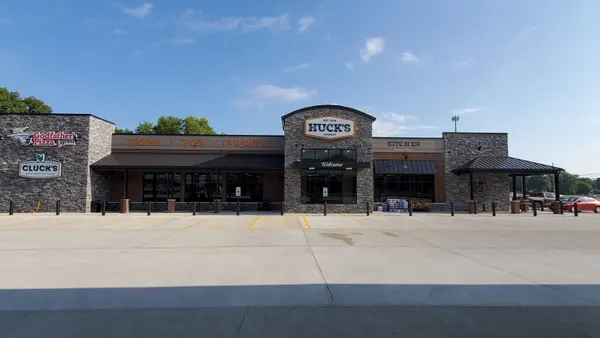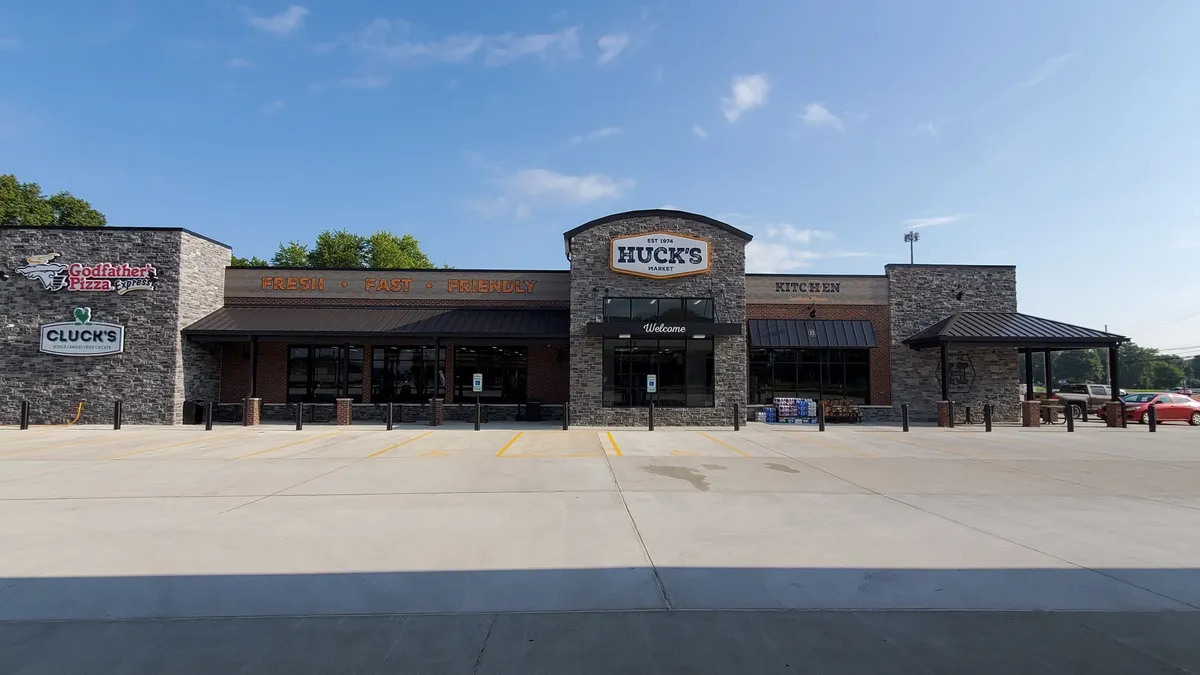
One misconception people have about convenience stores is that running them is easy, noted Murat Tokad, president and CEO of Martin & Bayley, parent company of Huck’s Market.
“A lot of people think that it's just a gas station, right?” he said. “You buy gas, you buy cigarettes. No, it's not like that. It's extremely complicated.”
The industry can be slow to innovate, but some retailers, like Huck’s, try to keep up with changing technology to address the problems that these increasingly complex operations face and position them for the future.
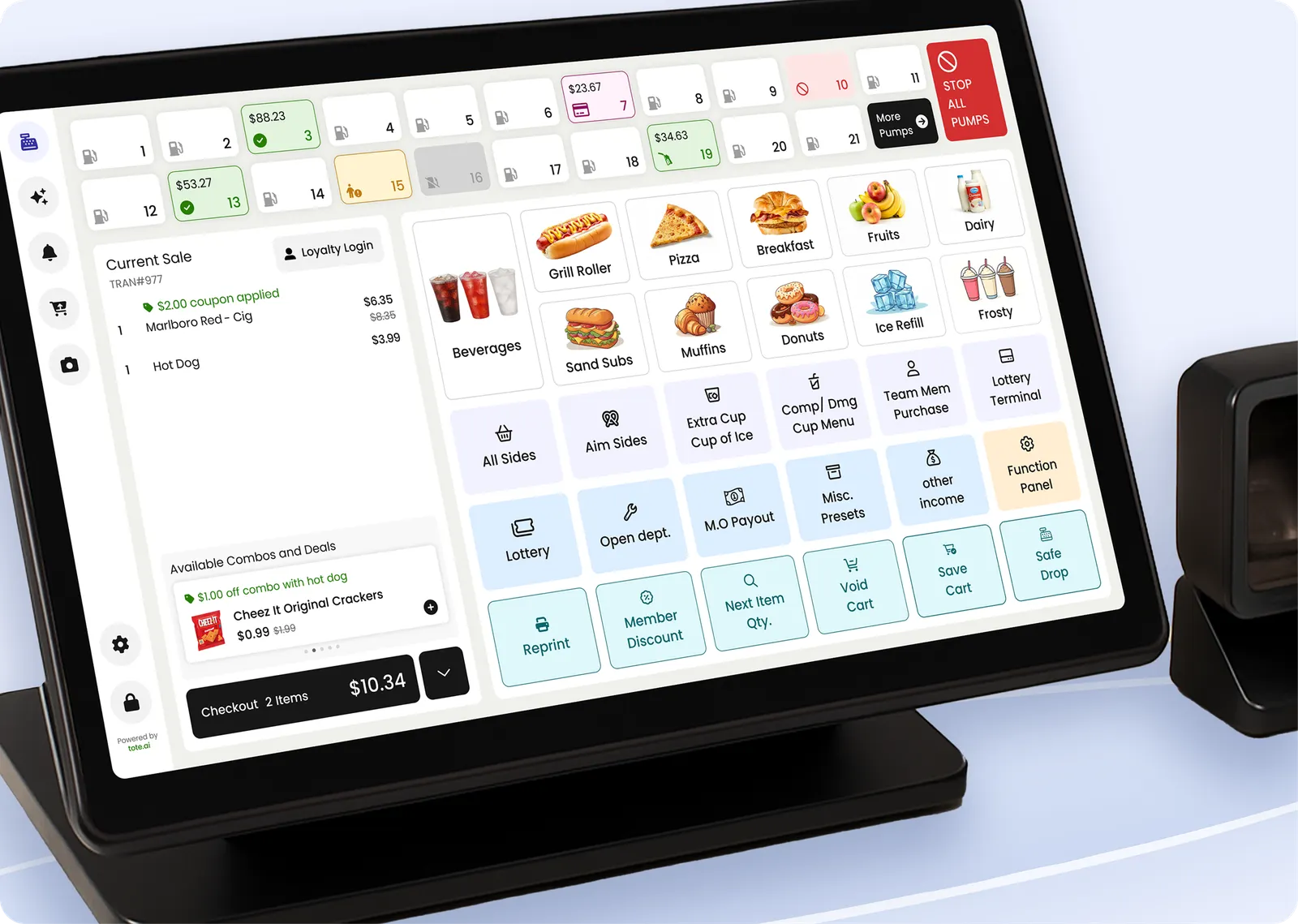
In June of 2025, Huck’s began testing a new AI-native point of sale system from Tote.ai at its flagship location in Carmi, Illinois. Less than a year later, the convenience retailer is hoping to add that system to all of its 135 locations across the Midwest by the end of the year.
While Huck’s had no issues with its existing tech partner, the retailer wanted more flexibility and a more streamlined presentation in which every part of the tech stack could talk to the other parts.
“I wanted something simple,” said Tokad. “I wanted something clean … customizable, and I didn't want to invest a lot of money on the hardware piece.”
The hardware issue is part of what led Huck’s to Tote.ai, which can use existing infrastructure, like pin pads, pumps and printers, said Shyam Rao, founder and CEO of Tote. This will make future updates easier as well.
Making the technology easier
One of the big selling points was how easy the program not only is to use, but also how it can make workers’ jobs easier. For example, training covers a lot of details, and there may be instances where some detail gets missed, or the associate forgets.
“I used to be a cashier before. I know how it is or how it feels not to know something … It's just embarrassing. And I don't want our associates to go through that.”

Murat Tokad
President and CEO of Martin & Bayley
“Even the best-in-class companies out there, I will find that associate who has not been trained properly,” said Tokad.
Tote.ai can reinforce training and fill knowledge gaps. Its AI assistant can accept typed questions, as well as spoken ones on some devices, and return answers quickly, pulling the data directly from Huck’s own training materials. If a worker can’t remember what identification the company accepts for a tobacco purchase or how to handle an irate customer, they can get that answer in moments and continue with their work.
“I want to be able to equip our people with all the knowledge that they deserve,” said Tokad. “I used to be a cashier before. I know how it is or how it feels not to know something … It's just embarrassing. And I don't want our associates to go through that ”
The system can be loaded with images to show a process step by step, and can translate instructions into multiple languages, Rao added.
While the AI agent supports workers through the POS system, customers can interact with a different version that’s integrated on Huck’s website and in its app. They can ask questions about the store, such as what sales and specials are currently running. It can also help Huck’s engage more deeply and quickly.
“We've spoken as an industry about, hey, how do we bring people in from the pump to the store?” said Rao. Tote’s integration makes it easier for those shoppers to start building a cart while they’re at the pump. Then they can go inside and “with a simple tap, transfer the cart and pay and leave.”
Reciprocal relationship
While Huck’s was learning how to use the new system, Tote.ai was also learning from Hucks.
“A lot of the product we designed is because of direct feedback from Murat and the team in terms of their pain points,” said Rao.
Part of the development of the AI assistant came from interviews with managers, who shared their difficulties around training and reinforcing processes.
For another example, Huck’s employees highlighted that if there was a problem at the self-checkout register, the worker had to physically leave the register to help, or else the entire basket would need to be re-scanned at the manned checkout station.
“In our system, if you get stuck at self checkout, the cashier doesn't move,” said Rao. “They can literally access the self checkout cart from the POS.”
In the end, though, it all comes back to the ease of use — and how important that is for complicated businesses like convenience stores.
“The system should just work,” said Rao. “It shouldn't be a detractor from the art of the possible. It should be an enabler.”