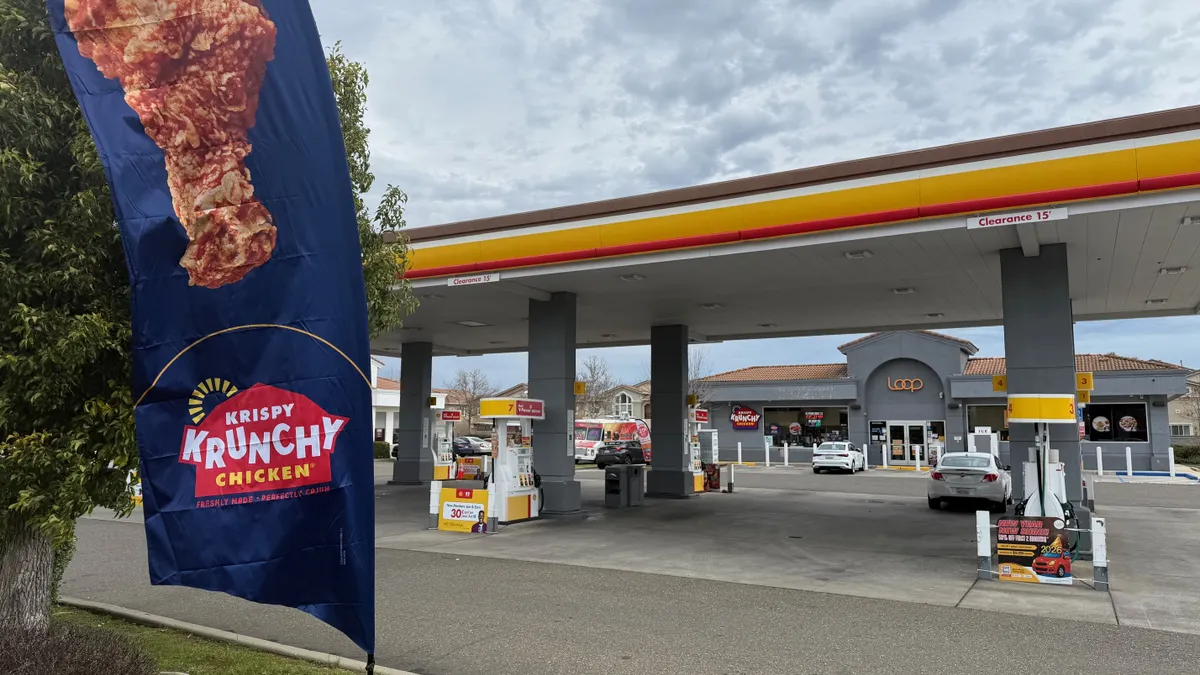
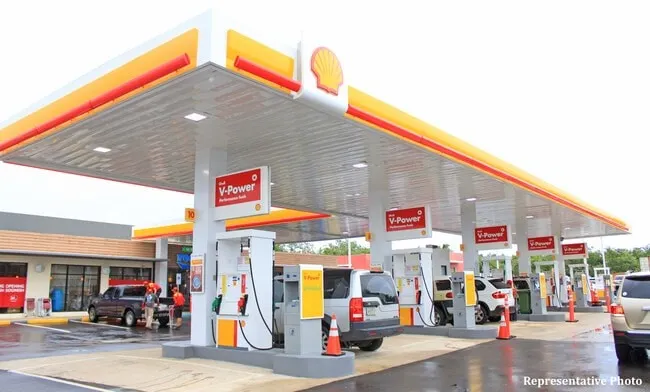
In late 2021, Halden and Kathy Miller’s real estate broker showed them a photograph of a Shell-branded gas station with a convenience store.
The forecourt had about 10 fuel pumps and was clean and packed with customers, while the store had bold and colorful branding. The broker was clear that the photograph wasn’t of the location the Millers were looking to potentially purchase, but said it represented what their future site could one day become.
Their reality would turn out vastly different.
The Millers, who live in Northern California, sought to buy property as part of a 1031 real estate exchange after they sold a home they owned in the Bay Area. Their broker recommended a gas station with a c-store in Rayne, Louisiana, a small town about 20 miles west of Lafayette. Available for just over $1 million, the Rayne site was close enough in value to the Miller’s Bay Area home to make the exchange.
The seller was a Georgia-based retailer and fuel company called Mountain Express Oil, which wanted to sell the location as part of a 20-year sale-leaseback agreement in which the Millers would own the site and Mountain Express would handle the day-to-day operations and maintenance needs.
The Millers learned that Mountain Express had financial backing from a real estate investment trust and had acquired hundreds of retail fuel sites via sale-leaseback in just a few years. While the Millers had no experience in convenience retail, Mountain Express did — and that was enough for them to pull the trigger. In July 2022, the deal closed without the Millers ever visiting the store.
Behind the scenes, however, Mountain Express’ co-CEOs, Lamar Frady and Turjo Wadud, were allegedly siphoning millions of dollars the company made into separate entities they owned instead of spending it on improving the stores. Many of the c-stores Mountain Express leased were neglected and ended up in dire condition. Eventually this led to the company going bankrupt in March 2023 and ceasing operations that August.
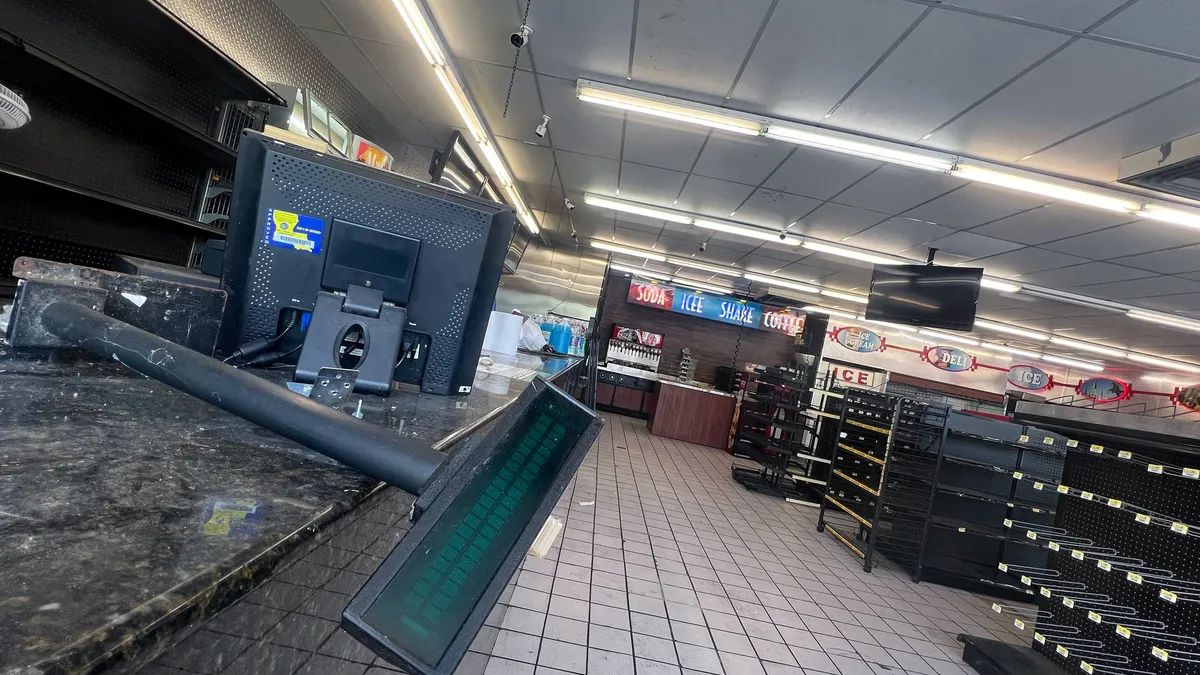
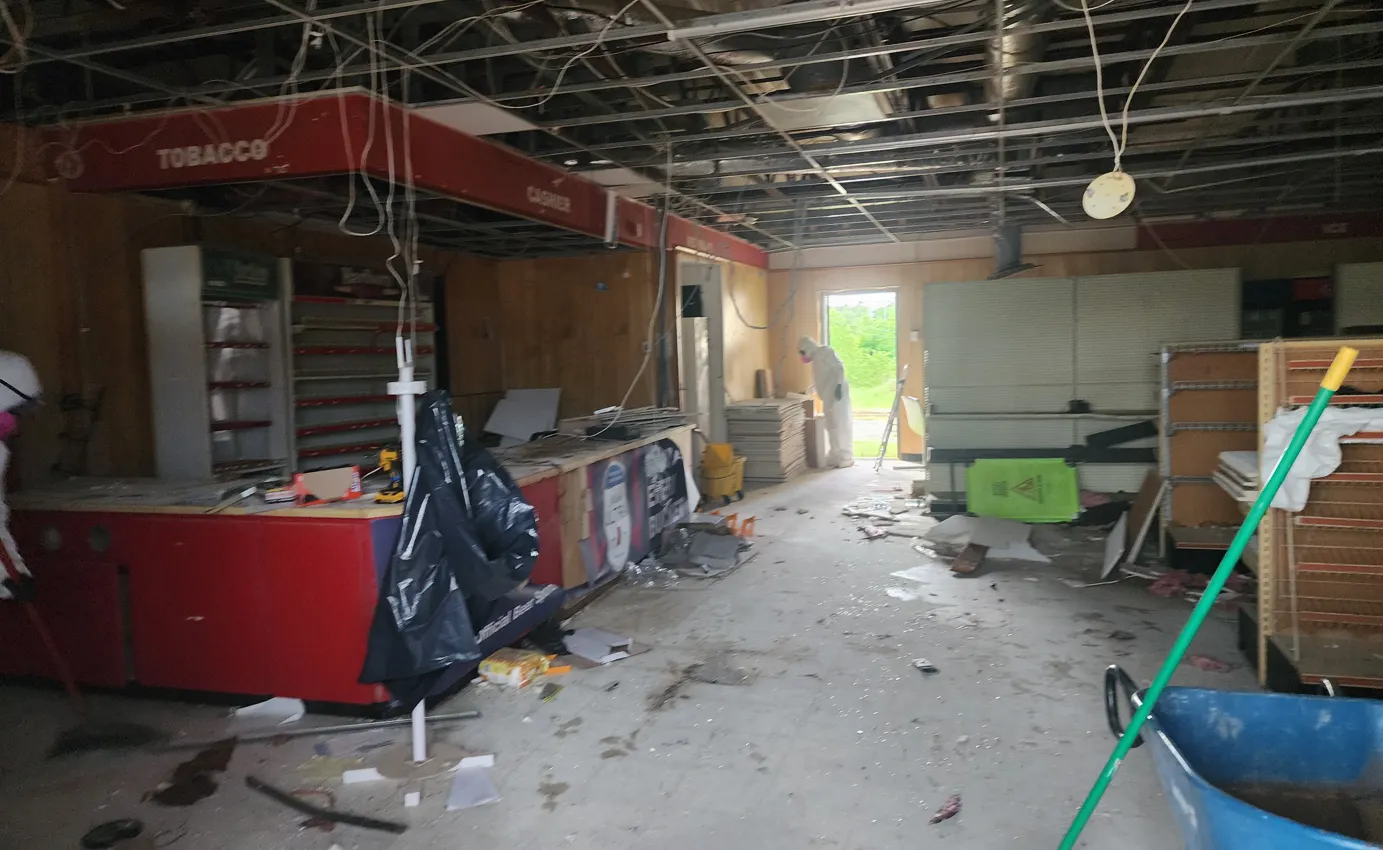
That neglect included the Millers’ store. About eight months into ownership, the Millers stopped receiving rent and learned that Mountain Express never even began operating the location. Although the previous owner who ran the store was informed of the sale, Mountain Express didn’t remove them. The former owner continued to take profits from the store’s adjacent restaurant and only left when, according to the Millers, the site ran out of fuel due to lack of payments from Mountain Express.
Three years after Mountain Express stopped paying rent following its bankruptcy, the Millers’ store has done nothing but bleed money — about $3,500 every month including property taxes, they said. The building is a “wreck” and there are potholes in the parking lot, Kathy Miller said.
“It’s not what we thought we purchased at all,” Kathy Miller said.

Meanwhile, in the years since Mountain Express’ shocking collapse, the bankruptcy court in Atlanta continues to liquidate the company’s assets, while its founder and former co-CEOs face civil lawsuits related to the alleged siphoning and a sale-leaseback approach that former associates have characterized as similar to a Ponzi scheme.
The Millers are among numerous landlords that were misled by Mountain Express, whose history of financial mishandlings and corporate dysfunction continues to cause financial and emotional pain for the owners who thought they were making a sound investment.
Halden Miller said he often thinks back to when their real estate broker showed the photograph of the Shell station and what could have been.
“Even though I knew it wasn’t the same station, it was supposed to be brought up to those standards,” he said. “If I went there and saw it, would I have said ‘No?’ I don’t know, but I might have.”
Three years — and thousands in debt — later
The Millers weren’t the only landlords from Northern California who purchased a Mountain Express c-store in a distant part of the country.
John Canchola and his father, who are also based in the Bay Area, acquired their store in Oklahoma City in July 2022, and believed Mountain Express would update the store and forecourt as needed, per the lease agreement.
Just a few months later, Canchola received notice of several violations from the Oklahoma Corporation Commission for failing to register the location’s underground fuel tanks. He also learned that there were multiple easements on the property, rendering parts of the site unusable.
Canchola, whose story was included in C-Store Dive’s investigation into Mountain Express two years ago, spent most of 2023 and all of 2024 getting his store into compliance and paying off the defaulted fees that Mountain Express left behind. He worked with an in-house attorney at the Oklahoma Corporation Commission to remove the fuel tanks and paid off the easements.
He and his father also undertook a major construction project to make the store and forecourt more marketable to hopefully sell it. They gutted the restaurant inside the store, removed all appliances, built a gate at the front entrance due to frequent break-ins, put security cameras inside the building and installed new lighting in the forecourt.
“It just got to a point where it was draining, to keep this property away from any vagrancy,” Canchola said.
“We wrapped up close to about $60,000 in debt."

John Canchola
Former Mountain Express landlord
The project took 45 days, during which Canchola and his father lived in a nearby hotel and paid a crew of four to work on the store. These additional expenses began to pile up on top of the thousands they were already paying in the store’s mortgage payments, property taxes and insurance.
Canchola said he even had to pull a home equity line of credit out of his house and a second loan on another one of his rental properties. He said he and his father were close to filing for bankruptcy.
“We wrapped up close to about $60,000 in debt,” Canchola said.
The battle for accountability
While landlords have worked to recover from the fallout, a separate battle has been unfolding in court.
Although the 2023 Chapter 7 filing appeared to accuse Mountain Express’ former co-CEOs, Frady and Wadud, of siphoning funds from the company into separate entities they owned together, it wasn’t until March 2025 that the Federal Court in Atlanta opened separate lawsuits against them for their alleged misconduct.
The court also sued Mountain Express Founder Barry Bierenbaum for similar conduct before he left the company in 2020.
At the time, the court accused the three individuals of misappropriating hundreds of millions of dollars. By last June, three former Mountain Express chief financial officers testified in court that they witnessed Frady’s and Wadud’s siphoning during the company’s rapid sale-leaseback spree between 2020 and 2023.
In the nine months since then, the court has asked several other individuals associated with Mountain Express, Frady, Wadud and Birenbaum to give depositions and witness testimony into their actions.
Recapping Mountain Express' past 3 years
-
March 2023Mountain Express filed for Chapter 11 bankruptcy protection. The retailer said its c-stores were expected to maintain normal operations during this reorganization. Days later, it received post-petition financing tied to a sale process.
-
August 2023Arko Corp., parent company of GPM Investments, submitted a successful bid of $49 million to acquire Mountain Express. About two weeks later, Arko backed out, and Mountain Express was forced to cease operations and terminate its 1,000-plus employees.
-
March 2024The bankruptcy court confirmed an investigation into Lamar Frady and Turjo Wadud, co-CEOs of Mountain Express from 2020 to 2023, for “the potential siphoning of millions of dollars” from the company into separate entities they owned.
-
May 2024Mountain Express Oil’s former chief financial officer, Gina Zamarelli, testified that Frady and Wadud siphoned company funds while they were leading the convenience retailer.
-
February 2025Investment management firm Blue Owl Capital — which financed Mountain Express' growth between 2020 and 2023 — and its chief of staff agreed to a $15 million settlement relating to accusations of breaching their fiduciary duties, aiding and abetting breach of fiduciary duty, civil conspiracy and fraudulent transfers.
-
March 2025Litigators in Georgia sued Frady, Wadud and Mountain Express Founder Barry Birenbaum in an attempt to claw back siphoned funds.
-
July 2025Two more former CFOs of Mountain Express who testified in court characterized the retailer’s growth strategy as similar to a Ponzi scheme.
-
March 2026Georgia litigators appointed U.S. Bankruptcy Judge Mary Grace Diehl to oversee a mediation “with a goal to reach a settlement” before the lawsuit against Frady and Wadud goes to trial.
According to an attorney directly involved with the bankruptcy case and the litigations against the three executives, the lawsuits aim to claw back as much money as possible to return to Mountain Express’ creditors.
For landlords like the Millers and Canchola, this litigation may be their only chance of recouping any portion of their investment.
“The trustee recovers money from these lawsuits, then that money will go into the bankruptcy case to be distributed to creditors who are holding claims,” said the attorney, who spoke on the condition of anonymity because they were not authorized to discuss the matter publicly.
Still, the process offers no clear timeline — or guarantee of recovery.
When asked what the penalty could be for Frady, Wadud and Bierenbaum, the attorney declined to comment, emphasizing that their job is to help the bankruptcy trustee recover money. When it comes to clawing back those funds from the three executives, there’s no timetable for when that process might end, the attorney said.
“Litigation takes a long time,” the attorney said.
There are signs that a settlement may be nearing in the litigation against Frady and Wadud. In early March, the court appointed U.S. Bankruptcy Judge Mary Grace Diehl to oversee a mediation “with a goal to reach a settlement” before the lawsuit goes to trial.
Although the filing did not specify a date of the mediation, in a statement to C-Store Dive, Diehl said that the hearing will occur on May 21.
To sell or not to sell
The work Canchola and his father put into the store paid off, as they were able to sell it in January 2025 to a boat rental company, which he said removed any trace that the location was once a c-store and gas station.
The deal was for $600,000 — almost exactly half of what Canchola and his father originally paid back in 2022.
“Looking back, it was a blessing that we even got that,” he said.
“Ideally I just want to sell it and get out of it — that’s where I'm at. The question is, how low do I go to get out of it?”
Halden Miller
Current landlord for a c-store and gas station formerly leased by Mountain Express
Canchola said he is still a buyer and seller of real estate but “not as aggressively anymore.” He emphasized that the Mountain Express ordeal has given him a new understanding of real estate. Whenever a broker emails him about a property, he ensures he’s doing the utmost due diligence, from soil testing to checking for easements.
“You trust that people out there and these big corporations will do the right thing, and before you know it, you're sabotaged with bad actors like this,” he said.
For the Millers, there is still no clear way out.
The couple’s store sits vacant. They have tried countless times to sell it, but can’t stomach the low offers they receive due to the store’s dire condition and association with Mountain Express. Halden Miller said their broker has brought over 30 potential buyers to the table, all of whom fizzled out “for one reason or another.”
Halden Miller said they have received offers from real estate companies to become the leasees for the store, but his experience with Mountain Express has made him apprehensive about once again becoming the landlord, fearing the rents would once more go unpaid.
“Ideally I just want to sell it and get out of it — that’s where I'm at,” he said. “The question is, how low do I go to get out of it?”