Cryptocurrencies have been making inroads in the c-store industry in the past few years, from 7-Eleven dipping into Slurpee-themed digital collectibles to Sheetz accepting several cryptos for payments.
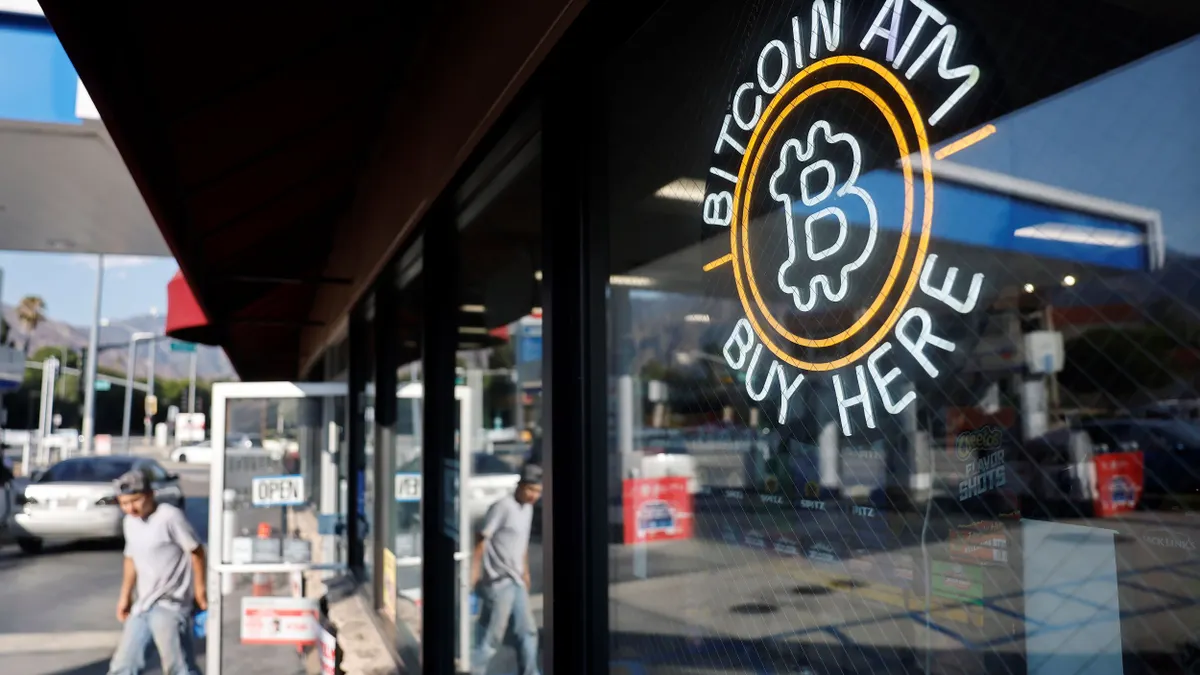
And then there are crypto ATMs, offered by a variety of vendors and already available at a number of major convenience retailers, including 7-Eleven, Jacksons Food Stores, Nouria, Circle K and more. These kiosks allow people to buy cryptocurrency and can generate passive revenue for the retailers placing them inside stores — but they have also become magnets for scams in recent years and the target of legislation in some areas.
There are a number of benefits and drawbacks that retailers must weigh when deciding if they want to add one to their store, experts note.
“It’s something the c-store industry should care about because those are obvious locations for bitcoin ATM kiosks,” said Patrick Daugherty, a partner with Foley & Lardner, which includes innovation technology like blockchain and digital assets among its practice areas.
Crypto ATMs can boost traffic
As with most amenities, one of the main benefits retailers can see from crypto ATMs is increased traffic.
“We're bringing new customers, or more customers, through the doors,” said Drew Barnard, co-founder and CEO of bitcoin ATM company Bitstop. He noted that the ATM companies often market heavily online, making the stores their kiosks are located in a destination for interested parties.
It’s not just established crypto users either. Crypto ATMs simplify access to digital coins and tokens, which can attract new customers, Barnard said.
Crypto ATMs use cash rather than a credit or debit card, which can give crypto companies and the businesses that house ATMs access to the unbanked. Customer service lines help customers navigate the process of setting up a digital wallet, which users need to hold crypto.
“I think that's the value proposition — that convenience, the trust,” said Barnard. “Let me hold your hand, and we're gonna help you learn this together.”
But scams have been a problem
Customers unfamiliar with crypto may still be aware of crypto ATMs from headlines about how these machines have been used to scam people.
“It's something that we've had to deal with, similar to the gift card industry,” said Barnard.
Scammers often reach out to victims pretending to be someone they know or from a reputable organization. They then get the person to use a crypto ATM to transfer funds to them.
Scammers target crypto ATMs because the transactions are nonreversible, unlike bank funds, which may be recoverable.
“There are a lot of stories about customers basically emptying their wallets … to buy Bitcoin that they then send to someone that they think they know,” said Daughterty.
Crypto ATMs usually have warnings on signs or the machine’s screen. Barnard said Bitstop has been engineering other ways to catch potentially fraudulent transactions before they can be completed.
“If the customer might be coerced by a scam, we're trying to wake them up,” said Barnard.
Crypto ATMs bring in money
Retailers aren’t expected to give up room in their stores for free. Crypto ATM vendors pay to lease space inside to get access to the foot traffic a c-store can bring. For companies with multiple stores, there may be opportunities across the footprint.
“It can be actually a pretty decent bottom-line-add for them at scale,” Barnard said.
While most of Bitstop’s clients are paid a flat amount to lease the space inside the store, others receive a revenue share based on transaction volume.
Between the two payment options, Daugherty noted that the flat fee may be safer for retailers, rather than basing some of their remuneration on the transaction volume.
“If you do that, it's easier for the government or a customer to argue that you're part of the same team as the kiosk owner and operator, and you should be equally liable with it,” Daugherty said.
“If the customer might be coerced by a scam, we're trying to wake them up.”

Drew Barnard
Co-founder and CEO of Bitstop
While some amenities, like electric vehicle chargers or proprietary foodservice programs, can eat up a lot of the limited real estate, crypto ATMs take very little room. And c-store employees aren’t expected to maintain them.
“It's a two by two square foot little space,” Barnard noted. “In that small space, it maximizes some of the money that [retailers] make.”
They can alter people’s opinions of a store
With crypto still being unfamiliar to many customers — only around 14% of Americans owned cryptocurrencies as of last summer, according to a Gallup poll — adding a machine to access the market could impact customer opinions of the store, for better or worse.
“When I see one, I think, ‘Oh, OK, that store owner … understands what's going on in the world,’” said Daugherty. “And so it would tend to draw in people like me. Others may have exactly the opposite reaction.”
He suggested that before putting one in, retailers should consider what their target market is and make a decision based on that.
Barnard said crypto ATMs can extend the digital currency to people who might not otherwise be able to access it.
“I think there’s huge opportunities” in some of the more remote areas, he said, since they may not have other ways to participate in the digital economy as easily.
Knowledgeable crypto users may balk at using an ATM because the prices for coins and tokens can be higher through them.
“But some people just like the convenience of the ATM, right?” said Daugherty.
Regulations are changing
Crypto has come under increasing scrutiny and regulation.
Barnard said the U.S. Financial Crimes Enforcement Network, which counters illicit activity in the financial sector, is requiring these companies to do things like register as money services businesses and have the ability to recognize specific users and monitor for suspicious activities. About 20 states also have their own rules, like requiring the ATM companies to be licensed with the state or limiting the number of daily transactions a person can make.
These changes have consolidated the crypto ATM space, with the companies with the best compliance protocols surviving, Barnard said, but retailers should not become complacent.
“I would check the reputation and the past history of the company in question before leasing space to it,” said Daugherty.