Dive Brief:
- Yesway plans to open 130 new convenience stores over the next five years, the company said in a filing with the Securities and Exchange Commission late last week.
- Most of the stores will be new-to-industry builds and will be funded both directly by Yesway and via partnerships with real estate investment trusts and other real estate groups, according to the filing. Yesway said it expects to spend between $40 million and $50 million opening the first six to eight stores this year.
- These plans coincide with Yesway’s intentions to go public as the clock ticks down on the retailer's original 10-year investment fund from parent company Brookwood Financial Partners.
Dive Insight:
Yesway’s future has been in flux ever since leadership axed its IPO plans back in 2022 due to poor market conditions. A year later, when Yesway had just under 430 c-stores, President and CEO Tom Trkla told C-Store Dive the retailer intended to open 60 to 80 new stores per year moving forward.
However, at the end of 2025, Yesway only operated 448 sites, and will soon have less than 420 after it closes the $17.5 million sale of its c-stores across Iowa and Kansas to Mega Saver, which Yesway expects will happen in this year’s second quarter, according to the filing. Between June 2021 and December 2025, Yesway opened 59 NTIs.
With Brookwood’s investment fund in Yesway set to expire this year, the company was left with two choices: sell its assets or chart new growth. That question has now been answered.
Yesway said in the filing that it's “in the early stages of our long-term growth journey, with significant whitespace to continue our new store development activity in our existing and new markets.”
Most of the company’s new stores will be developed through Yesway’s “build-to-suit” program, in which a third party contributes the majority of the capital to construct the new store while Yesway oversees site selection, permitting, design and the construction processes. Once construction is done, Yesway operates the location under a long-term lease agreement. Yesway said this strategy will help increase its capacity to build new stores while reducing capital expenditures and accelerating EBITDA.
However, Yesway said it also intends to consider self-funding “an increasing portion” of these new stores, as it remains “mindful of the benefits of owning the real estate underlying our portfolio.”
A representative from Yesway declined to comment when asked what new markets it’s eyeing in its expansion. The company noted in the filing that the expansion could include both the Yesway and Allsup’s banners.
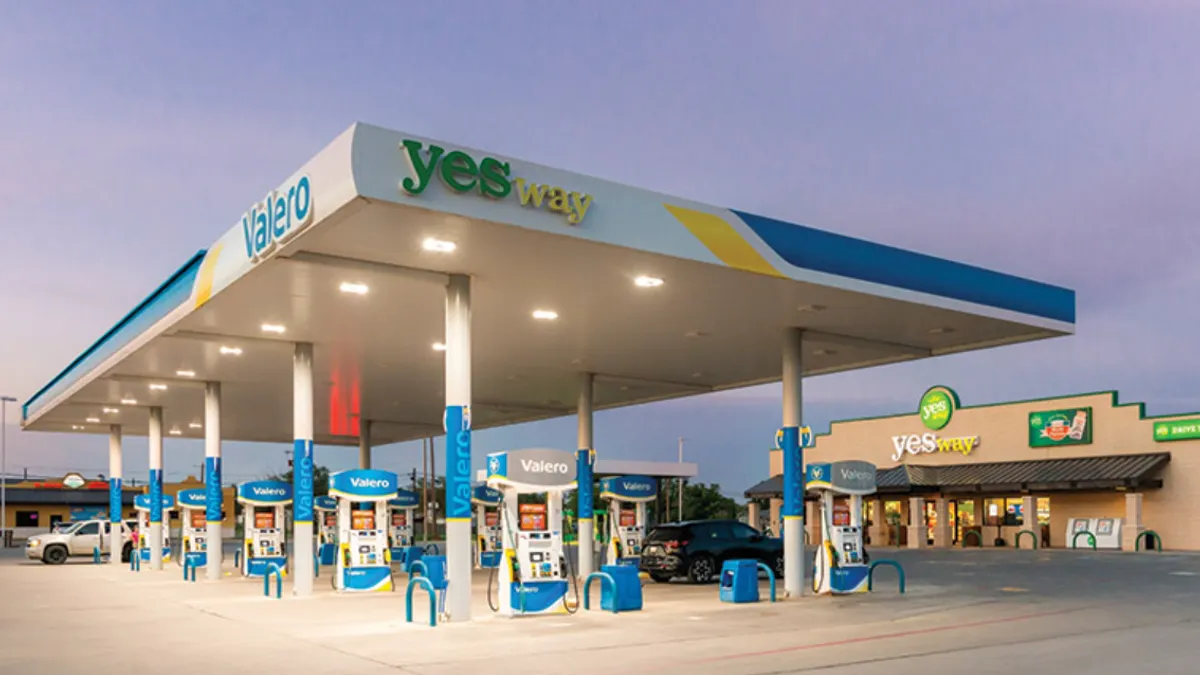
Yesway said it has already engaged numerous construction companies to help it accelerate the pace of its NTI rollout. These locations follow one of two formats, with stores of either 5,600 square feet or 6,300 square feet and featuring expanded forecourts and dedicated high-flow truck diesel lanes.
Yesway’s traditional stores average about 3,900 square feet. The larger space allocated to the new builds gives Yesway more storage areas and enhanced fuel offerings, as well as the chance to offer a broader assortment of SKUs.
“Each development is customized to reflect local market demographics and the unique characteristics of the lot, traffic patterns, and access points, allowing us to deploy capital efficiently without sacrificing customer experience,” Yesway said in the filing.
Although the majority of Yesway’s growth will come from NTIs, the retailer said it intends to “selectively pursue” strategic acquisition opportunities as part of its expansion plan.