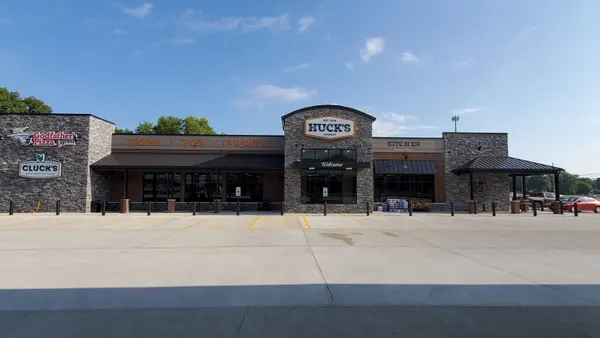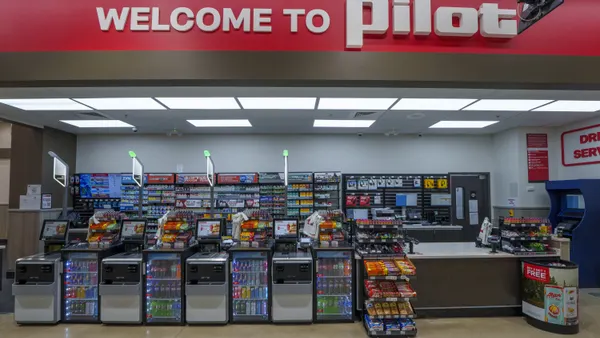

Running a convenience store is demanding; managing multiple locations only increases the complexity. Between staffing challenges, customer expectations, compliance requirements and maintaining accurate pricing and labeling, multi-site operators face constant pressure to run efficiently. In this environment, even small process improvements—faster checkouts, consistent labeling or reduced downtime—can make a measurable difference.
As convenience store networks expand, many operators are rethinking how they manage the core technologies that support daily operations, from printing and labeling to scanning and back-office documentation. The goal is consistency—ensuring that every location operates with the same efficiency and accuracy, regardless of staff experience or store size.
Eddie Blackburn, Manager of Retail Major Accounts at Brother International Corporation, shared in a sponsored conversation how convenience store operators can leverage standardized document management and labeling systems to improve consistency, control costs and maintain uptime across locations.
“When technology is consistent across locations—whether it’s a printer, label maker or multifunction device—employees spend less time troubleshooting or learning new systems,” Blackburn said. “Standardization creates predictable workflows that improve both speed and accuracy.”
Technology That Scales and Adapts
Employee turnover is a constant in retail, and convenience stores are no exception. With new team members frequently onboarding, technology needs to be intuitive, reliable, and quick to deploy. Devices that can be set up without extensive technical support help maintain uptime and operational consistency.
For organizations managing dozens or even hundreds of stores, scalable technology infrastructure makes a significant difference. Standardized devices and centrally managed systems enable faster deployment, simpler maintenance and greater visibility across the entire network—reducing the risk of downtime or compliance lapses.
As Blackburn noted, many convenience store operators are seeking solutions that are “easy to deploy, simple to maintain and designed to minimize downtime across locations.”
Reducing the Burden on Local Teams
Most convenience stores don’t have dedicated IT support on-site. When something goes wrong, the responsibility often falls to the store manager or whoever happens to be working that shift. Remote management capabilities help ease that burden, allowing issues to be resolved before they interrupt operations.
With centralized document and device management, IT teams can remotely monitor performance, deploy software and security updates and troubleshoot problems across every store in the network. This keeps locations running smoothly and lets in-store teams stay focused on customer service rather than technical challenges.
To further streamline operations, many organizations are adopting a “convenience-store-in-a-box” model — a standardized, preconfigured suite of document and labeling technologies that can be easily deployed across new or existing sites. This approach enables corporate branches to replicate a proven setup across dozens or even hundreds of locations, ensuring consistent performance, compliance and employee experience everywhere.
Labeling is one area where these efficiencies have an immediate impact. Errors in shelf or food labeling can lead to waste, compliance issues and lost revenue. When stores use reliable systems to print shelf tags, expiration dates and inventory labels directly from the back office, accuracy improves — and so does profitability.
“When labeling is simple and reliable, stores waste less and sell more,” said Tim Rounds, Director of Retail Major Accounts at Brother International Corporation. “It’s a small operational detail that drives measurable financial impact.”
Building for Growth
Convenience store chains often expand across multiple states and regulatory environments. As that growth continues, technology decisions made today need to support tomorrow’s scale. Enterprise-level visibility, simplified management and strong security practices all contribute to sustainable operations across a distributed network.
A scalable document management infrastructure allows organizations to maintain control of costs, standardize performance expectations and ensure business continuity—no matter where new locations open.
Focusing on What Matters Most
Convenience store leaders consistently emphasize the same priorities: simplicity, reliability and consistency. They don’t need complex systems; they need technology that supports employees, reduces errors and sustains uptime.
As Rounds explained, “When the right systems work reliably in the background, operators can focus on customers, their teams and the overall performance of their business.”
With decades of experience supporting retail and multi-site businesses, Brother International Corporation provides reliable, easy-to-use document management and labeling solutions designed to help multi-site operators work more efficiently. From streamlining device management to improving accuracy in labeling and scanning, Brother helps convenience store owners and operators maintain consistency, reduce downtime and keep their focus on customers.
To learn more about how Brother supports retailers and convenience store operators, visit brother-usa.com/businesscampaign/retail.