As cigarette usage continues to decline in the U.S., smokeless tobacco is making its case as the new darling of the backbar.
The smokeless category includes items like chewing tobacco, snuff and snus. But it’s nicotine pouches that have become an area of particular focus in the c-store industry, with sales in the U.S. expected to grow at a compound annual growth rate of almost 25% through 2033, according to research from Grand View Research.
Despite all that growth, however, the smokeless category is still far from the biggest piece of the nicotine business.
While cigarette sales were down 2.4% year over year for the 52 weeks that ended May 30, they still made up almost 70% of overall nicotine category sales, according to NielsenIQ and Goldman Sachs data.
Smokeless products are the second-biggest nicotine category
Still, smokeless nicotine products make up the second-largest piece of the nicotine category pie. Moreover, smokeless is the only category to see growth over the past year, with sales up over 8% for the full year, according to NielsenIQ and Goldman Sachs.
Cigars, the smallest category, saw a 1% pullback, while cigarette sales dropped over 2% and vapes saw a double-digits reduction in sales.
Breaking down the smokeless category
Three producers make up more than 90% of the smokeless nicotine category — Altria Group, British American Tobacco, and Swedish Match, a division of Philip Morris International.
Nicotine pouches are poised for huge growth, but only two nicotine pouch brands have earned marketing approval from the U.S. Food and Drug Administration.
The biggest companies in smokeless nicotine
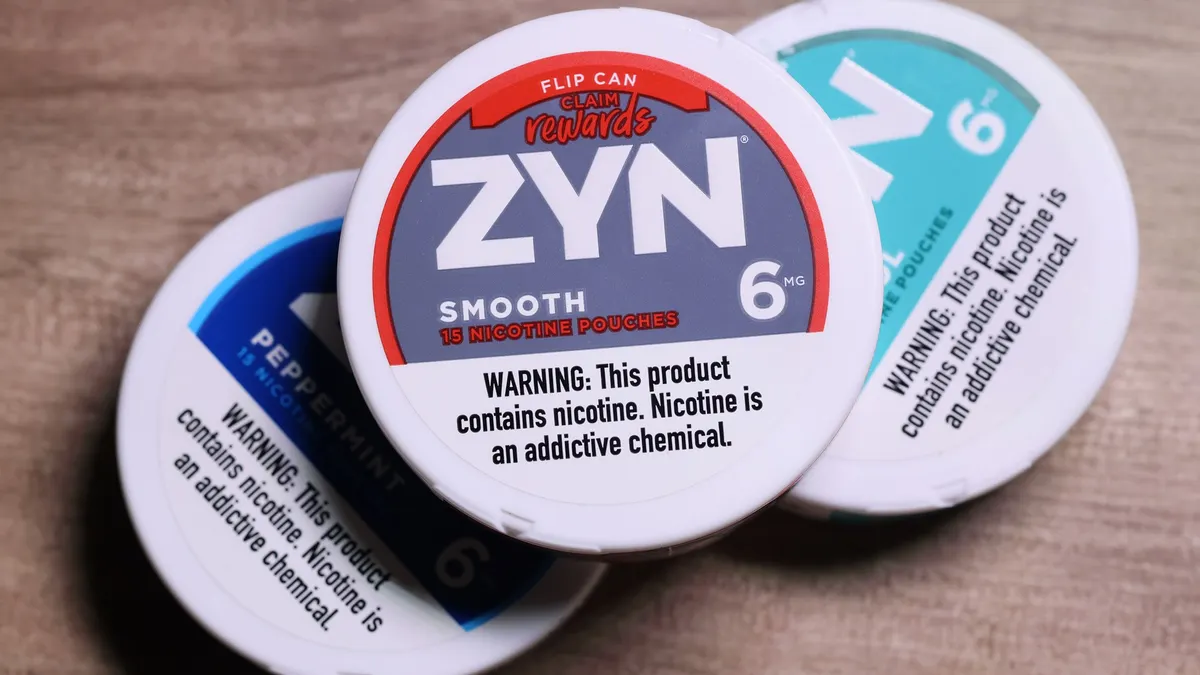
First, in January 2025, 20 Zyn-branded nicotine pouch products were the first to earn marketing authorization from the U.S. Food and Drug Administration. Then in December, six types of On! Plus nicotine pouches got the green light, including 6- and 9-milligram nicotine varieties in mint, wintergreen and tobacco flavors.
The Goldman Sachs data did not list the year-over-year sales change for On! Plus, likely because the product only went into wide distribution in March. However, Zyn has been available for longer — and the popularity of these nicotine pouches is borne out in its year-over-year sales numbers.
Zyn makes up the largest piece of Swedish Match’s smokeless sales, with almost 90% of the company’s sales in that category, and the brand’s sales grew by a double-digit percentage over the 52 weeks that ended on May 30.
Sales growth among Swedish Match’s smokeless nicotine brands
Zyn sales were up almost 13%. If Zyn gets additional flavors approved for marketing — the full line also includes unapproved citrus, coffee and cinnamon varieties — it could keep its sales momentum going.
The report did note Zyn volume pulling back in recent weeks, down about 2% year over year in the past two weeks and down 1% in the past four weeks. However, the Goldman Sachs report also noted that promotional activity around Zyn could rise, increasing volume without putting too much pressure on sales since Zyn products sell at a 60%-65% premium over other brands.
The other Swedish Match banner that reported sales growth during that same period was Longhorn, best known for its snuff products, which grew by over 5%.