Fueling Up is a column from C-Store Dive offering a fresh perspective on the top news and trends in the convenience store industry.
Despite macroeconomic pressures weighing on the company’s performance, Seven & i President and CEO Stephen Dacus struck an optimistic tone about 7-Eleven’s trajectory in North America last week.
Speaking during the company’s fourth-quarter earnings presentation, Dacus said he expects 7-Eleven to deliver compound annual growth in merchandise sales per store of 3% to 5% through fiscal 2030. He also reiterated plans to expand the retailer’s store base over that same period — an initiative he has emphasized since taking the helm last year.
“I am confident we will deliver on these targets and stay on our growth trajectory,” he said.
However, a series of developments over the past week complicates 7-Eleven’s outlook and raises questions about its future.
IPO delay, closures and continued turnover
Seven & i said this week that it's pushing back the planned North America IPO of 7-Eleven to at least fiscal 2027 — an 11-month delay at minimum — due to economic uncertainty. During this time, Dacus said the company will prioritize “demonstrating tangible results” from its ongoing transformation strategy, which has included rolling out larger, more food-focused stores with an increased emphasis on private label.
Dacus reinforced that message throughout the Q4 presentation, stressing a disciplined approach to the public offering.
“The timing of any IPO will be driven strictly by value,” Dacus said. “We will proceed only when [7-Eleven] is ready, and when market conditions appropriately reflect its strength and potential.”
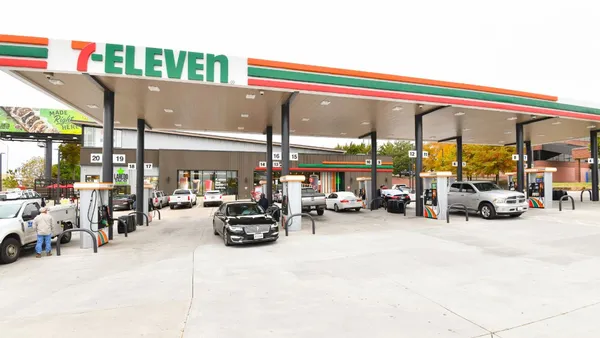
At the same time, Seven & i quietly disclosed plans to close 645 7-Eleven stores in North America in fiscal 2026 — roughly 400 more locations than it expects to open. That would mark the most stores 7-Eleven has shuttered in the past several years and the fifth consecutive year in which closures outpaced openings.
The company, which currently has over 10,000 stores in the U.S., noted that some of these closures will include sites that get converted to wholesale fuel locations, a common cost-cutting measure used in c-store retailing. However, Seven & i did not provide details on the scope of that program or how many stores will be shuttered versus converted. Dacus did not address the closures or the conversion strategy in his remarks.
That omission stands out, particularly as Dacus continues to position store expansion as central to 7-Eleven’s strategy. During the presentation, he described organic growth as the company’s “North Star” and top priority through 2030.
Leadership instability adds another layer of uncertainty. The IPO delay and expected closures follow yet another slate of executive departures this month, continuing a period of significant turnover. Most notably, 7-Eleven is still searching for a permanent successor to former CEO Joseph DePinto, who retired at the end of 2025.
Dacus said this week that the search remains ongoing.
“We will provide an update as soon as we have new information to share,” he said.
Mixed signals heading into a new fiscal year
Taken together, 7-Eleven’s recent actions present a more complex picture than Dacus’ growth aspirations suggest. He continues to emphasize expansion, operational discipline and transformation, yet the combination of increased store closures, leadership turnover and the delayed IPO underscores the significant challenges facing the business right now.
As the new fiscal year begins, the convenience store industry will be watching closely to see whether 7-Eleven can stabilize its U.S. operations. For now, the waiting game continues.