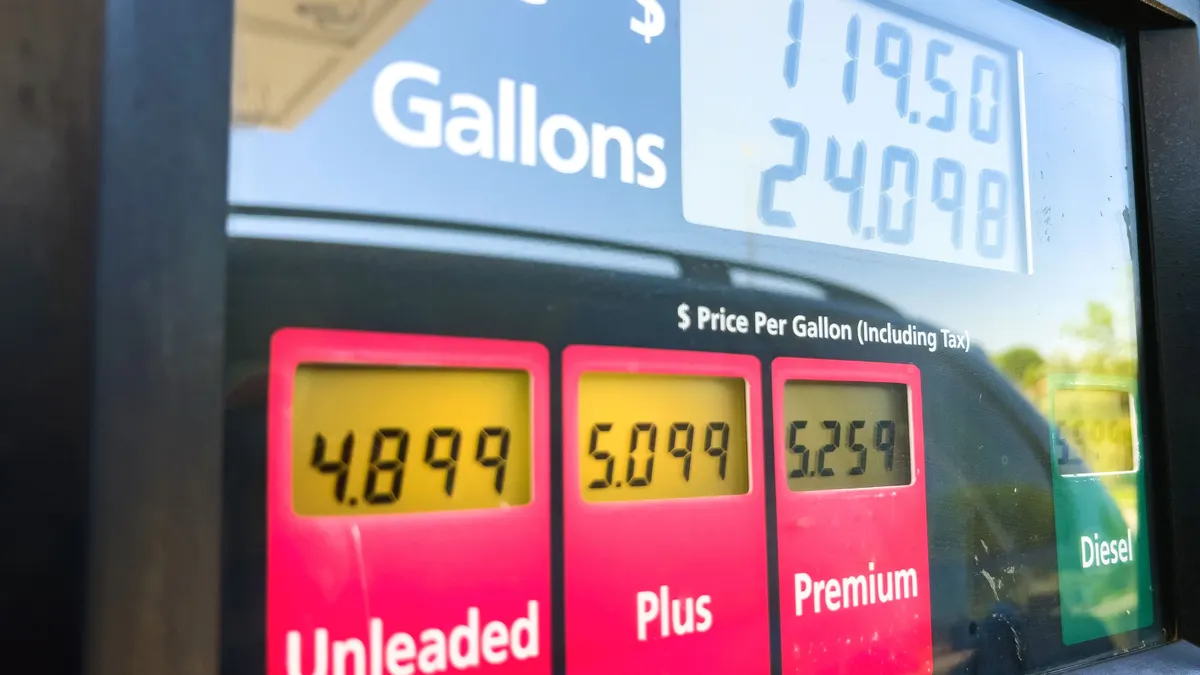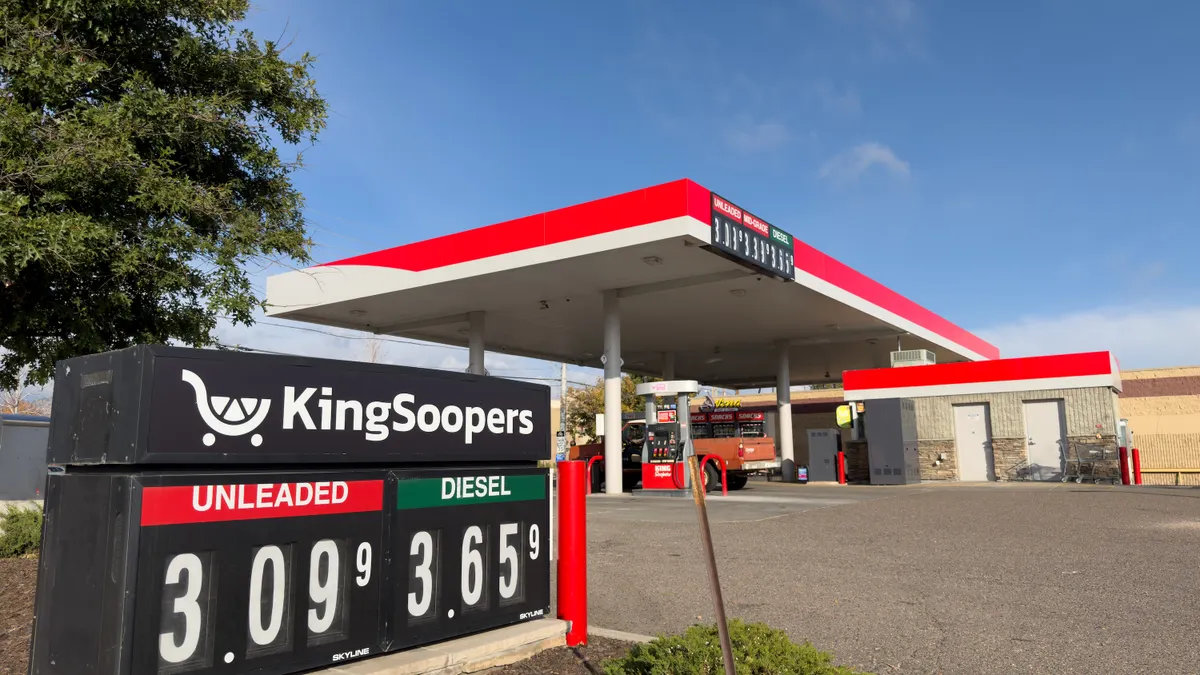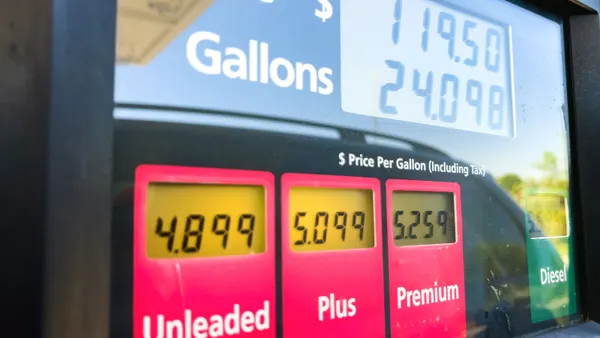
The continuing closure of the Strait of Hormuz, a vital international waterway that has been constrained since the U.S. and Israel attacked Iran in February, is having ramifications around the world — including at U.S. gas pumps. The closure has not only made filling up more expensive, but has also inflated the cost of goods, as aviation and diesel fuel prices are also soaring.
With the summer travel season looming, consumers are hoping for relief and executives are keeping a weather eye on the situation.
Here’s how executives from six oil and convenience retail companies see these impacts evolving and how they’re impacting the industry.
BP
Carol Howle, deputy CEO for BP, noted in the energy company’s Q1 earnings call that the difficulties in the Strait of Hormuz have disrupted the crude oil hitting refineries in the Middle East and Asia, which has in turn impacted supply in areas like Europe and North America.
“What we are watching… and monitoring very carefully are things like the EU stock levels,” Howle said in the call. “We are looking at where they should be against the five-year average. It is injection season, so we are watching that very carefully. Obviously, continued disruptions to the Strait of Hormuz has the potential to increase the shortages that we are seeing in the market.”
Global Partners
Mark Romaine, COO of Global Partners, noted during the company’s Q1 earnings call that because of the market disruption, gasoline inventories are “at pretty low levels heading into a key driving season.”
He also doesn’t see a quick fix for the problem.
“Even if the conflict is resolved tomorrow, there's been a lot of damage done to worldwide production and inventories are at a pretty low level across the board. So it will be interesting to see how that plays out,” he said.
Later in the call, he added, “There is some underlying fundamental strength in the market that I think we're going to see play out at least through the end of the year.”
Murphy USA
Mindy West. Murphy USA’s President and CEO, was asked during the company’s Q1 earnings call about the possibility of exceeding full-year guidance. She noted that global uncertainty makes forecasting difficult.
“Our guidance, as you may remember, was built around [a] very low volatility, low price environment,” she said during the company’s Q1 earnings call. “Obviously, now we are in a different situation. But honestly, my crystal ball isn't going to be any better than yours. And this is unprecedented volatility and geopolitical risk, and it's changing every day, minute by minute. So I honestly wouldn't know what fuel margin to put into the model to give you an accurate forecast.”
Chevron
Michael Wirth, chairman and CEO of Chevron, also said in the company’s first-quarter earnings call that it was too early to determine how this “very significant disruption to the global energy system” would change the global energy system. However, he said there would be changes.
“I think we have to see how things play out over the coming weeks, hopefully not longer than that, as this comes to some sort of a resolution and the energy system begins to be reconstituted in a way that can reach some new equilibrium” Wirth said. “I think that new equilibrium will look different than what we've known before, but I'm not sure I could argue with a lot of confidence that I could describe exactly what that looks like.”
Sunoco
The first quarter of 2026 was “more challenging than most,” said Joseph Kim, President and CEO of Sunoco, in the company’s Q1 earnings call. However, he added that Sunoco has been able to leverage its scale to address many of these challenges. When it became too expensive to keep supplying its Hawaiian business out of South Korea, for instance, the company shifted to supplying it from the U.S. Gulf Coast.
“There's literally countless other examples of how our operations have been impacted by some of the global disruption of product flows, but that's not always a bad thing,” Kim said. “In fact, in our world, a lot of times, that can mean value creation.”
Sinclair Oil
Sinclair Oil’s President and CEO Franklin Myers took a moment out of the first-quarter earnings call to discuss the Middle East conflict. He highlighted the disruption that the conflict has caused, and the resulting volatility hitting Sinclair’s markets as well as those around the world.
“We remain very nimble as we see events occur because we see volatility in the markets that we've got to address on a constant basis,” he said. “But I believe our team is up to the challenge. And I think that we will see and continue to see as others have stress in the world as a result of this, and we've got to just address it to make sure we do our part to try to resolve that stress.”