Frank Beard is a longtime convenience retail enthusiast who currently works in marketing for Rovertown. His column, The Road Ahead, examines innovation in the c-store industry.
Sometimes I think we forget how much emotional math factors into consumer decisions.
By all accounts, this is a moment when consumers should pull back on spending. Sentiment is in the gutter, tracking lower than during the pandemic and near historic lows, according to the University of Michigan. Since 2020, people have faced COVID, inflation, the collapse of housing affordability, a difficult job market and now a sense of anxiety around how AI might impact their careers. The situation in Iran has injected even more uncertainty.
Even people who are on the upward slope of our k-shaped economy might decide to postpone vacations and other large expenses until there’s more stability and certainty.
Retailers, of course, see this and feel the need to emphasize affordability. And while that absolutely matters, it’s not the only thing consumers are looking for.
We’ve seen a paradox during recessions and other challenging times where consumers pull back on some categories but splurge on others. The lipstick effect captured this more than 20 years ago, and today it’s been rebranded as “little treat culture.” The basic idea is simple: People seek needed comfort through small indulgences. Maybe someone can’t afford to buy a house, but they can splurge on a $7 coffee or a $25 cheeseburger.
McKinsey highlighted this trend in its recent ConsumerWise Global Sentiment Survey. It also noted that the consumers who were most concerned about their finances were also the most likely to report plans to splurge. McKinsey framed it as a broader impulse to seek “modest luxuries as a coping mechanism during economic strain.”
It seems to me that convenience retailers are well-positioned to reach these consumers. It’s often said that this industry sells convenience, but I disagree. The whole world sells that in 2026. What this industry sells instead is better days — and that’s something a lot of people need right now.
America’s acceptable vices
Convenience stores have always been happy places.
I remember the thrill of going to a gas station as a kid. Growing up in Iowa, I looked forward to whenever my parents pulled into Casey’s or QuikTrip. In high school, my friends and I would call Casey’s to order pizza when we stayed up late playing video games.
After college, those retailers had my back in a different way. Breakfast pizza at Casey’s helped make my mornings better during a stressful stint with Teach For America, and QuikTrip’s chocolate donuts helped pick me up emotionally when I had a hard day.
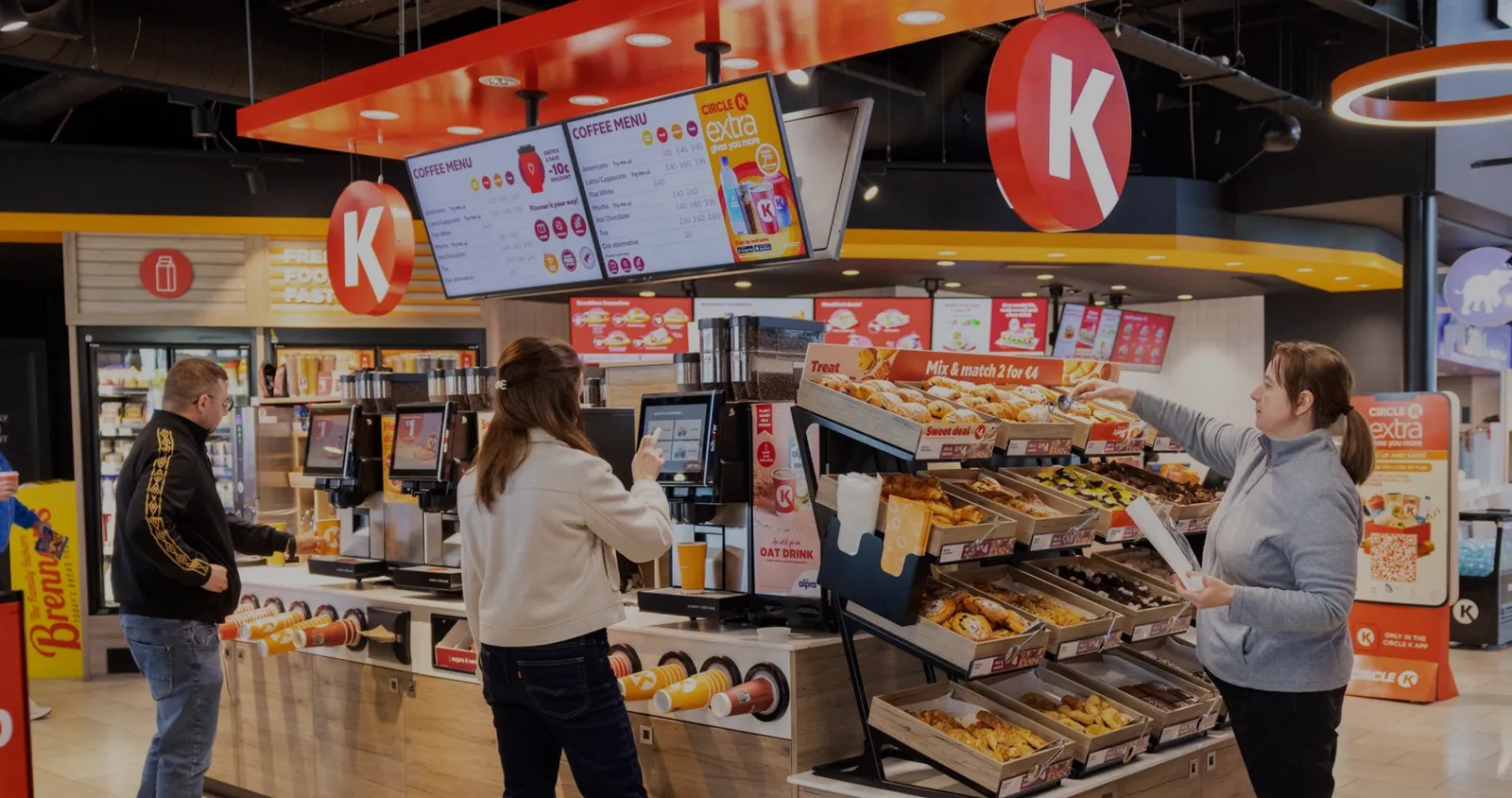
Convenience stores sell America’s acceptable vices. Whether it’s sweet, salty, fatty, caffeinated or alcoholic, they carry products that give us a small taste of the good life — or at least a way to take the edge off. The business doesn’t have to be reinvented to win with little treat culture, because it’s already built for that. I think standing out in 2026 means being more intentional and thoughtful with the moments you already own.
For example: What does the coffee taste like, and how does it compare to the other options around the stores? Do the breakfast items in the hot case tempt the shoppers, or do people see them as more of a last resort? After all, financial math would tell someone to make those things at home. Emotional math looks for reasons to say yes.
And on that note, I think there's three things retailers should keep in mind.
Keep things interesting: I would argue that at its best, convenience store food is the closest thing America has to proper street food.
Street food is the antithesis to the endless sea of mediocre fast food that plagues so many of our communities. There’s been efforts to make street food happen, especially with the growth of food trucks, but it’s difficult when our cities are designed for cars instead of people. Cities never really seem to support food trucks, but convenience stores are on the best corners of every intersection. And when you combine an on-site kitchen and a hot case, that’s basically a recipe for street food — or at least something close enough.
I think this is where retailers can out-execute QSRs, which have to rely heavily on marketing and advertising because the food doesn't stand on its own. Moreover, their business model doesn't allow for much divergence from narrow menus and rigid brand identities.
If I was in Abbeville, Louisiana, and wanted to treat myself, I’d skip the McValue drive-thru and go straight to Shop Rite’s Bourbon Street Deli. The food it sells — especially the boudin — scratches the itch for something fun and delicious in a way national fast food chains never will. And all for comparable prices to a meal at McDonald’s.
Make sure it’s good: This gets to a deeper issue: Americans tend to confuse good with expensive, and that's a mistake.
I’ve been in conversations where people point to the failure of Foxtrot as evidence that mass-market consumers are unwilling to pay for quality, and that there’s no point in trying to change the status-quo.
But I don’t think Foxtrot was an attempt at quality, per se. As someone who was squarely in their target demographic and liked their stores, I'm comfortable saying that Foxtrot was all about vibes. It was a gentrified take on convenience that wasn’t necessarily better, just different and more expensive, packed full of niche products from CPG startups.
This belief that most consumers don't want good things seems to be uniquely American. Japan’s convenience stores are the very definition of mass-market, and they’re arguably the best in the world. Ireland’s convenience stores have some of the best prepared food programs in the industry, and they’re also built for everyday people.
Good doesn't have to mean bougie. And maybe if certain things were just a bit better, they would stand out amongst a sea of competitors.
For example, everyone's trying to sell fried chicken these days. And yet, the focus seems to be on chicken breast — a lean meat with little room for error before it dries out.
Why not try boneless chicken thighs? That’s what Japanese convenience retailers do, with iconic products like Family Mart’s Famichiki. Chicken thighs are more tender, juicy and flavorful due to the high fat content. I’ve purchased Famichicki late at night from a hot case and been immensely satisfied.
Stay authentic to your roots: While the Japanese market is dominated by three national chains, the United States is dominated by regional and hyperlocal brands with the freedom and flexibility to truly make products unique.
That’s a massive advantage, particularly against the QSRs. McDonald’s and Burger King can’t talk like locals, but convenience stores can — especially chains that have been around for nearly a century and are deeply invested in their communities. Local brands fulfill that desire for authenticity, imparting local flavors, traditions or quirks into their food and presentation that might not make sense to outsiders but give locals exactly what they care about.
All of that is to say that this industry is positioned to help the American consumer pick themselves up emotionally at a time when they need it. Have fun with this and remember that if you can sell someone a better day, they’ll remember how that felt and keep coming back.