Frank Beard is a longtime convenience retail enthusiast who works with retail technology companies on marketing and communications. His column, The Road Ahead, examines innovation in the c-store industry.
One thing you notice walking around the NACS Show floor is just how much c-store food has grown up.
At this year’s event, I noticed someone at one booth cooking hamburgers on a flat-top griddle, seasoning the patties while the buns toasted next to them.
It reminded me of the time that a now-retired, legendary foodservice leader told me about the importance of using the right visuals to signal that a store is serious about food. He once directed staff to cook on gigantic stainless steel woks for that reason. But a griddle works too, and if the NACS Show reflects the state of the industry, then seeing that at a booth shows how far it's come since the days of “gas station food.”
But at the same time, I can’t shake the sense that the conversation on food has gotten stuck.
I attended my first NACS Show in 2016 to join a panel about my stunt eating at gas stations for a month. Since then, this industry has spent a lot of time talking about how far its food has come and why retailers need to outcompete quick-service restaurants. But lately, those conversations remain focused on improving the current generation of convenience store food rather than imagining the next one. What's missing is a vision ambitious enough to bring about another foodservice transformation.
Consider coffee’s three waves as an analogy. If convenience store food had a first wave, it was traditional gas station food that customers bought out of necessity. The second wave, then, was food that customers genuinely crave, which is where much of the industry finds itself today.
So what might define a third wave?
I think it needs to be food programs that customers can rely on as often as retailers want them to visit.
Nearly every conference I’ve attended over the past decade has featured someone discussing loyalty programs, personalized promotions and other tactics intended to squeeze out an incremental visit. But if you want customers to visit three or four times per week, shouldn’t they be able to eat the food three or four times per week?
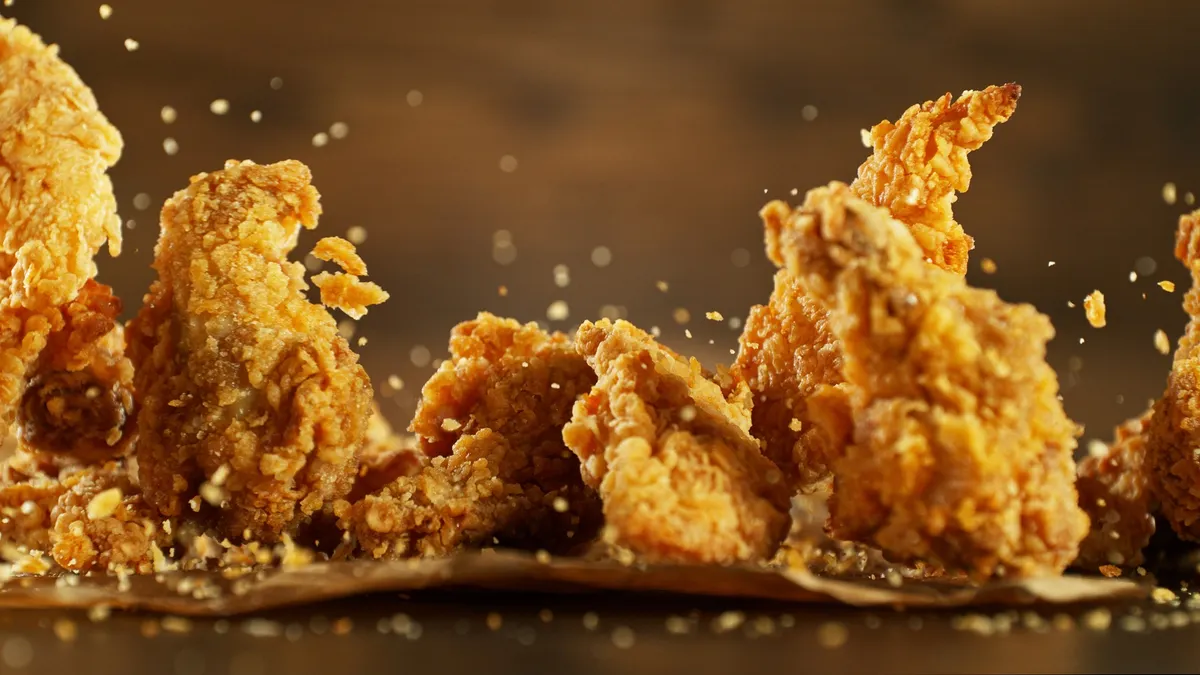
Last year during a tour of various c-stores that I organized for a group of international retailers, one of the attendees said he was tired of fried chicken. I had to laugh because I was feeling the same way. Fried chicken is genuinely one of my favorite foods, but when you're two and a half days into a weeklong study tour and nearly every retailer you visit has made fried chicken the centerpiece of their food programs, you start to wonder what else there is to eat.
Whatever the future looks like for food, the path forward isn’t going to be revealed by opinionated people like me. It’ll be forged by a few bold retailers with a strong vision. Getting there, however, requires understanding what your customers need that they don’t currently have.
Which is why I want to issue a challenge to retailers.
Spend two weeks eating your own food. Visit your stores for breakfast, lunch, snacks and even dinner, if that’s an occasion you’re trying to win. Whenever you’re asking customers to eat at your stores, you should eat at them too.
Two weeks is long enough that you're forced to consider two questions: Is the food good enough, and can I eat here regularly?
Let’s take a closer look.
Is the food good enough?
Nothing intrinsically prevents the gas station business from selling good food. I once ate a caprese salad made with 40-year-aged balsamic vinegar inside a gas station, staring at a fuel canopy while enjoying a horizontal tasting of Tenuta San Guido's 2017 wines. It's just that historically, many chose to sell food that wasn't very good — and customers noticed.
That’s why the progress of the past few decades deserves recognition. But I don’t think the industry has written the final word on what food looks like inside America’s convenience stores. There’s even an argument to be made that while America created the modern convenience store, stores in many other countries have moved on. Retailers in Japan and Northern Ireland, for example, are global outliers when it comes to food programs.
Consider something as simple as an egg salad sandwich. The attention to detail from Japanese convenience retailers is such that even the late Anthony Bourdain raved about the egg sando at Lawson, describing it as having an ”unnatural, inexplicable deliciousness.”
Conversely, I recently visited an American convenience store where I was delighted to see an egg salad sandwich in the cooler. But this one was so bad that I threw it away after two bites. The egg and mayonnaise tasted off, made worse by the addition of a disgusting onion and cucumber relish. I left wondering if anyone at the company had even eaten it.
Is the food designed for everyday life?
Escaping the stigma of gas station food has meant creating products that customers genuinely crave. And in many cases, retailers succeeded. But much of the food in this industry seems to have been designed around the experience of a single meal, without much consideration for how frequently someone might want to eat it.
The NACS Show itself illustrates the point. Walk the floor, and you'll find plenty of indulgent food. Much of it is genuinely good. But there’s a reason why so many of us are ready for more variety afterwards. I overheard someone at the airport this year saying he desperately needed to "eat something green.”
If we recognize this distinction in our own lives, why should we expect customers to be any different?
To be clear, I don’t think there’s anything wrong with indulgent food. Even best-in-class retailers like FamilyMart sell fried chicken. It’s just that when you consider the totality of their food programs, you see the variety they provide to support the way people navigate everyday life. And it’s all very good. Even something as ordinary as onigiri receives extraordinary attention to detail, with 7-Eleven Japan operating a Rice Master program since 2015.
Most of us want more variety than a menu with only a few indulgent signature products can provide, which is why quick-service restaurants are the wrong north star for this industry. Not only is the quality of their food typically mediocre, but copying their menus risks recreating the perception of “gas station food” all over again.
If I could wave a wand and magically transport a Lawson near my home in West Des Moines, I’m confident that I could easily eat there for two weeks. I don’t think it’s unrealistic to suggest that retailers should aspire to be able to do the same at their own stores.

It's time to think bigger
It’s worth remembering that Howard Schultz didn’t get the inspiration for Starbucks by looking at Maxwell House. He was influenced by a trip to Italy, where he experienced espresso bars in Milan. You can practically feel the excitement leaping off the pages of his first book when he recalls that trip.
As someone who considers coffee one of my hobbies, I’m not going to pretend Starbucks is a paragon of quality. But that company raised the floor for coffee quality in America and even taught people new words and phrases to talk about it. Putting aside the business end of their story, Starbucks actually influenced our culture.
A lot of people thought Schultz was crazy. The idea of selling espresso to Americans and treating coffee like anything other than a cheap commodity ran counter to the best practices of the 1980s.
The reality is, convenience retailers serve half of America every day. It’s an industry serving people across all socioeconomic backgrounds, and it’s closer to its customers than perhaps any other retail channel. The opportunity for any company that can crack the code on foodservice is enormous.
A lot of progress has been made, but the next stage needs a bold vision for what kind of food can and should be sold inside of America’s convenience stores. A vision that leverages the unique strengths of the format rather than asking retailers to become something other than what they already are.
For anyone reading this who wants to show the way forward, start by eating your own food for two weeks and consider what you learn by doing so.
And besides, wouldn’t it be great if 10 years from now the roles are reversed, and retailers globally are visiting the United States, asking why the food here is so good?