Frank Beard is a longtime convenience retail enthusiast who works with retail technology companies on marketing and communications. His column, The Road Ahead, examines innovation in the c-store industry.
When the disruption hype about Amazon Go was near its peak back in 2019, I brought a group of international retailers to one of their stores. We were out in San Francisco for the first leg of a study tour focused on retail technology. It made sense to visit the one thing that was supposedly changing everything.
But when we entered the store, the retailers quickly began criticizing the merchandising. Far from being impressed, the general vibe was that it seemed odd for a company to invest hundreds of millions of dollars into checkout technology while taking a rudimentary approach when deciding what should be on the shelves.
As I thought about their reaction, I realized it made sense. I’d been to several Amazon Go locations by that point, and while the original store in Seattle was admittedly kind of cool — the adjacent kitchen produced some great food — the stores got less impressive over time as many of the most interesting products disappeared. After COVID, they eventually devolved into sad little mini markets, sometimes with reduced square footage and a lot of empty space.
It only takes about fifteen seconds to check out of a convenience store. It’s worth asking why someone would settle for a subpar store just to shave that down to a few seconds.
I’ve been thinking about this recently, since it’s become nearly impossible to open LinkedIn or attend a retail conference without hearing about the need for retailers to figure out their AI strategy. And while I get it, I can’t help but wonder if we’re at a similar “so what?” moment.
Don’t misunderstand me. I’m far from a Luddite. I’ve marketed retail tech for a while now, and I’ll likely continue doing so. I’m also easily excited by new tech, to the point that I once went to work for an autonomous checkout startup for no reason other than I thought it was the coolest thing happening at the time.
But technology investments aren’t a substitute for good food and good retailing. They instead work best when they’re layered on top of an operation that’s already firing on all cylinders — one that has a clear vision for the brand and what if offers the people in its communities.
Foodservice is a critical but still-emerging category for America’s convenience stores. We generally know what to expect when we hear phrases like “fast food” and “casual dining,” but “convenience store food” can mean any number of different things. The industry as a whole has not converged on a shared definition, and some retailers have only recently dipped their toes into foodservice.
Worrying about AI strategies when basic questions still remain about what food should be sold kind of feels like putting the cart before the horse. I genuinely enjoy using and learning about new AI tools myself. I agree there’s a lot of value there. I can’t eat a retailer’s AI strategy, however, and customers don’t care if retailers even have one.
But everyone does wake up in the morning and want to eat something good.
Focus on Making it Really Good
In a similar vein, I recently told a retailer I wasn’t sure if they should launch a loyalty program.
I don’t have anything against loyalty programs, but they work best when tied to a clear business purpose and layered on top of a well-defined brand and offer. They’re also a lot of work. Running one requires finding the right talent, paying enough to attract and retain them and giving them the resources to do their jobs. If you do it, you should do it well.
In the case of this retailer, I just didn’t see a rewards program as the next logical step given what I knew about their business. In particular, I thought they were really onto something with their food program. Why not double down on that?
Inside their stores, I saw people meeting for morning coffee and donuts. I saw groups gathering in the booths to enjoy lunch together. Each location was quite busy, and the overall vibes were very positive and welcoming. The food was great too. The experience reminded me of growing up in Iowa, seeing firsthand how a convenience store can become a community hub for a small-town.
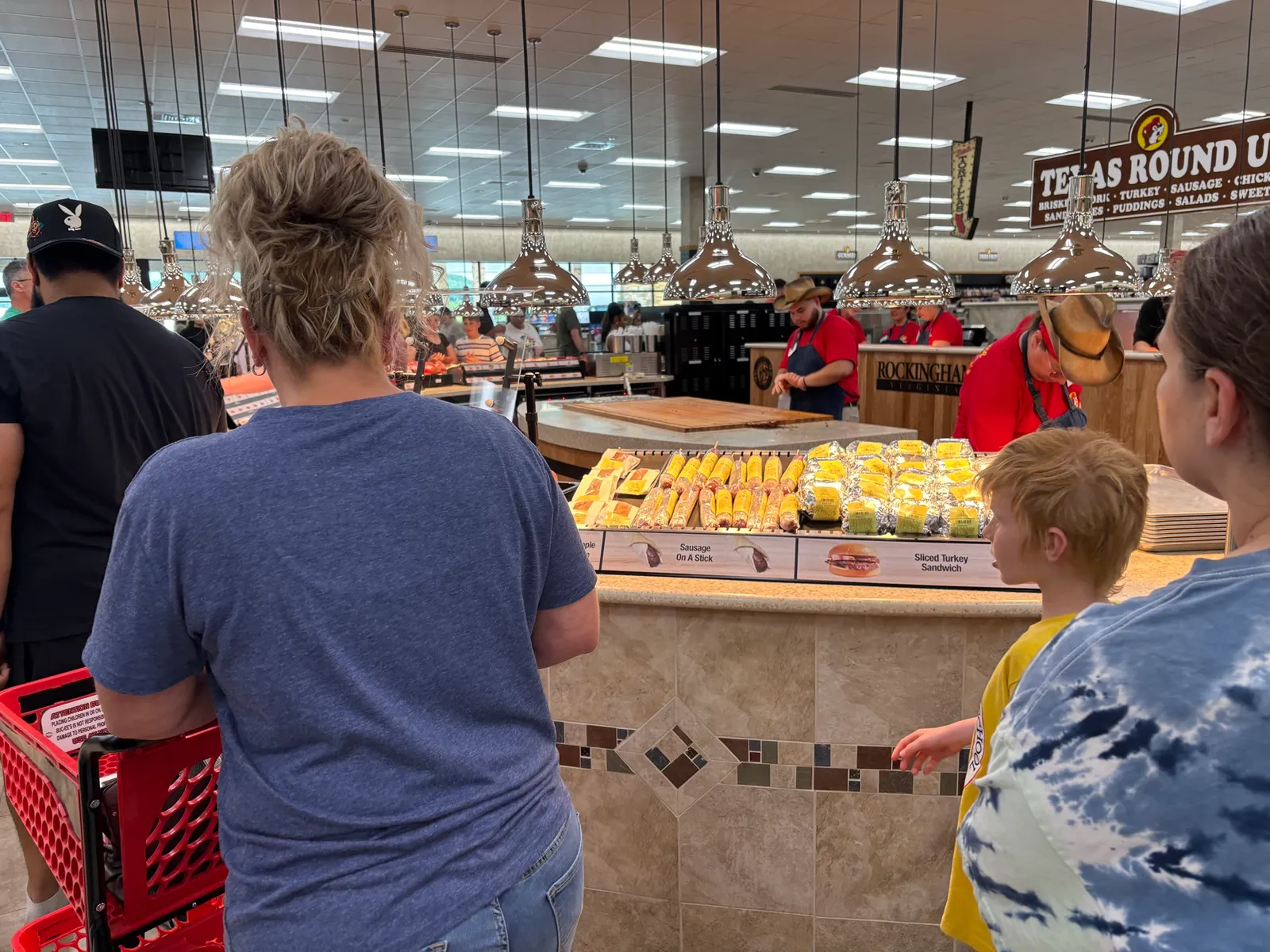
Maybe a rewards program would make sense at some point in time. But for now, it just seemed like this retailer had a massive opportunity to expand on what was already working and make it so good that it becomes an institution within their communities.
What I'm trying to say is that it’s important to prioritize what makes sense for your business. There will always be new technologies on the market, but sometimes there are prerequisites to master if you want to unlock their full value.
Viewed through that lens, here’s a few pieces of advice.
First, take a deep breath and remember that technology doesn’t replace the need for human judgement. Your instincts, experience and leadership skills don’t go out of style just because technology evolves. If anything, they become more valuable. Anyone can buy a Claude subscription, but judgement still has to come from somewhere.
This past year has provided plenty of reminders about why sound operational decisionmaking is so important. It’s no secret that generative AI has led a lot of business leaders to suddenly make brash, erratic decisions. We’re hearing about AI psychosis for a reason. Social media consultant Rachel Karten recently wrote a piece that everyone should read, detailing how a lot of marketers have unfortunately lost trust in executives for relying too much on generative AI. I can barely scroll through LinkedIn without seeing posts from folks who’ve completely outsourced their voice to Claude and ChatGPT. That’s not innovative, it’s cringey — and yes, the contrastive reframing is usually a dead giveaway.
Second, don’t panic. It’s true that things are changing fast, but when someone tells you that you risk falling behind or wants you to believe that your competitors are secretly digging a moat while you sleep, press them for specifics. Ask them what you risk falling behind on, exactly. This is something people often struggle to answer. They might gesture at vague notions of “transformation” or talk about the “rate of change,” but rarely can they point to some specific capability or explain how taking the time to be thoughtful and deliberate will harm your business.
Not every problem in retail is an AI problem. There are food problems, labor problems, real estate problems and other unglamorous issues that represent the hard work of running stores. And even where AI might genuinely help take some of the grind out of that work or enable it to be done better, being a bit slow to adopt a solution isn’t a death sentence.
Besides, many of the best solutions in this industry won’t be proprietary. They’ll be sold by specialized vendors and marketed by people like me. But anyone can sign a contract for a great product. What you get out of it is another matter entirely. Technology amplifies good retailing, and the operators already running great stores are the ones who will get the most out of whatever they buy.
One of the best ways to keep yourself honest and grounded is to go visit your stores. Show up in plainclothes and buy breakfast, assemble a lunch, use the restrooms, and make smalltalk with the employees. Better yet, raise the stakes by bringing a friend or family member and buying them a meal. Then ask yourself: did you feel proud, or did you catch yourself thinking, “it’s just a gas station”?
I know it sounds simple, but it’s no accident that the best retailers I’ve visited over the past decade have always been those who are proud of what they do. Pride doesn’t mean you’ll get everything right, but it does mean that you’re likely to figure out the things that actually matter to customers.
And those are the retailers who will set the standards that others have to follow.