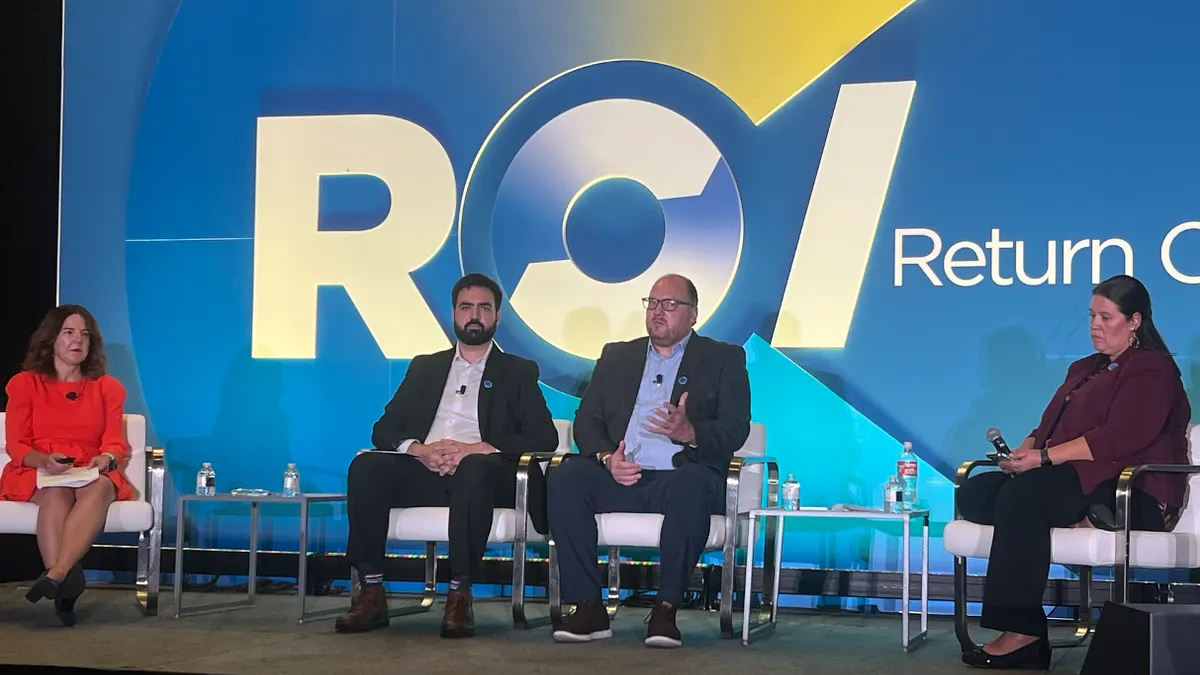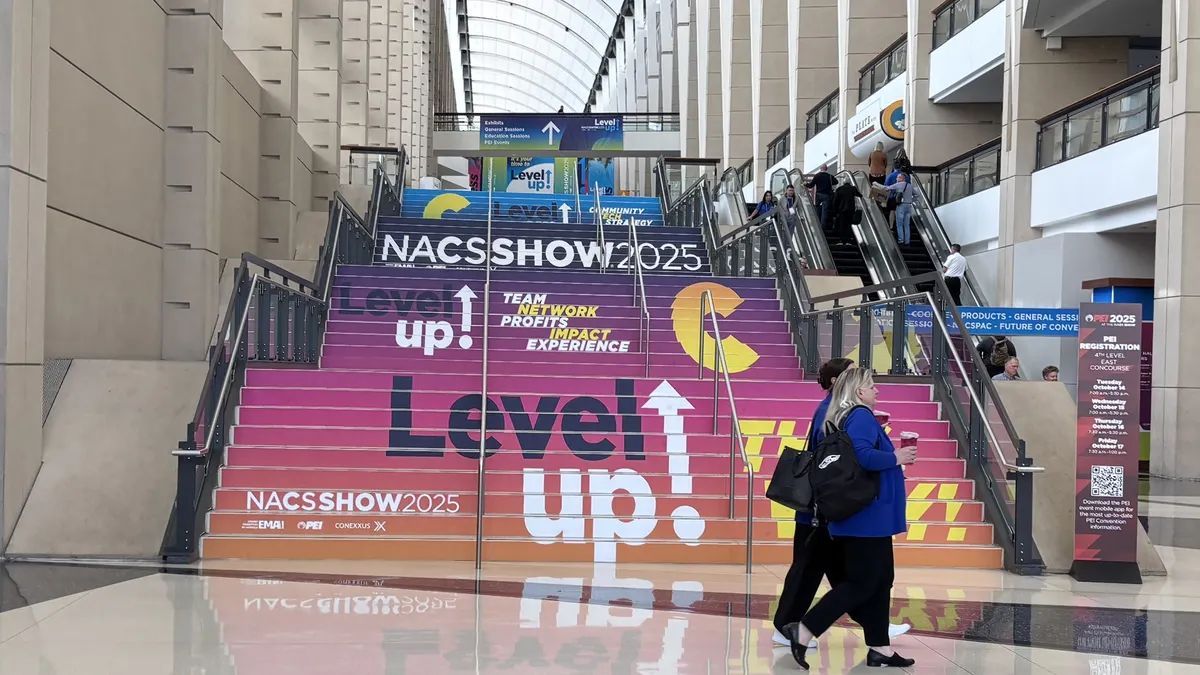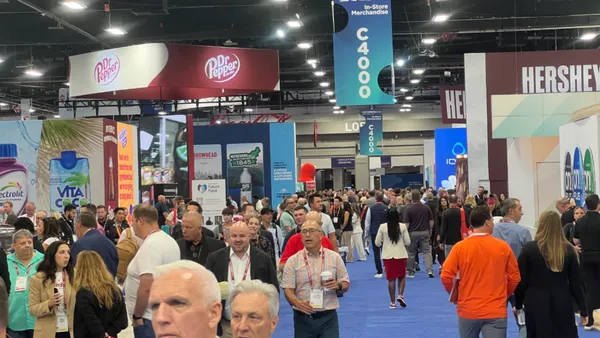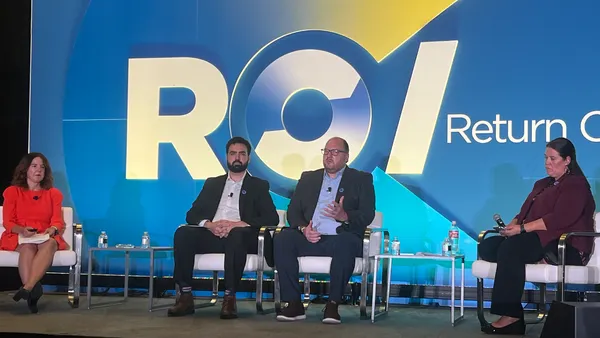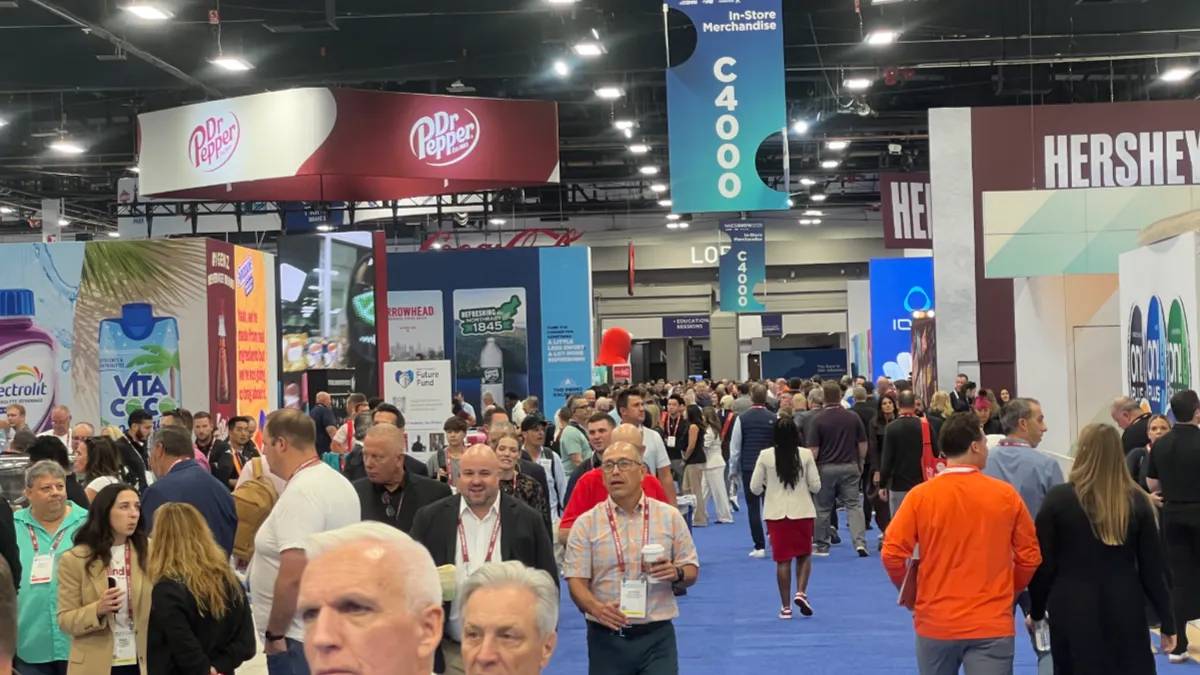
Day two of the 2026 NACS Show kicked off with educational sessions covering the state of convenience retail, from tobacco and store visit frequency to career development and cold vault innovation. The association also ushered in a new NACS chairman and opened the massive show floor to retailers, vendors and attendees looking for the latest in snacks, beverages, foodservice and store technology.
Here’s what stood out to us from the second day of this year’s NACS Show.
Poly-users are keeping the tobacco category afloat
The decline in cigarette sales in convenience retail is no secret as consumers become more health-conscious. Since 2016, cigarettes’ share of inside sales has fallen 11.5 percentage points at c-stores, according to data presented by Jasmeet Chawla, vice president of merchandising for 7-Eleven, during a Wednesday session on tobacco.
At the same time, other tobacco products’ share has surged nearly 4 percentage points and gross profits have grown over the past three years, even as cigarette sales decline. That shift is making alternative nicotine products an increasingly important priority for the channel, Chawla said.
“This used to be a category that was led by combustors … cigarettes were king, that's what everybody used,” he said. “Today, we have new innovative categories like modern nicotine and vape.”
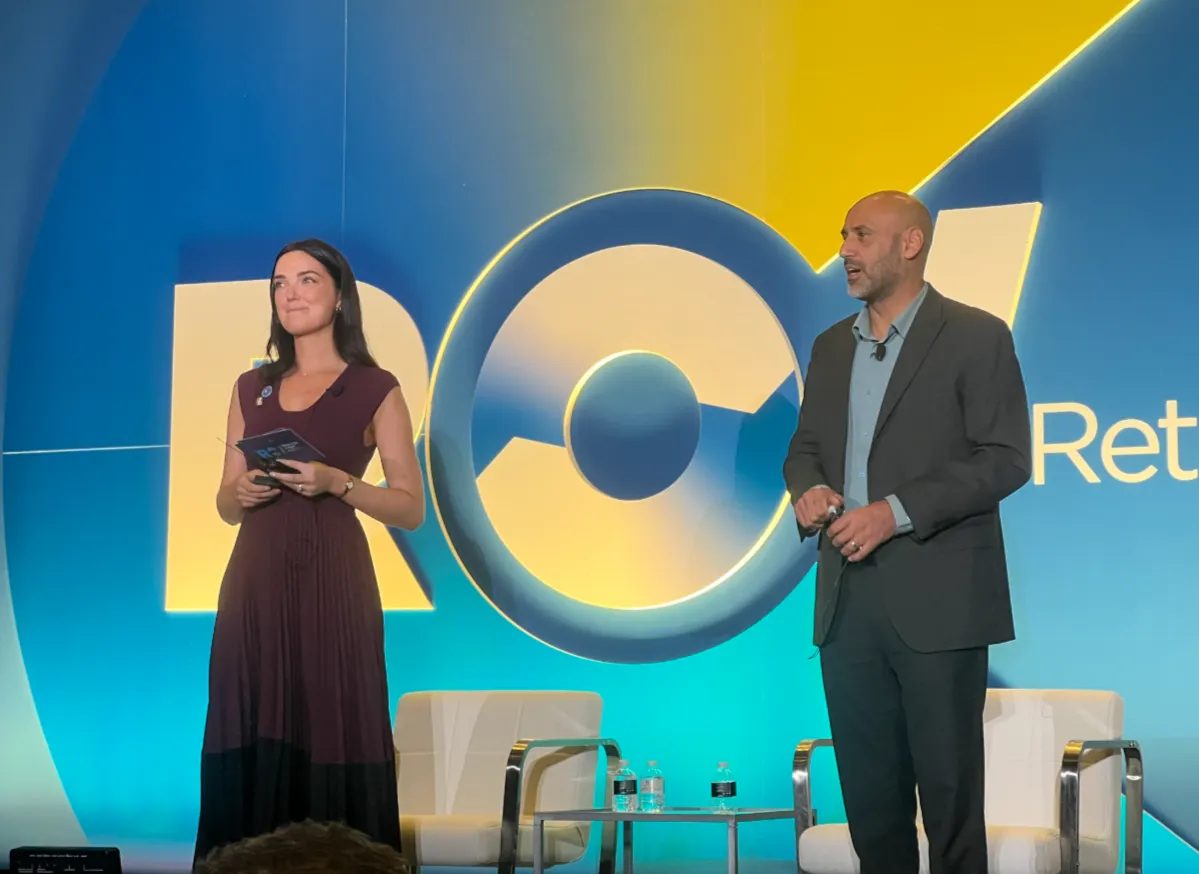
A major driver of other tobacco products’ growing impact on c-store tobacco performance is poly-usage — consumers who use multiple nicotine products.
According to Chawla’s data, 87% of modern oral consumers also use other forms of nicotine, such as vape and cigarettes, compared with 52% of cigarette smokers. Poly-usage, he said, is pushing retailers to expand the variety of tobacco products they carry.
“You can understand why we need 69 different items [in the back bar] to satisfy the needs of this growing consumer,” he said.
Gen Alpha requires a new approach to tech
During a panel on what convenience means to Gen Z and Gen Alpha customers, a handful of industry executives watched a video during which members of those two generations shared how technology could improve the c-store experience.
“I think what's interesting about what these consumers say is, they don't mention online ordering,” said Crystal Maggelet, CEO of Maverik, in the session. “They don't mention mobile payment.”
That’s because younger consumers, and particularly Gen Alpha, have lived their whole life immersed in this type of technology.
“They're so used to those sorts of technologies being available to them that it doesn't even come to mind when they think about convenience,” Maggelet said.
That can be important to remember as retailers look to turn those consumers — who are all still under 30 years old — into lifelong customers. Some of the technologies that retailers are still just getting started with — such as mobile pay and online ordering — are considered table stakes for younger shoppers.
“They're not even going to ask you for [the technology],” said Frank Gleeson, president and CEO of NACS. “If you don't have it, you're in trouble.”
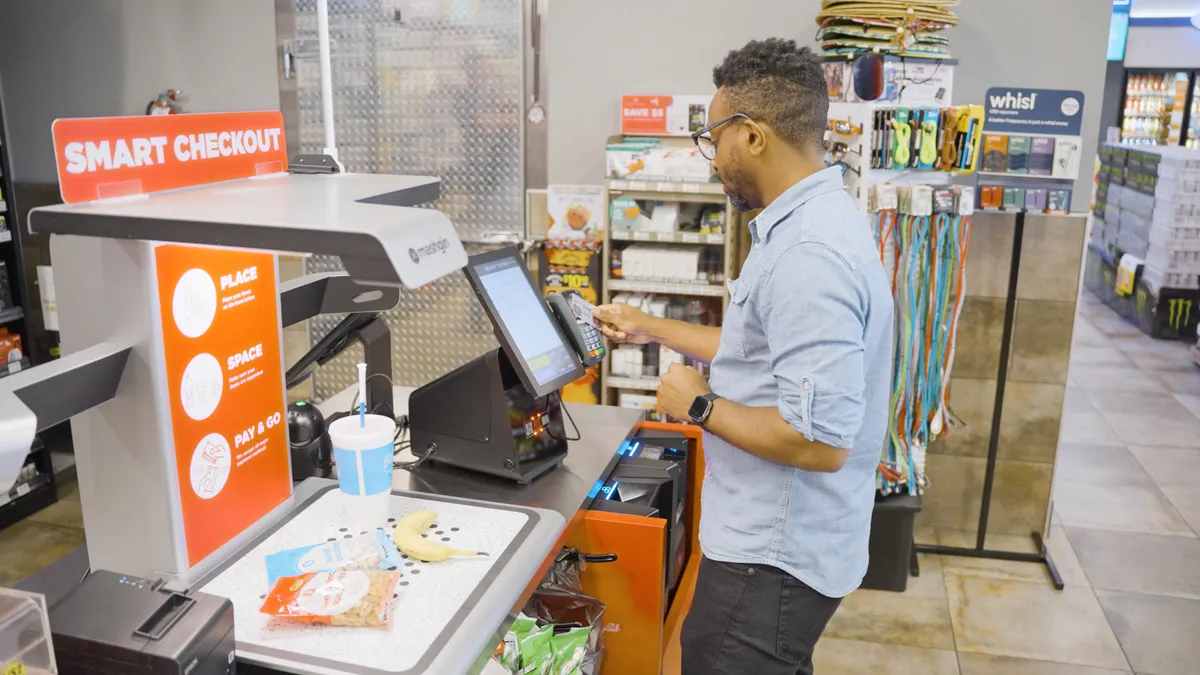
However, the young consumers in the video mentioned self checkout and loyalty programs, showing they see value in these technologies.
When it comes to loyalty, Kevin Smartt, CEO of Texas Born convenience stores, said retailers need to keep the experience simple and intuitive but still rewarding.
“[The c-store industry] has just kind of been a little bit behind the curve... we're a little clunky in how we kind of operate,” said Smartt. “I think we have a challenge as an industry to speed that up.”
Convenience is at a trips crossroads
Convenience retailers are at a critical juncture when it comes to store trips, according to experts from Cadent Consulting Group who spoke during a Wednesday session on c-store visits.
In a study of 2,000 convenience shoppers, Cadent found that 25% considered going elsewhere during their most recent c-store visit. Retailers face several threats that could lower their visits, including improved fuel efficiency and shorter commutes, as well as growing competition from big-box retailers, grocery stores and QSRs, said Richard Bode, CEO of Cadent, during the presentation.
C-stores also face a perception problem, with many consumers holding long-standing negative stigmas about the industry, Bode added.
So how can retailers win back those trips?
Cadent’s experts outlined a three-tiered trip hierarchy that retailers can use to identify opportunities, structured like a pyramid.
Forming the foundation are the fundamentals.. The top reasons consumers lower their c-store visit frequency include high prices, dirty stores and restrooms, poor food quality and slow service.
The next tier consists of growth levers, such as offering the right product selection. At the top is an owned experience, which could include a strong loyalty program.
Bode said convenience retailers should first assess where they stand before deciding which tier to pursue. But he emphasized that this hierarchy “is critical to understand.”
“If the fundamentals are key, focus on those first,” he said. “If those are in place, think about foodservice credibility — the right items for the right cohort.”
Decision Day looms for THC beverages
THC beverages are growing but currently hampered by legal uncertainty. State laws vary, and a federal bill that could ban 95% or more of the industry is slated to go into effect Dec. 11.
If the bill goes into effect, products will be limited to 0.4 milligrams of THC or under, which would not only ban THC beverages, but a number of therapeutic products as well.
“Consumers are going to be upset when their products go away from shelves,” said Diana Eberlein, chair of the Coalition for Adult Beverage Alternatives, in a Wednesday session on the adult beverage subcategory. Meanwhile, “the bad actors are going to remain on shelves because it's very hard to enforce and remove those products,” she said.
On the other hand, Eberlein said that if the products were legalized and regulated, the industry could expand from its current $1 billion value to over $30 billion.
Education remains a crucial step to getting THC beverages regulated in the way that alcohol is, said Eberlein and Hayley Thrift, director of public relations for Spinx, in the session.
However, even if the ban goes into effect, Eberlein believes the fight will continue.
“Regardless of what happens in December, THC beverages will be back,” said Eberlein. “THC beverage has demand. The consumer wants it. The wholesalers, the retailers want it. It's continued to grow, and we have a lot of momentum.”
Nostalgia in a new package
Across the NACS Show floor, familiar brands were showing up in new flavors and categories.
Two frozen treats are making their way to the candy aisle, with Popsicle lending its flavors to an array of lollipops while Creamsicle is being transformed into candy twists.
Jolly Rancher was a popular flavor on the floor, with the hard candy showing up as a frozen drink, popping boba and gummies. It wasn’t the only candy serving as inspiration for a frozen drink either, as fellow tangy options like Nerds, Trolli and Sour Patch Kids were also in on the action.
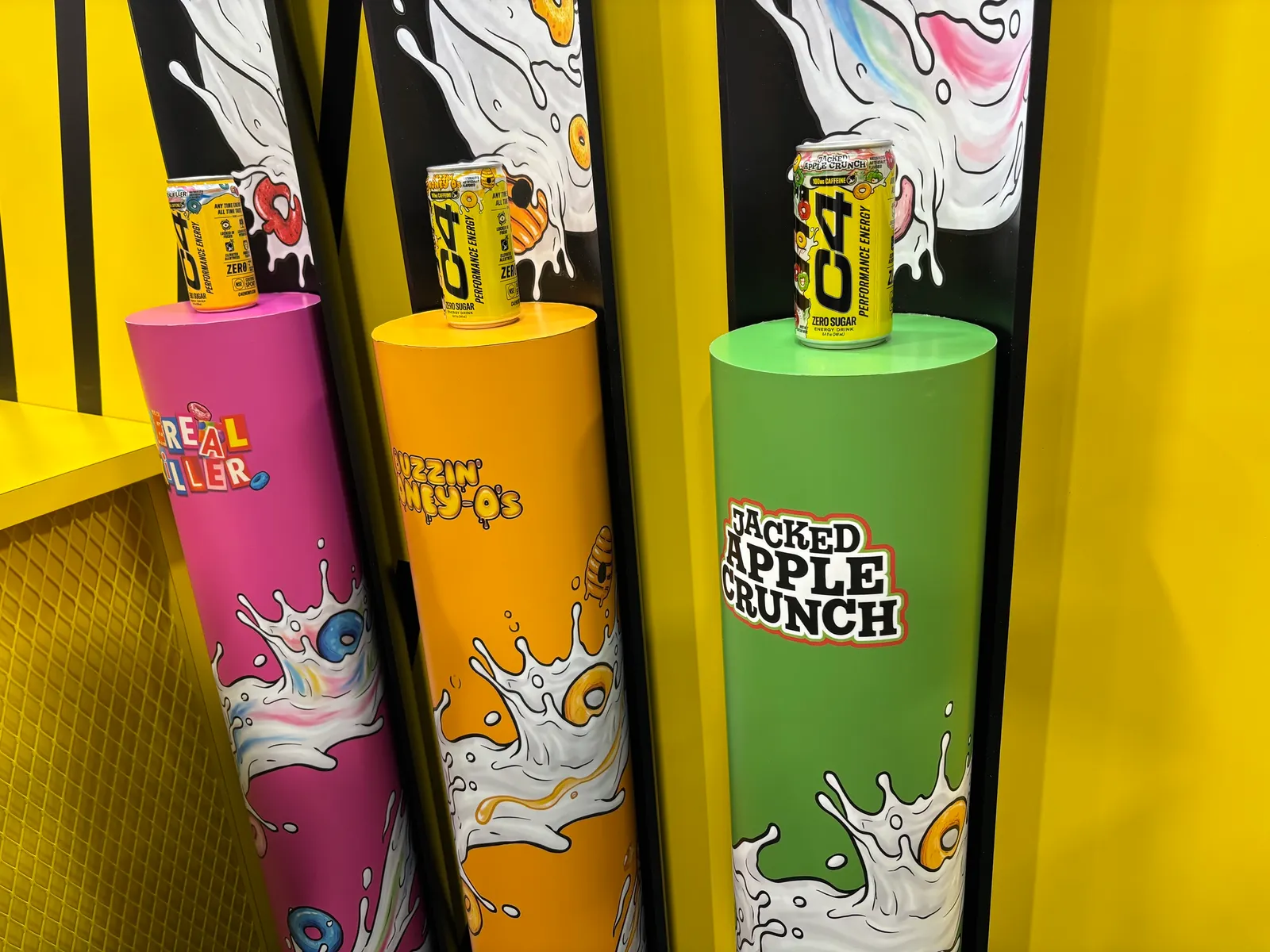
Cereal flavors also made their way into several products. Peeps is releasing a Fruity Pebble crossover, while C4 energy drinks released a line of beverages that aim to evoke familiar breakfast cereal flavors.
These options tie into a trend that Suzy Badaracco, president of Culinary Tides, a forecasting think tank and trend intelligence firm, called “newstalgia” in a Tuesday education session. That is, foods that evoke a sense of nostalgia but bring a fresh twist.