On June 24, C-Store Dive and sister publications Retail Dive and Payments Dive hosted an event that explored how the payments landscape is evolving. It included a conversation between C-Store Dive Senior Reporter Brett Dworski and Jack Hogan, senior vice president of sales and partnerships for AI-powered self checkout firm Mashgin. You can watch an edited version of their conversation above or read an edited transcript below.
C-STORE DIVE: Good afternoon everyone. Welcome to the session in the Payments, Retail and C-store [Dive] session, C-store Checkout Innovation: What's Actually Working? I'm Brett Dworski, senior reporter with C-store Dive. Today we're going to be breaking down what's actually working in convenience retail payments, how retailers are evolving their systems, what's delivering results and running down the future of these platforms.
I'm joined today by Jack Hogan, senior vice president of sales and partnerships for AI powered self-checkout platform, Mashgin. Jack, I've met you before. You're an expert in this field. I'm excited to talk to you today. How are you doing?
HOGAN: Doing good, Brett. Hard to say expert, but I have been around here for a while.
C-STORE DIVE: I'm just going to get this started with a big picture question for you: When you look at convenience retail today, what are the biggest misconceptions you would say people have about self-checkout innovation?
HOGAN: Well, I think that when you take a look at convenience retail holistically, the biggest misconception is that there's not innovation happening. One of the key factors with innovating in the convenience space is actually how many systems are plugged in together to make a simple transaction in a gas station work.
For example, there's probably 50 or so systems that are all interconnected. Many of those systems were installed before the year 2000. So a lot of what's taking place on the back end right now is something that the customers are just starting to see the beginning fruits of as we come out with new things.
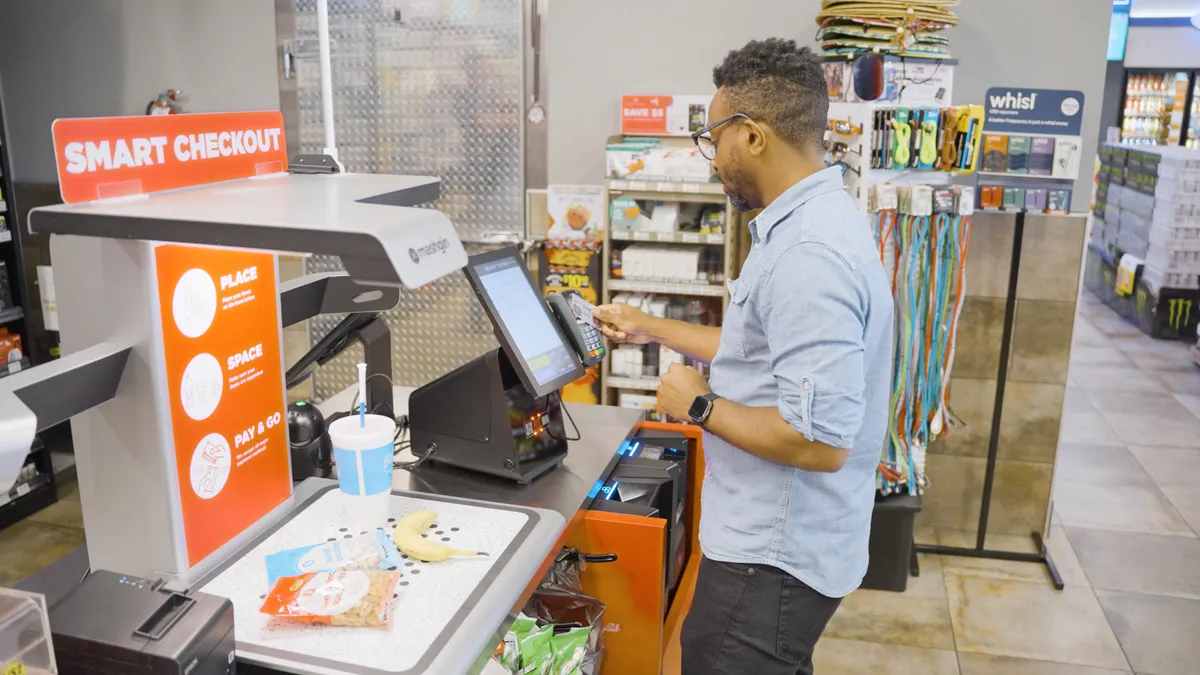
So take Mashgin, for example. We're innovating on the front end of checkout, but in order for the front-end of checkout to get innovated, the back-end needs to come along. So you're seeing massive retailers like Circle K and most of the other ones in the top five to 10 doing whole-scale projects to understand how they can get their infrastructure to the phase where they can layer on and test out all the new AI native products that are going to start popping out in the space.
C-STORE DIVE: So the misconception is that there is no innovation.
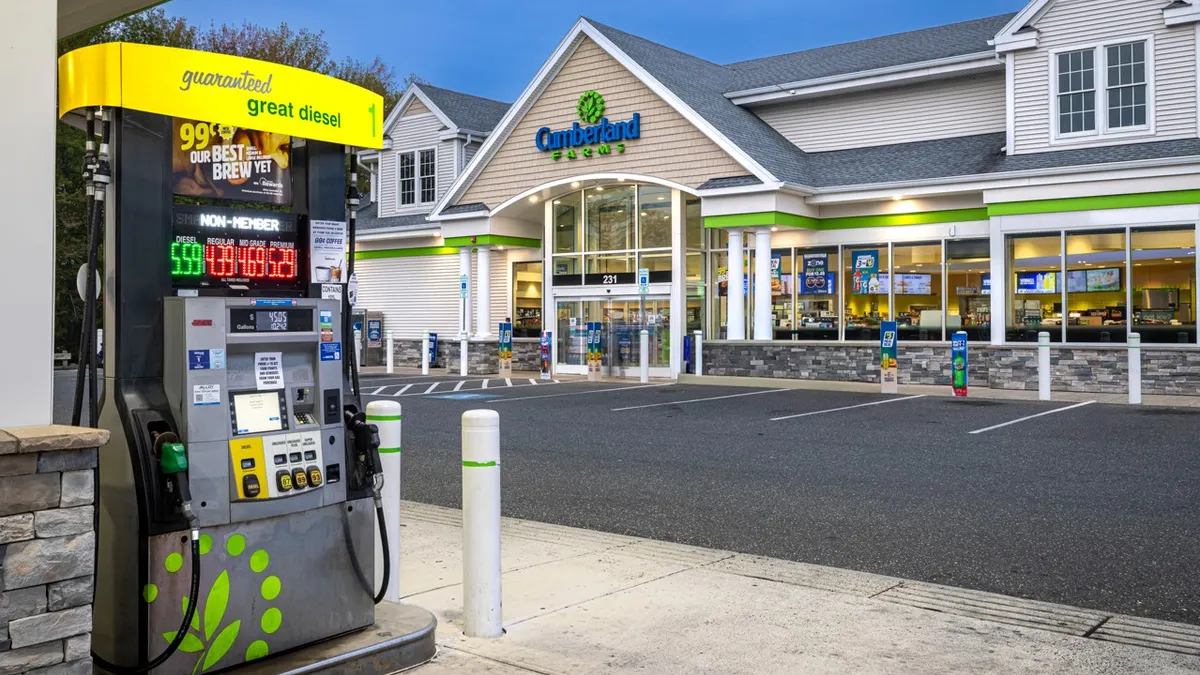
HOGAN: Yeah, I would say that's kind of a common refrain that we hear. What's the difference? What's new? If you take a look across those top innovative chains like your Circle K's, your [QuikTrips], your Cumberland Farms — you look across the regions and these are all moving quickly. And when you start going into these stores over the next probably 12 to 18 months, you're going to start to see front-end changes and just general speed of service additions.
A lot of folks are also taking a new tack towards trying to drive some additional foodservice items. So these are the things you'll start to see popping up aggressively over the next 12 to 18 months, especially during this summer travel season.
C-STORE DIVE: What self-checkout approaches — based on what you've seen and with the retailers that you've spoken with and interacted with — are delivering the most measurable ROI right now?
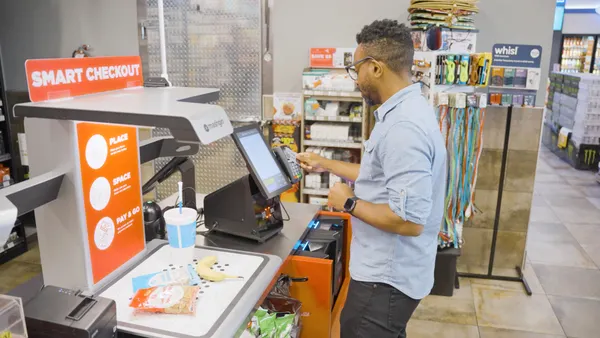
HOGAN: We think that the biggest advancement that you can put into a convenience store right now is the ability to give the customers a much faster speed of service. If you look at California, you can't buy alcohol at the self-checkout. So self-checkout is a fairly efficient experience. Unless of course, if you put an unnecessary item in the bagging area, in which case you're going to have to get intervention from someone at one of those stores.
What we've realized about the convenience industry is that the future of self-checkout is not self-checkout. Much like my opinion on all AI, is that AI should be helped to augment humans and not replace them. The ideal scenario within a convenience store is getting the customers to move faster by using AI to ease the burden on the cashiers.
If you had a store full of customer service representatives, instead of a store full of three people that are tethered to a check stand all the time, it's going to be a dramatically better store experience. And because roughly 50% of the transactions you see in a convenience store might contain alcohol, tobacco or something else that could come across in the next few years that's age restricted, you need to have the cashier there, but they don't need to be scanning every item for every customer.
So that's pretty much what we see the major innovative chains doing — trying to get one cashier to two lanes, one cashier to three lanes, or even trying to get the customers to ring themselves up on their phone.
C-STORE DIVE: Yeah. That's fascinating, and that's something I'm hearing all the time, too. It's not about replacing the cashier or getting rid of the cashier. It's more about, how can we best utilize that person and maybe take away some of those more repetitive responsibilities and have them focus on different elements of the customer experience while tapping into these platforms?
We're seeing folks across the industry pilot this on a regular basis. I've seen through the years it be piloted, and then some retailers stop because it wasn't successful for them. And then on another side of the coin, you see retailers take it and it just blows up and it's a huge success for them. So what separates the retailers who are very successful with this and they go to the moon, compared to the ones who, after a few months, they just get rid of it and say that it didn't work for them?
HOGAN: What really separates the successful retailers from the ones that aren’t are some really simple things.
Placement of the items. We tried putting Mashgin everywhere in the store. We thought initially that putting it by the coffee would be the best place, because there's tons of customers that want to just come in and grab a coffee, grab something sweet and hit the road. We thought that putting it closer to the cigarettes off to the side, so that cashiers could easily get the person who wants to get a soda and a pack of cigarettes going would be effective.
None of that was effective. Customers have been trained that commerce takes place at the counter. They will go to the counter regardless of whether there's a cashier standing there or a device standing there. They're used to that concept. So that's probably the number one aspect that we find: Figure out a way to make your augmented checkout system — whether it be with traditional or AI — primary, and put it in a primary location.
Number two, the biggest one that we found, is to take cash. Because with the advent of gas cigarettes, lotto — cash is still highly prevalent in a convenience store. We found that this is kind of the factor that will make or break a pilot to scale, is getting it so that you can accept those cash transactions and you can accept those lotto transactions and those gasoline transactions all through the same lane. And this makes it so that the staff is happy to stand there and help the customer with it. If the staff's having to move around they're miserable and it's an abysmal experience for the employee as well as the shopper.
C-STORE DIVE: Those are great points, especially about the placement. I feel like I personally have walked into a convenience store before and have just noticed the self-checkout in an odd part of the setup, and it feels off.
But I do actually have a follow up to that point on taking cash. Maybe this is just me, but I actually don't think I've ever paid in cash at a self checkout kiosk before. Am I an anomaly here, or do you see that consumers regularly pay with cash at these setups and it's just kind of needed more from the employee to express that they're able to do that?
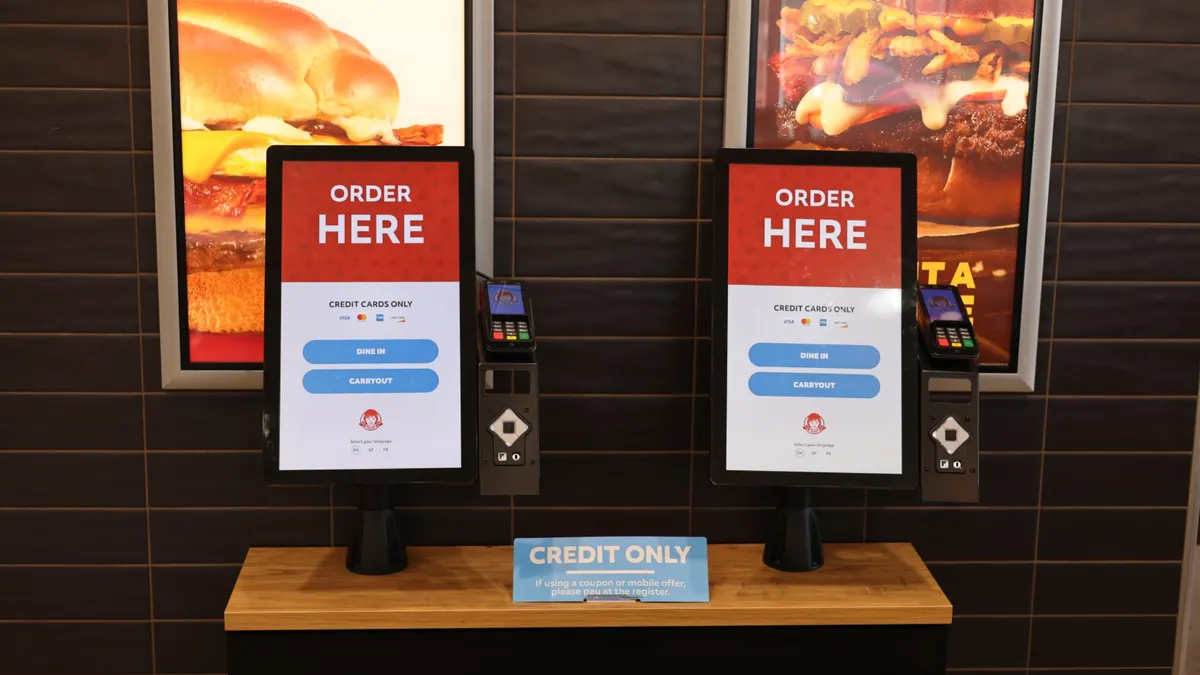
HOGAN: It's been highly popularized by Circle K all throughout the South with this type of thing. And then most of the travel center self checkouts that they've implemented, like the ones from grocery stores, those do accept cash. But in the Northeast they typically make self-checkout card-only. So this is kind of the dichotomy that we've experienced at Mashgin and found what actually drives more success is by making it so that every customer can go use it.
There's some barriers to entry with cash. Cash recyclers can be more expensive. They add more cost. But we figured out a way to actually tie that into a traditional cash drawer. That way one cashier could be working three lanes and just grabbing the cash customers when they come up, especially in places like the Northeast where cash percentage continues to decline. In a lot of the Southern states, cash percentages are holding pretty firm at 40% of all transactions.
C-STORE DIVE: So if you're listening, don't listen to me, the consumer doesn't pay with cash at kiosks. Cash is a big part of this.
HOGAN: If there is any sort of recession or any sort of decline, the most common budgeting system is cash. You put $1,000 on the kitchen counter and that's all that you're going to spend for that two week period. It's extremely common to see cash percentages tick up a little bit if there's any sort of recession.
C-STORE DIVE: It’s no secret that foodservice and competition with QSRs is one of the most, if not the most talked about topics in convenience retailing right now. Convenience retailers are trying to narrow the gap with quick service restaurants. As operators invest in fresh food programs, they start curating their menus, they start widening their menus, they start adding in-store seating. This is a huge deal in the convenience retail space.
So I'm curious, as c-stores compete more directly with quick service restaurants, how can self-checkout become a bigger competitive advantage for convenience retailers?
HOGAN: Well, the biggest competitive advantage that you're going to struggle with competing against a QSR is like at McDonald's, minimum wage in California is a couple dollars higher oftentimes than a convenience store chain. So first of all, the best talent is not going to be working in your store if the McDonald's across the street is paying $22 an hour and you're paying $18. And those numbers may sound crazy to some other states, but the whole world of labor is kind of going through the roof right now.
So the self-checkout aspect of that helps in a twofold manner. One, you're going to be able to optimize the labor that you have, and you're also going to be able to retain your better labor longer, because they're not going to be as stressed out. They're not going to have to be running back and forth between cleaning and checking people out as often.
Most QSR strategies in c-stores kind of take a twofold path where you can have order-ahead or you can have only grab and go. If you have only good grab and go, self-checkout is going to really nail it for you because the customer can walk in, grab their fried chicken and leave without talking to someone. The experience at a QSR, they're still going to have to probably go up, tap buttons on a tablet of some sort, and wait for Taco Bell or KFC or whichever one it is to fulfill their order. So convenience store chains will have more speed.
Not only with the checkout aspect, but having that staff member be able to ensure that that food is fresh and looks good is how you're going to grab that customer the first time and get them to come back, assuming that you can nail it on that first transaction.
C-STORE DIVE: There’s two common types we see of self-checkout when it's specifically with QSRs and c-stores. There's a type when you walk in and there's immediately a board where the customer can enter their order themselves. They check out themselves. And then in a couple of minutes, a foodservice worker behind the counter brings their food to them and then they go. And then there's the other kind where they order at the counter with someone face to face, wait for their food, get their food and then do self-checkout on the latter end of the visit.
If I'm a retailer and I'm looking to get into this space specifically with foodservice in mind, is there one type that's more advantageous to the other? Is using both of them the way to go?
HOGAN: We see it on both sides. You know that Wawa and Sheetz are famous for their sub sandwiches. Those are always going to be made-to-order. You've got QuikTrip down in Tulsa and across the country, they have made-to-order items as well that they're punching in and then you're going with your receipt and checking out at the register with a human.
So we see it in all shapes and forms. I think that the most advantageous one that can drive the most value quickly and provide the best ROI is going to be that grab-and-go aspect. Because once people know about that, once people like that, they will hit that periodically.
However, made-to-order is never going to go away. You're never going to get someone that doesn't want to pick what they want on their sandwich, so it's more about figuring out how you can optimize that journey and get that customer to go pick out other things in the store while they're hopefully only waiting 90 seconds to two minutes to get that sandwich.
So we kind of think about that as the order, shop and pay strategy versus when you order and pay, oftentimes that will cut off the customer's purchasing journey, because after they order, pay, then they just kind of stand around twiddling their thumbs. [When] they have to pay at the end from either a person assisted self-checkout, the odds of them adding on a second item is infinitely higher. Most people will order a soda if they're ordering a sandwich, but they might forget to get the Snickers.
C-STORE DIVE: So having that payment more towards the end maybe just gives more opportunity to stroll around the store, add stuff to your basket.
HOGAN: Yeah, that's huge. And even in some spaces where we're seeing them pay beforehand, the number of customers that are doing two transactions because they've waited and then they see, ‘Oh, there's a really quick checkout system over there right next that Rice Krispie Treat, I'll put down my Rice Krispie and Apple Pay that while I wait for the sandwich, there's no likelihood of that happening if the cashier has to go make the sandwich and the person waiting for their sandwich is just standing there twiddling their thumbs.
C-STORE DIVE: What are some of, or maybe the most important, checkout KPIs that convenience retailers are not paying closely enough attention to?
HOGAN: Yeah, so if you folks saw the data posted by NACS’ State of the Industry event, they came out with a pretty interesting concept, which most of the executives in this industry know but we found to be incredibly interesting. It was essentially that an inside transaction if the customer is not purchasing fuel is a loss of a couple cents, because the cost per labor hour, or transaction per labor hour metric, has dipped down because the profit margins on items have stayed the same as labor has shot through the roof.
So we really try to guide our customers by looking at total transactions that can be accomplished per store labor hour and still make sure the store is clean. We have an executive of a national firm who says that he can walk into any store and understand which one has a Mashgin in it because of how clean it is. Just the first second he walks in without looking, and that's because he feels like the store’s staff is able to spend more time keeping the store's hygiene at a high level.
While it doesn't sound like it bakes back into that transaction per labor hour metric, it does. Anybody on this call who's ever hired for a convenience store knows, there's probably 6 to 8 hours a week, maybe 10, that's a revolving door shift that the manager's constantly having to train that person. You're having to constantly hire that person, and that person is just in and out within six to eight weeks.
If the good staff who work in the store are able to accomplish all the tasks and keep the customers happy, that revolving door shift is no longer needed. So we see that across most of our customers. We're not typically replacing labor. Jobs are really never being cut. It's more of the fact that the spiky labor hours that are really hard to fill anyway are not as necessary to keep the store running efficiently. And that metric that you want to look at for that is transactions per labor hour.
C-STORE DIVE: I talk to operators all the time just about the metrics that they're looking at in their store performance. And that's not one that I hear quite often. Is that one that maybe you’re more aware of because of the side of the business that you work on, or is that a common metric that operators are really in tune with?
HOGAN: A lot of the operations folks within these companies will be attuned to that metric. But if you're asking people on other sides of the business, it's pretty much an operations-only metric that's used. And we oftentimes bring it up and they say, oh yeah, that's a really good way of looking at it. There's tons of different other metrics that kind of play to the same point that these folks are using, but that one's just been really successful from a Mashgin perspective for our ROI calculations with customers, because it's blatant and it's linear, and we can show that the speed of transaction directly relates to that.
One thing that we see that some stores aren't really taking a close look at is just basic traffic counting data, like how many people are walking in versus how many people are walking out. Some major chains have it and then we're deeply surprised when we talk to other major chains when they don't have their walkout numbers. So this is something that we really hope to take a look at from a Mashgin perspective in the next couple of years. As you know, AI is advancing and the security cameras in these stores are going to be advancing. So these types of metrics are things that we think are coming on the horizon that the audience who has access to all of those cameras can start thinking about how to use AI to solve those problems.
C-STORE DIVE: Speaking of what's on the horizon, if you think ten years from now, what does the ideal self-checkout system in c-stores look like to you?
HOGAN: Our dream would be that it looks a lot like what we've built with our new model that's coming out. We want the cashier to start to be able to feel more like they can build relationships with the customers. We think it enables more of a bartender-style mode, or maybe your favorite restaurant server. People go back to see that person over and over and over again throughout the course of the week, months, years.
If we can get the convenience store to a place where that staff member is making more money, wants to stay there, and the customer has a great experience every time they go, and they're able to actually have those interactions… We see that happening in a lot of stores these days more and more, by enabling those cashiers to not always be running from the check stand because they have to go finish the trash outside, then they have to get back inside and run the next transaction. We think that that's definitely the angle that we see these stores heading towards and that we want to see over the next few years.
Another good piece that we see coming on the horizon is probably more personalized loyalty, because the ability for stores to start understanding your purchasing habits and things of that nature to keep you coming back, is going to dramatically improve with all these new models that are coming out.