Speaking to Seven & i Holdings’ stakeholders during the global convenience retailer’s Nov. 6 investor day, Mauricio Leyva outlined how 7-Eleven plans to achieve its North American growth targets, even as the company continues to grapple with profitability challenges in its largest market outside Japan.
“Our success is defined by our ability to strengthen both our store operations and our merchandising, and we will invest in the highest value opportunities across both operations and [an enhanced] assortment,” said Leyva, who became CEO of 7-Eleven Inc. on Aug. 1. “By strengthening the customer experience across our core disciplines, we will drive higher foot traffic, larger basket sizes and lasting customer loyalty.”
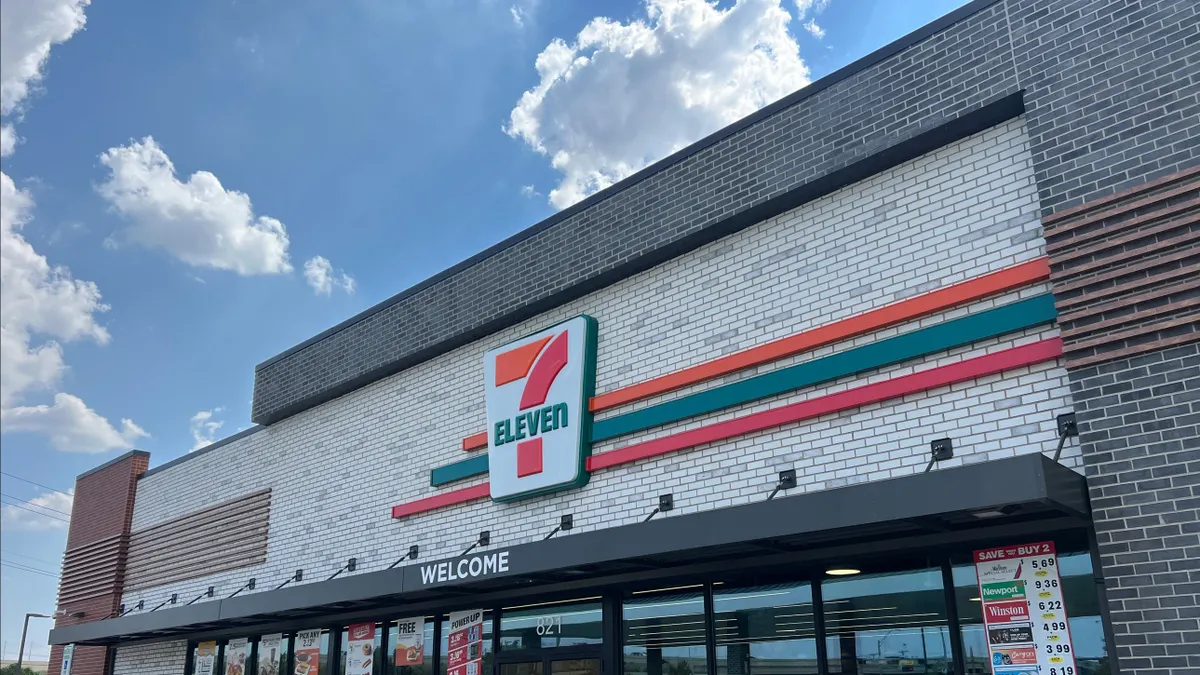
Leyva is spearheading 7-Eleven’s transformation program, known as its North Star strategy. At its center is a plan to remodel several thousand convenience stores across the U.S. through 2030 and convert roughly 2,600 company-owned locations to its franchise model in that same timeframe. Many of these remodels involve larger-format, food-focused stores designed to encourage longer visits through amenities such as in-store seating and QSRs.

Although 7-Eleven’s store transformation program predated Leyva’s arrival, the executive outlined a more detailed framework for how the company plans to allocate capital across its North American store network during the investor day.
The strategy is built around three pillars: foundational upgrades, store modernization and network optimization. The first two focus on improving existing locations, while network optimization involves expanding the company’s new store pipeline and continuing to convert company-owned locations to franchised sites.
For its existing stores, 7-Eleven is taking a tiered approach to remodels, separating basic upgrades from more complex projects. Each category has its own standards and objectives based on individual store needs and growth potential.
The two types of remodels
Foundational upgrades are the more basic of the two remodel types, with the goal of turning stores into clean, safe and reliable locations, according to Seven & i’s presentation deck. These projects focus on building and utility improvements, enhancing store appearance, replacing aging equipment and improving operational reliability.
Leyva said that approximately two-thirds of 7-Eleven’s planned remodels will focus on these types of upgrades.
“Think of this program as capital investment focused on basic enhancements that improve reliability and customer satisfaction,” Leyva said.
Store modernization, meanwhile, involves a more extensive investment. While foundational upgrades focus on raising baseline standards across the network, modernization remodels aim to make stores more relevant, engaging and productive, according to the presentation.
In other words, the goal is to drive sales growth and higher unit returns, Leyva emphasized.
“This approach allows us to match capital directly to store sales potential and ensures that any investment adheres with our [return on invested capital] standard, while creating flexibility to capitalize on store enhancements where we see the strongest growth potential,” he said.
Since modernization projects vary depending on a store’s needs and growth potential, 7-Eleven has divided them into three tiers: bronze, silver and gold. The company assigns each project a tier based on location potential, competitive impact and financial metrics, Leyva said.
“By 2030, 7-Eleven Inc. will be offering a much more enhanced customer experience."

Mauricio Leyva
CEO, 7-Eleven Inc.
The bronze tier most closely resembles foundational upgrades. Described in the presentation as an “essential, condition-led investment,” this tier focuses on creating a clean, bright and safe store through repairs, refreshes and essential customer-facing improvements.
Silver, a step above, is what 7-Eleven considers a “scaled core investment,” per the deck. These include “meaningful customer improvements with disciplined capital” and “targeted upgrades and refreshed appearance.”
Finally, the gold tier is a full transformation, according to the deck. Stores receiving this tier of upgrade are the highest priority locations with the strongest opportunity, receiving broad customer-facing upgrades across exterior, interior, layout, fixtures and experience.
7-Eleven’s large-format locations that began rolling out in late 2025 fall under the gold tier, Leyva said.

“This approach lets us improve the experience across the whole network while concentrating the most extensive investment where it can create the greatest impact,” Leyva said.
Leyva closed his portion of the presentation by reiterating 7-Eleven’s plans to continue converting company-owned sites to franchise stores, with a new goal to convert 500 sites in 2027. He also discussed the company’s efforts to further establish 7-Eleven as a food destination through improved meal options and continued investment in its 7Now delivery business.
“By 2030, 7-Eleven Inc. will be offering a much more enhanced customer experience,” Leyva said. “It will be more productive, more attractive to consumers, and built to deliver compounding shareholder value.”