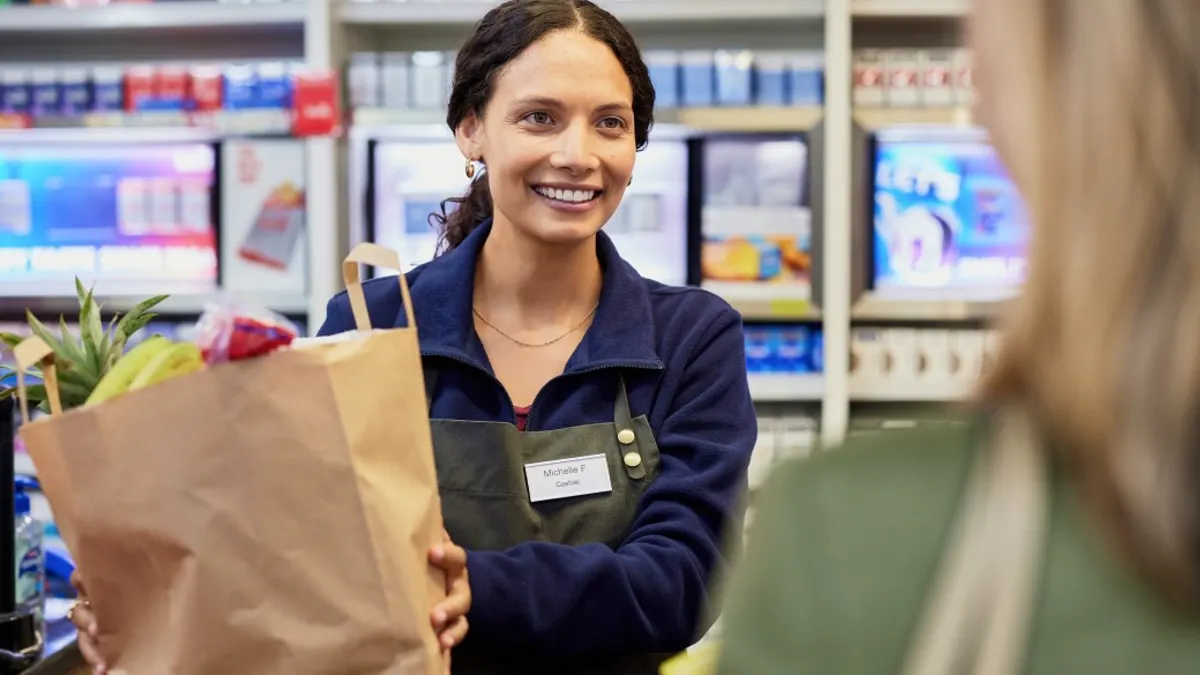

She pulls in at 6:50 a.m. for fuel. By the time she's back in her car, she's also purchased a coffee, a breakfast burrito, and a catering order for her work event. Four minutes. Four different purchases. One customer.
Most convenience stores are lucky to capture one or two of those moments. Not because the demand isn't there, but because the store wasn't built to prompt or ring up the other four.
You work hard on marketing to get customers through the door. The gap between capturing one revenue stream and capturing six is typically a lack of operational efficiency.
Six revenue streams your c-store can offer
1. The fill-up. The real question at the pump is whether that fill-up converts into a walk-in, and how big the basket is once she's inside.
2. The coffee she'd buy anyway. Dispensed beverages are often a key driver of store margins, and she's likely buying it somewhere today regardless. It's one of the cheaper entry points into foodservice because there’s no kitchen required, just a clean bar and consistent quality.
3. The breakfast burrito she didn't plan on. Made-to-order breakfast is the attach sale. The coffee gets her in the door and gets her back tomorrow; the hot food is what turns a $3 visit into an $11+ one.
4. The lunch she buys at 7 a.m. A well-stocked grab-and-go case sells a second daypart during the first visit. If you already run a deli, having staff prep a few salads and sandwiches during slower hours is a low-lift way to bring her back later in the day.
5. The item off her grocery list. She spots trash bags in aisle three and crosses "stop at the store after work" off her list. Center-store retail just needs to be visible at the moment she's already there.
6. The dozen she's bringing to the office. Catering and bulk orders can drive higher-ticket revenue with little to no additional marketing spend. She already trusts the store enough to order two dozen breakfast sandwiches or pastries for a meeting.
Stop connecting multiple systems
Here's where most operators get stuck. Different revenue streams tend to show up with their own system attached: a fuel POS at the pump, a separate foodservice POS at the counter, a different loyalty program, and a back-office inventory tool that reconciles once a week if someone remembers.
At the end of the month, figuring out which program was actually profitable could mean exporting multiple spreadsheets and hoping the timestamps lined up. By the time the answer comes back, the ordering decision it was supposed to inform might have already passed.
Running multiple systems creates a visibility problem, and it shows up in the same place every time: the constraint on foodservice growth in convenience is operational. The customer was always going to buy the fuel. The question is whether your systems make it easy to upsell to her, or make her, and you, work around them.
Indian Mound Grocery & Deli in Greenwell Springs, Louisiana knows that gap firsthand. Before consolidating onto one platform, a deli order meant a written ticket carried across the store by hand.
"Toast has removed what used to be about 10 to 15 steps of hand-delivering a written ticket around the store." -Sunni Nichols | Co-owner | Indian Mound Grocery & Deli.
One strong system can remove the manual handoff. The next question is what that same system can tell you once it's running.
Know what's actually working
Having metrics scattered across six places creates more work for you. The operators pulling ahead are the ones who can see, in one place, which daypart is dragging, which SKU to cut, and which promotion actually drove incremental visits.
That's the difference between reporting and intelligence. Toast IQ turns your operational performance into a shift-by-shift view of what's working, so the fifth and sixth sale aren't left to chance.
"I have been using the AI assistant—Toast IQ—to ask what our best sellers are, and that's something I've never been able to do in the past." —Sunni Nichols | Co-owner | Indian Mound Grocery & Deli.
A question that might have once required pulling together and analyzing data across multiple spreadsheets can now be answered in seconds, giving operators insights before the next shift starts.
Built for the store that never slows down
Toast helps you connect prepared foods, self-checkout kiosks, age verification, catering, and loyalty on one unified platform—giving you a clearer view of inventory and margins across your core revenue streams.
Ditch the disconnected tech. From inventory to checkout, Toast is designed to help keep your operations unified and synced.
Six ways to sell to the same customer, without six systems to reconcile.