
C-store operators are under pressure from every direction. Customers expect speed and personalization. Labor remains expensive and difficult to retain. Emerging growth engines like foodservice demand tighter operational execution.
This environment is forcing leaders to scrutinize technology investments through a much sharper business lens, said Gary Price, executive director, convenience stores retail technology sales leader at Toshiba Global Commerce Solutions.
“While legacy systems can require a significant amount of investment to adapt to changing market expectations, the larger issue is the unmeasured cost of inaction,” he said. “When existing systems prevent retailers from keeping pace with the market and the experience guests expect, they’re leaving revenue on the table from declining customer satisfaction.”
Although retailers recognize the potential in upgrading technology, today’s economic environment means that every capital investment must be tied to quantifiable business objectives. From improving loss prevention and operational efficiency to creating more seamless customer experiences and building a foundation for future growth, technology investments must demonstrate clear returns.
Three questions every technology investment should answer
Before evaluating features or comparing vendors, c-stores should start with the desired business outcome. Three questions can help guide the decision:
1. Will it deliver measurable ROI?
The first step is to quantify what the investment is expected to deliver, from revenue growth to expense reduction. Retailers should also consider the value of being able to respond faster as market conditions and customer expectations change.
Better data can be particularly valuable here, Price notes. “By analyzing transactions and customer behavior through loyalty programs, retailers can gain insights that inform product mix and accompanying pricing and promotional strategies,” he said.
Loss prevention provides another tangible opportunity. Price points to camera-vision solutions that can keep tabs on activity throughout a store, including at the sales counter, ensuring cashiers ring up the correct number of items and that all cash sales are accounted for.
“When multiplied by thousands of locations nationwide, we see that brands are able to save hundreds of millions of dollars a year through these investments,” he said.
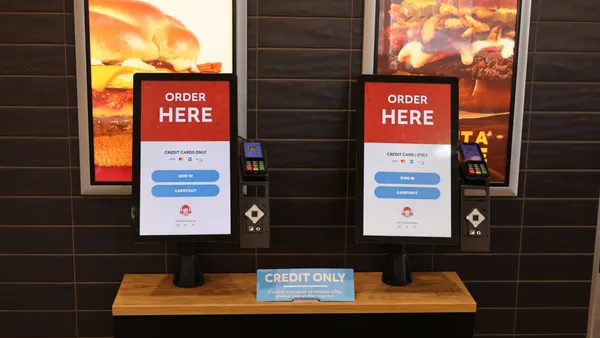
Self-checkout offers another example of how a relatively small productivity gain can add up across a large store network. While it may not deliver a one-to-one reduction in staffing as it can in grocery, Price said his team has found it can effectively reduce or redeploy the equivalent of one full shift per week, which can be significant when extrapolated across 52 weeks and an entire store base.
2. Will it improve operational efficiency?
As c-stores look beyond traditional sources of differentiation, such as fuel pricing and increasingly compete in areas like foodservice and customer experience, removing friction for both associates and customers becomes essential.
For associates, that might mean simplifying workflows or improving back-of-house and kitchen operations. Reducing day-to-day obstacles gives them more capacity to engage with customers and deliver more personalized service.
For customers, operators should prioritize factors such as reducing checkout friction, improving inventory management or making foodservice operations faster and more consistent.
“Technology solutions should cover the entire store, offering speed at checkout and the ability to manage inventory and other activities,” Price said. “You want to have a seamless system that supports all those functions holistically.”
3. Will it provide long-term growth and scalability?
A technology investment should solve current operational challenges while giving retailers the flexibility to respond to what comes next. That means looking beyond the initial feature set to assess whether the underlying architecture can adapt as the business evolves. For example: Is it a modern platform that’s open enough to integrate with third-party systems and APIs? Can it be easily modified as new requirements or services emerge?
“You have to consider not only how to solve current issues, but how much future-proofing you’re bringing to the table,” Price said. He recommends that retailers look beyond the typical one- to three-year planning horizon and consider how the platform can support the business five or even 10 years into the future as customer expectations and business priorities evolve.
For large operators, scalability can also create immediate efficiencies. Price recalls working with a retailer managing five different hardware platforms; moving to a single, out-of-the-box solution streamlined operations while cutting expenses and boosting output.
Turning technology into a business advantage
Building a strong technology business case shouldn’t happen in isolation. Price encourages retailers to tap trade associations and connect with operators in other regions to discuss best practices. He also recommends taking advantage of the perspective technology providers can offer. “Because we regularly talk to hundreds of retailers at Toshiba, we can bring that broad perspective on emerging solutions and common challenges operators face to our consultative approach, ” Price said.
Ultimately, the strongest technology investments are those that connect directly to business goals. By looking at measurable ROI, operational efficiency and long-term scalability, retailers can move beyond evaluating technology for its own sake and make a clearer case for investments that help the business perform today while building a more future-ready operation for tomorrow.
Three questions that help operators move beyond evaluating technology for its own sake.