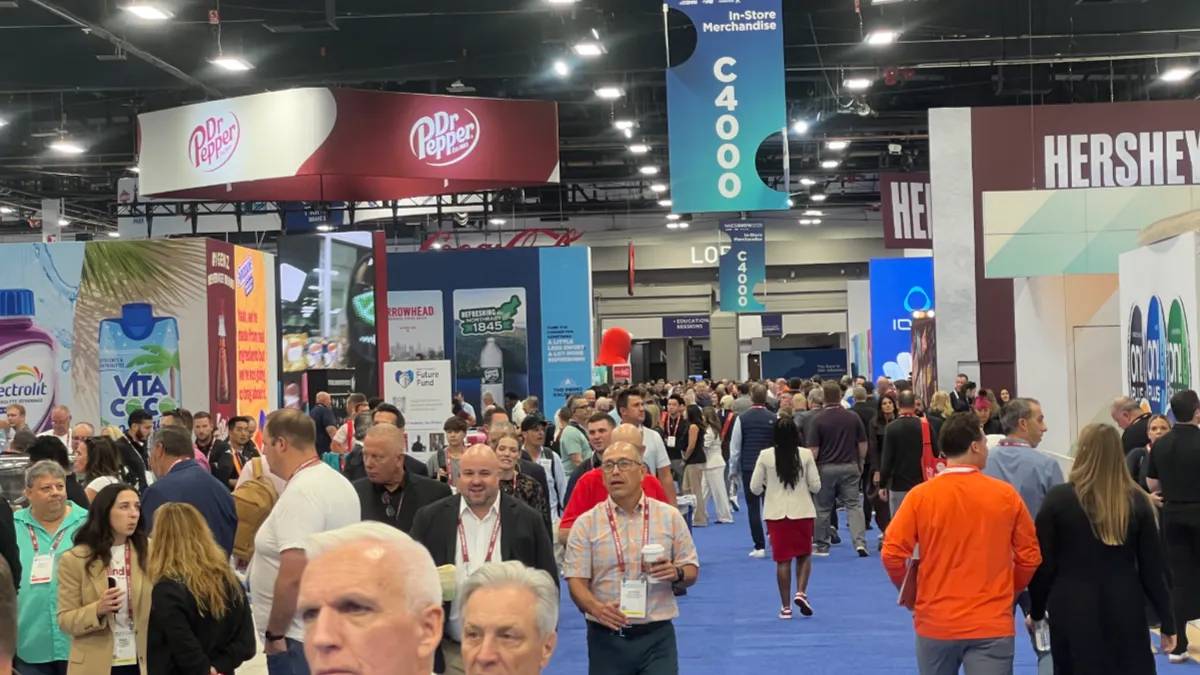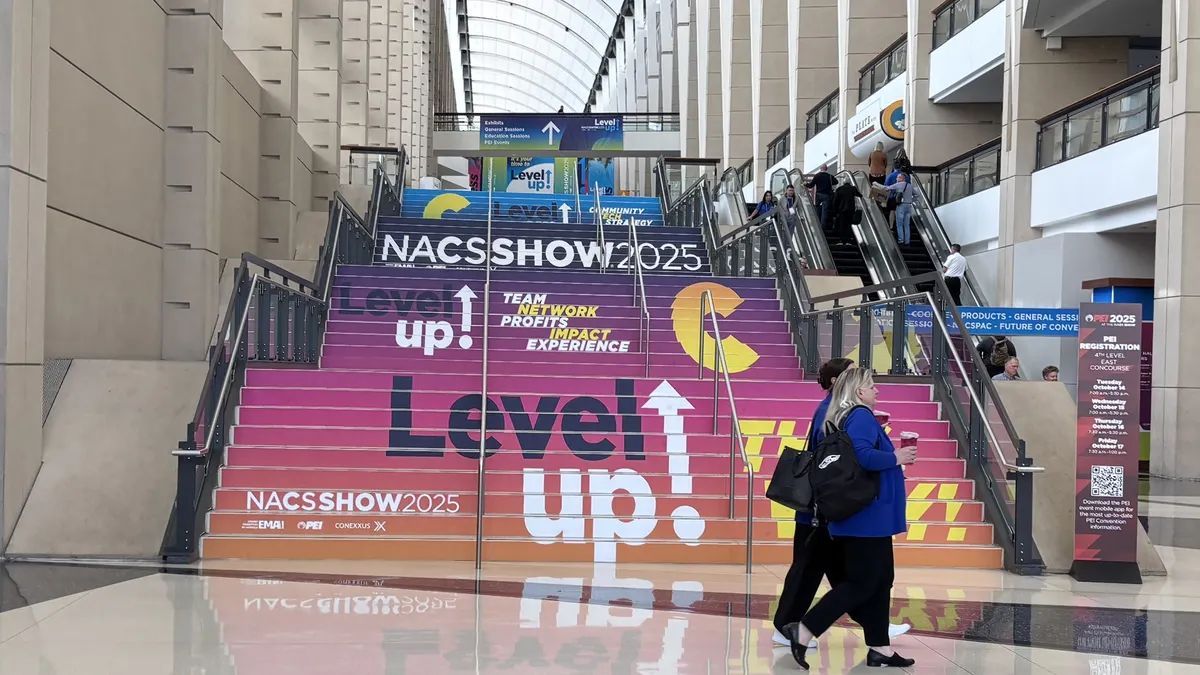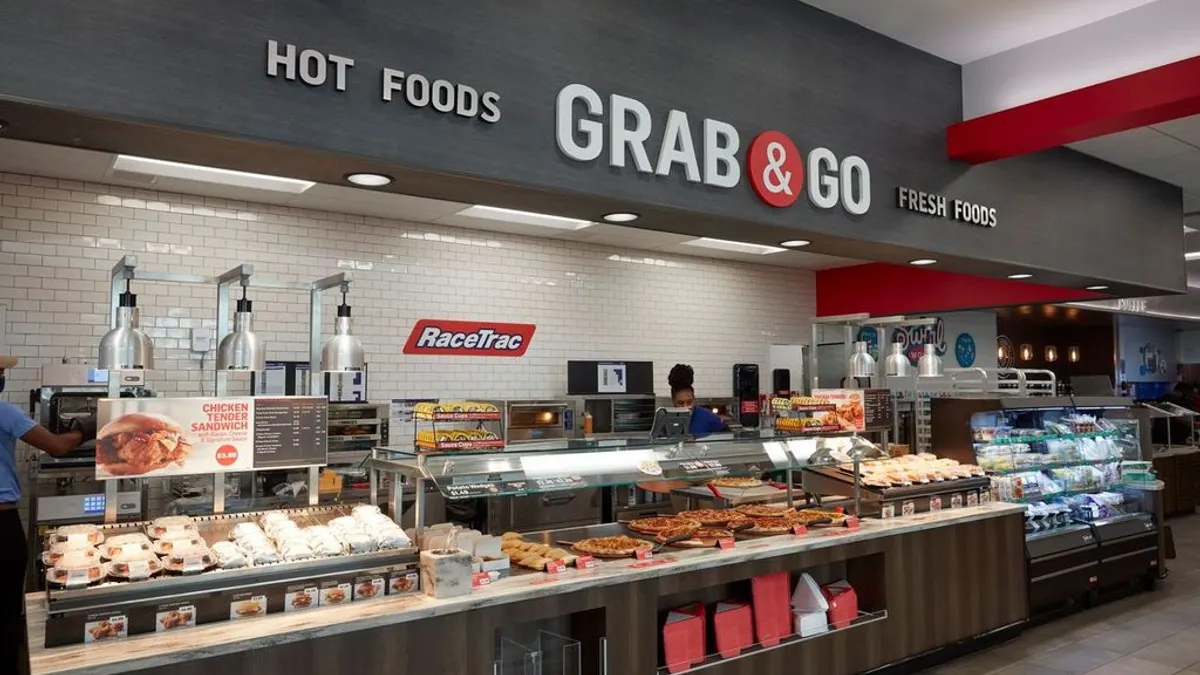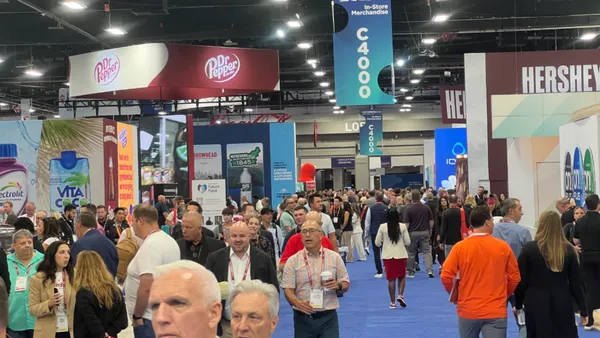
The third day of the 2026 NACS Show offered another look at some of the biggest challenges facing convenience retailers, from evolving store manager responsibilities to how operators can adapt to new SNAP stocking rules. And as expected, there was no shortage of trends on the show floor, with the seemingly endless spread of all-things protein and the rise of hydration beverages catching our attention.
Here’s more on what stood out to us from day three of this year’s NACS Show in Las Vegas.
Protein is in everything, everywhere all at once
Protein’s rise in convenience isn’t new. C-store operators have spent the past few years tweaking their offerings to meet growing demand for the macronutrient. The stats suggest it’s a smart target: More than one-third of consumers increased their protein intake in the past year, while roughly 80% prioritize protein daily, according to the International Food Information Council.
But what began as a budding trend across c-store snacks, candy and foodservice has become a seismic, all-encompassing force in product development.
At NACS, protein was seemingly everywhere — featured prominently in nearly every third booth, and marketed more aggressively than ever.
While meat-snack, protein-bar and shake companies have obvious reasons to put the macronutrient front and center, protein has increasingly found its way into more unconventional products.
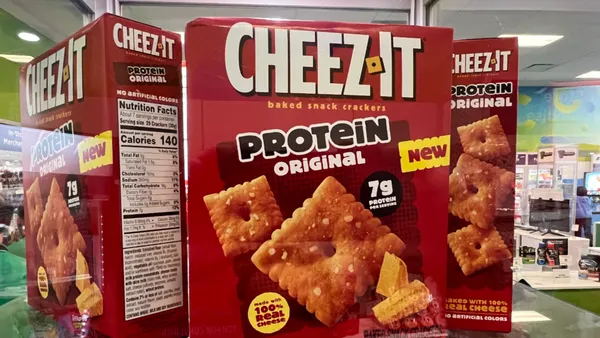
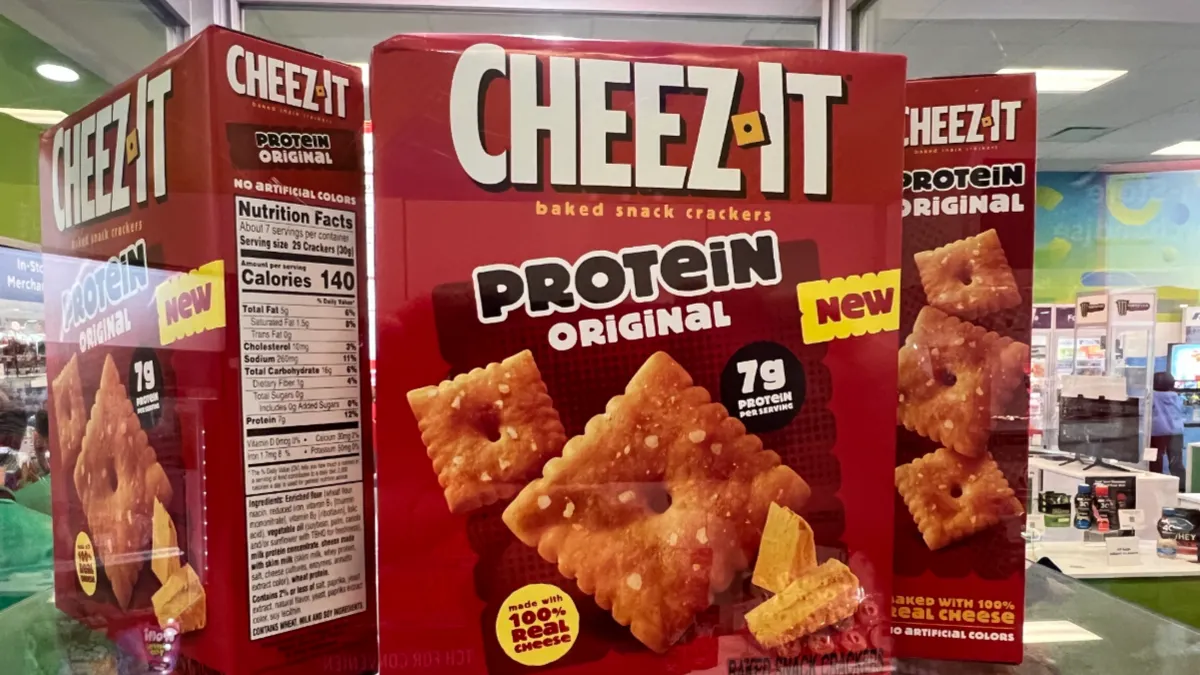
Consider some of the new products debuting on the show floor: Legendary’s protein macaroni and cheese, J&J Snack Foods’ soft protein pretzels, F’real’s protein smoothies, Bucked Up’s protein popcorn, Ready Protein’s puff snacks, Quaker’s protein rice crisps, Jif’s protein cookies, and, of course, protein Cheez-Its and Doritos. Even Barebells, known for its protein milk and bars, debuted a new line of gummy candies with more protein and fiber than the average gummy.
The question now is whether protein has become oversaturated. With the ingredient appearing in essentially every category, does simply offering more protein still provide the differentiation it once did? Only time will tell.
The role of the store manager is changing
Store managers are typically most effective when they’re out on the retail floor interacting with customers, solving problems and coaching employees. But all too often, these individuals are stuck handling paperwork and other administrative tasks for several hours a day.
This is a problem Casey’s General Stores and Texas Born both decided to confront recently. Their solution: centralize and automate some of the most time-intensive work in order to free up time for managers.
One of the most time-intensive tasks managers face has been recruiting and hiring in the high-turnover industry. To address this, both chains have centralized their recruiting processes by having company recruiters review applications and conduct screening interviews with candidates. Once a recruiter deems a candidate a good fit, they then pass that individual along to the store manager, who does the final interview and makes the call on hiring.
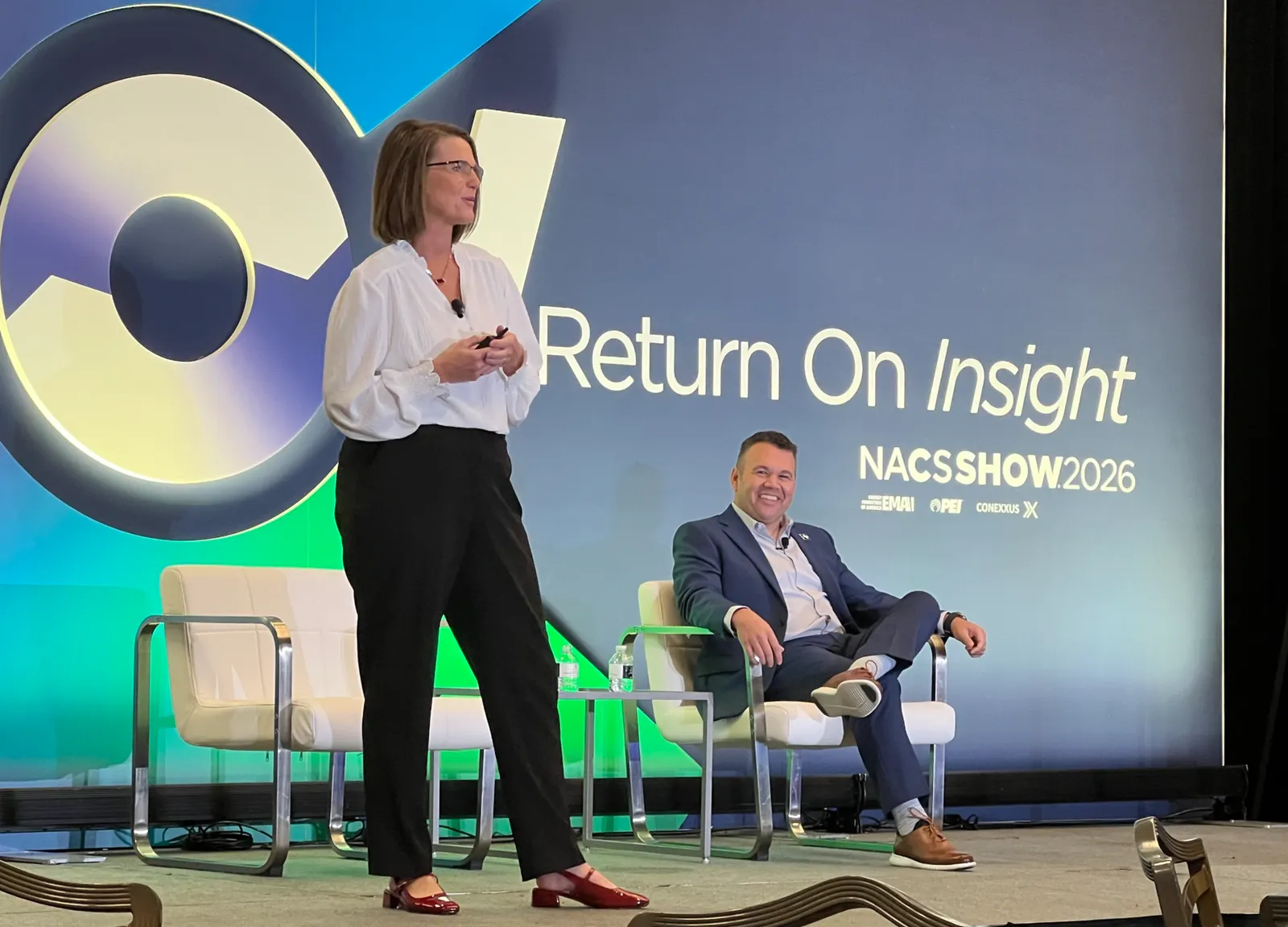
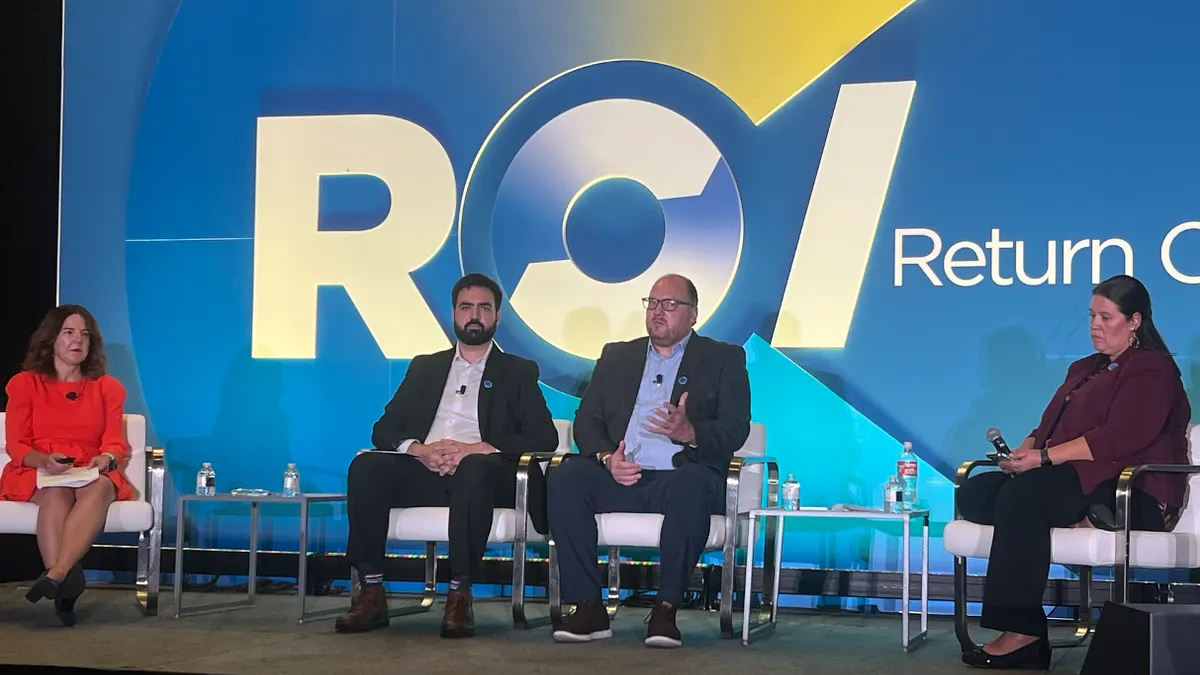
Utilizing company recruiters has helped Casey’s standardize its communication with potential employees. It’s also helped the company get better at identifying and weeding out unsuitable candidates, said Sherri Hart, vice president of HR field operations at Casey’s, during an educational session at the NACS Show on Thursday. The number of times people “ghost” — or fail to show up for — interviews with the company has dropped by around 40% by using recruiters.
“These folks know how to interview,” Hart said.
Casey’s has also centralized the onboarding process by allowing new employees to complete training modules virtually.
TXB, meanwhile, has automated more of its store processes like inventory scanning and updating fuel prices. This lets managers — who used to spend 4-5 hours in their back offices — now spend most of their time on the retail floor, said Nathan Graham, TXB’s director of human resources, during the session.
But c-stores can’t just free up hours for their managers and call it a day. They also need to set clear expectations for what managers should do with the time.
“Freed time only counts if you decide where it goes,” Graham said.
Hydration has its day
Hydration beverages may not have been as ubiquitous as protein-infused items at this year’s show, but the marketing claim still had a significant presence.
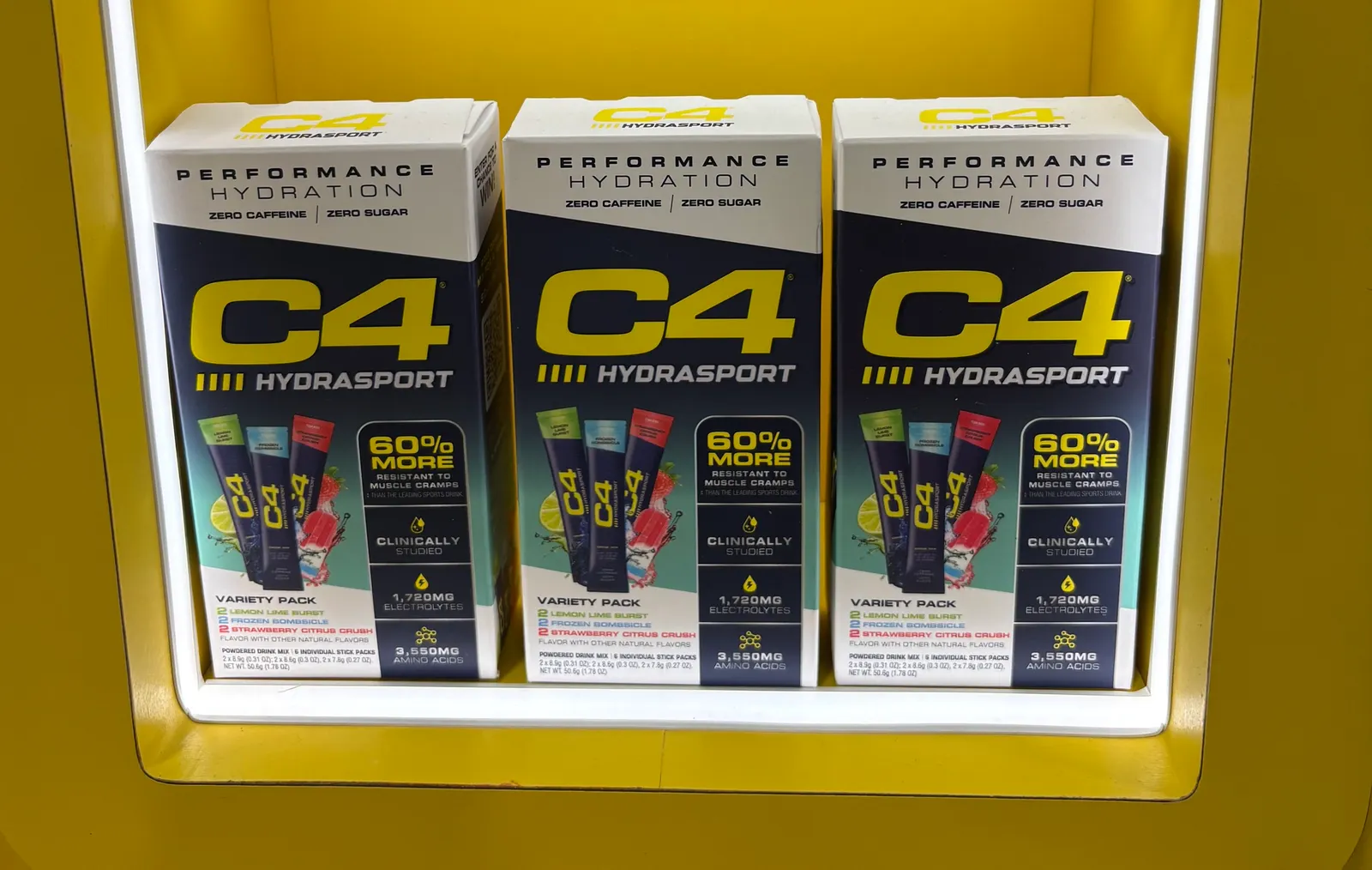
Energy drink companies had numerous products claiming hydration benefits. C4 had its zero-caffeine Hydrasport powdered drink mix on display alongside its array of highly caffeinated flavors. Gorilla energy drinks showed off Rvivl, a hydration beverage that also contains protein and fiber. In the new exhibitor area, PHX displayed its combination energy and hydration drinks.
And energy drink companies weren’t the only ones.
Capri Sun also sported the fruity flavors of its Capri Sun Hydrate beverage in bottles. Cirkul had multiple flavors of its hydration soda at the show, including Prof Parker and Cirkola. And Pepsi showed off its new Gatorlyte Longer Lasting, which uses a proprietary electrolyte blend that aims to keep users hydrated for longer than its traditional formulation. The company said it’s targeted at people undertaking activities that may make more frequent hydration breaks difficult, like a long travel day or busy work shift.
Hydration claims could play an important role for GLP-1 users.
“[Using GLP-1’s] not only cuts your taste — like you are not hungry — it cuts your sensation of dehydration,” said said Suzy Badaracco, president of Culinary Tides, a forecasting think tank and trend intelligence firm, in a Tuesday session on food trends. “So you are dehydrated, but you don't know it. That's why hydration is so important for that group.”
New SNAP stocking rules are sowing confusion
New stocking requirements are set to take effect in less than a month for retailers that want to participate in the USDA’s Supplemental Nutrition Assistance program. But c-stores are still unclear on the finer points of the rules, according to speakers during an educational session Thursday at the NACS Show.
The regulations, which go into effect Nov. 4, were passed by Congress more than a decade ago as part of the Farm Bill but got hung up in legislative challenges. They require retailers, including c-stores, to stock seven varieties of products in each of four health-focused categories — proteins, grains, vegetables and fruit, and dairy — and include at least three stocking units of each variety. That’s up from the current requirement of three varieties in each of the four categories. The rule also requires retailers to stock one variety of perishable product in at least three of the four categories.
As if the new rules weren’t complex enough, c-stores are also struggling to parse the requirements, said Margaret Mannion, director of government relations at NACS. Yet retailers haven’t gotten much clarity from the USDA, so NACS is pushing the agency to delay enforcement of the rule.
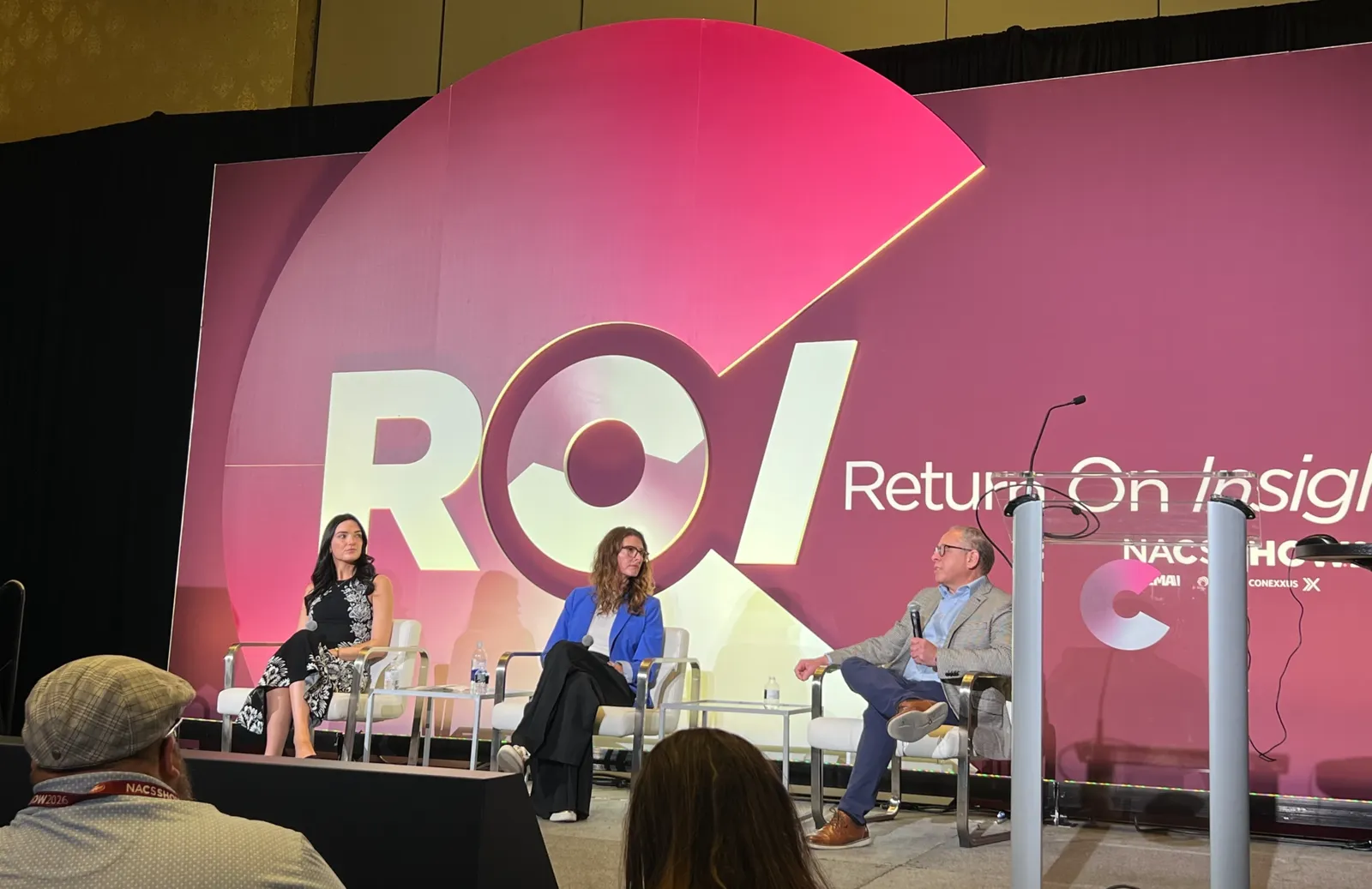
Pilot is one retailer that’s confused by parts of the new rule. Eva Rigamonti, the travel stop chain’s chief legal officer and corporate secretary, said it’s unclear how the company should categorize certain products. Canned peas, for example, could qualify as a protein or as a vegetable. And it’s hard to tell if hard-boiled eggs in a to-go container count as shell eggs — which fall under the protein category — or not.
C-stores are also struggling to source many of the required items because the distributors and suppliers they work with just don’t have them, Rigamonti said.
“Our industry doesn't get deliveries every day, and we work with suppliers that only have certain types of items. So there are just certain items that sort of meet these definitions that we can't stock,” she said.
Make food safety a companywide practice
During a Thursday session about foodservice fundamentals, the unavoidable topic of food safety came up. The key area to focus on is training. Operators shouldn’t just train workers handling food on proper food safety standards — they should also have that same training and buy-in across the company.
“We also trained our operations team from our CEO down to our district leaders in food service and food service safety,” said Ryan Krebs, senior director of food service at Sprint Mart.
Krebs noted that unlike other areas of foodservice, food safety isn’t really a competitive advantage — it’s a “non-negotiable” capability that every retailer needs to have, and one where companies should be willing to share best practices.
For example, Sprint Mart’s approach of getting everyone on the operations team trained in food handling is something it learned from Weigel’s — and that Weigel’s picked up from Kwik Trip.
While food safety inspections can be intimidating, Krebs and Beth Hoffer, vice president of Weigel’s, also suggested retailers that are new to foodservice should consider asking inspectors for pointers on what they see and how to improve their operations.
“Once they give you those pointers and you actually execute, you'll have a great relationship with them,” said Hoffer.
Getting back to basics is more important than ever
While most of the show focused on new opportunities, growing headwinds and innovative products and services, one topic came up in multiple education sessions.
Clean bathrooms.
Everyone in the industry knows that having clean bathrooms is a great way to appeal to customers. But with growing financial uncertainty among customers, delivery on the basics like this might be more important than ever.
With foodservice a large and growing part of convenience retail, the connection customers may make between a dirty bathroom and a dirty kitchen is stronger than ever. Michelle Weckstein, director of food and beverage brands for Southwest Georgia Oil, doing business as SunStop Stores, shared a story of how, on road trips as a child, her mother wouldn’t let them eat at a restaurant until she’d had a look at the bathrooms.
“As a child I thought that was crazy,” said Weckstein. “And then I got into restaurants.”
She pointed out that a dirty bathroom doesn’t have to mean a room in desperate need of bleach and scrubbers. All it may take is a balled up paper towel on the floor for a customer to consider a bathroom dirty, no matter how big or small the chain.
“It doesn't matter if you have 5,000 stores or you have 20 stores,”said Weckstein. “The judgment by the consumer is the same.”